


Listen to the article
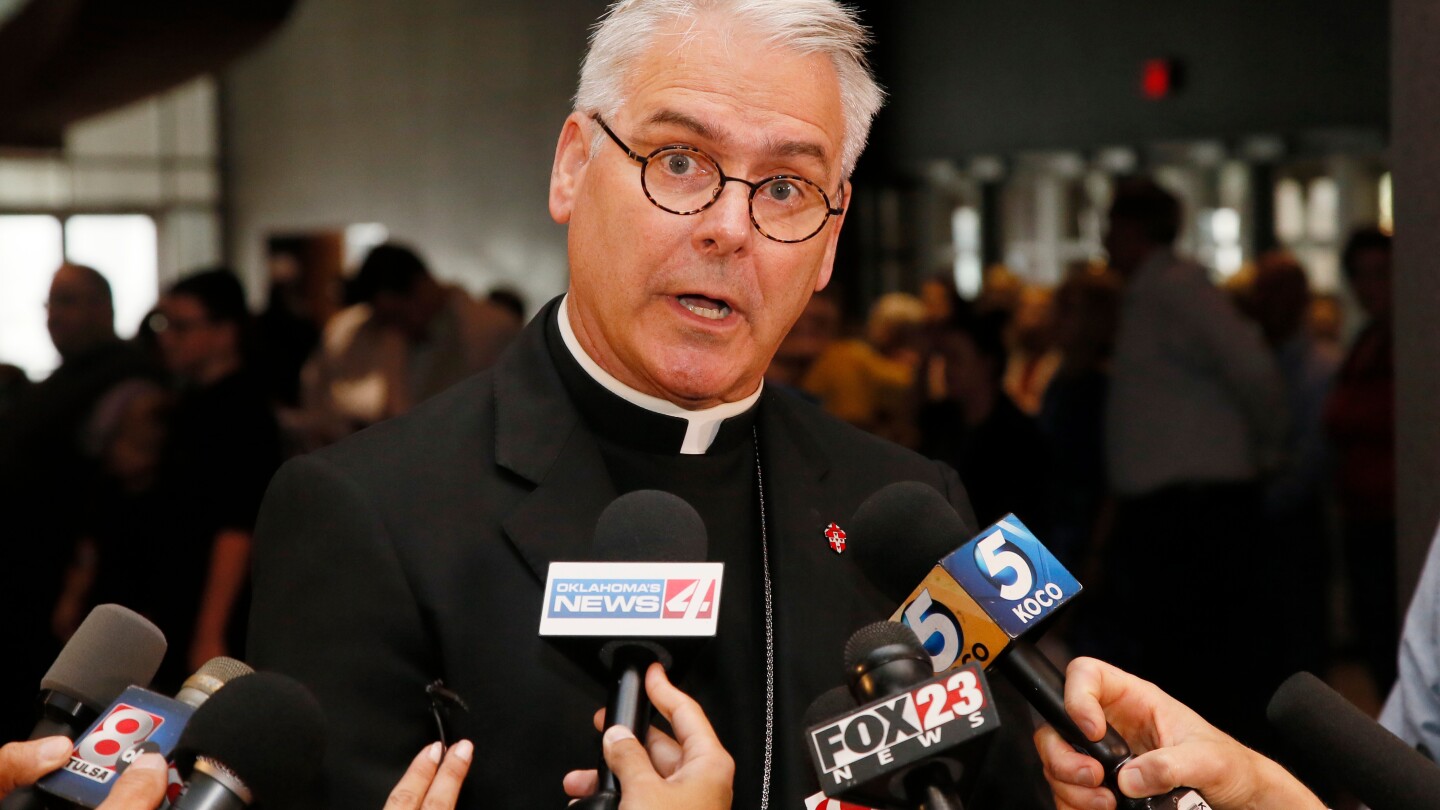
U.S. Catholic bishops elected Archbishop Paul Coakley of Oklahoma City as their new president on Tuesday, signaling a continued conservative direction as the church prepares to navigate President Donald Trump’s second term in office.
The election took place during the bishops’ annual fall meeting in Baltimore, where Coakley emerged victorious after three rounds of voting. He defeated Bishop Daniel Flores of Brownsville, Texas, who is widely regarded as a centrist voice within the conference. Flores was subsequently elected as vice president.
Coakley, who previously served as the conference’s secretary, has established himself as a conservative figure within the American Catholic hierarchy. He serves as an adviser to the Napa Institute, an influential organization of conservative Catholic leaders and donors. His election reinforces the U.S. bishops’ rightward tilt on cultural and social issues, even as they prepare to challenge the Trump administration on immigration policies.
The selection comes at a time of notable tension between American church leadership and the Vatican. Many U.S. bishops had maintained an uneasy relationship with Pope Francis during his papacy, and similar dynamics appear to be continuing under his successor, Pope Leo XIV, who has emphasized care for marginalized communities, environmental protection, and addressing poverty.
“In the long conflict between many U.S. bishops and Francis that Leo inherits, this is not a de-escalating step,” noted Steven Millies, professor of public theology at the Catholic Theological Union in Chicago.
Coakley’s conservative credentials include his public support in 2018 for Archbishop Carlo Maria Viganò, an outspoken critic of Pope Francis who was later excommunicated for divisive positions. The election also saw Coakley prevail over Bishop Robert Barron of Minnesota’s Winona-Rochester diocese, another prominent conservative known for his successful Catholic media ministry.
While the conference leadership may be shifting further rightward, observers note that Flores’ selection as vice president could indicate a potential future change in direction. Flores has led U.S. bishops’ participation in the Vatican’s synod process aimed at modernizing church approaches, and as a Latino bishop from a border diocese, he has been a strong advocate for migrants while maintaining traditional Catholic positions on abortion and LGBTQ+ issues.
“The election of Flores as vice president suggests the U.S. conference may eventually, cautiously open itself to the church’s new horizons,” said David Gibson, director of Fordham University’s Center on Religion and Culture.
Immigration policy appears to be one area where even conservative bishops find common ground in opposition to Trump administration policies. During their meeting, the bishops worked on crafting a statement regarding immigration, reflecting growing concerns about enforcement tactics that have affected Catholic communities.
Reports indicate that fear of immigration enforcement has reduced Mass attendance in some parishes, while clergy have struggled to provide pastoral care and sacraments to detained immigrants. The U.S. bishops previously shuttered their refugee resettlement program after federal funding was cut during Trump’s first term.
Bishop Kevin Rhoades of Indiana’s Fort Wayne-South Bend diocese, who serves on Trump’s Religious Liberty Commission, emphasized that access to worship is a fundamental concern. “That’s an issue of the right to worship,” he said. “One doesn’t lose that right when one is detained, whether one is documented or undocumented.”
In a letter sent to Pope Leo from their meeting, the bishops affirmed they “will continue to stand with migrants and defend everyone’s right to worship free from intimidation.” The letter acknowledged support for “secure and orderly borders” but emphasized they “cannot remain silent in this challenging hour while the right to worship and the right to due process are undermined.”
Pope Leo has recently called for “deep reflection” in the United States about detention practices, noting that “many people who have lived for years and years and years, never causing problems, have been deeply affected by what is going on right now.”
Coakley succeeds outgoing president Archbishop Timothy Broglio of the Military Services and will serve a three-year term leading the influential conference of approximately 200 active U.S. Catholic bishops.
Fact Checker
Verify the accuracy of this article using The Disinformation Commission analysis and real-time sources.

18 Comments
The selection of Archbishop Coakley as the new president of the U.S. Catholic bishops is a clear shift towards a more conservative direction for the church. His background and affiliations suggest he will likely lead the bishops to take stronger stances on cultural issues during Trump’s second term.
It will be crucial to monitor how Coakley’s leadership impacts the church’s relationship with the Vatican, especially given Pope Francis’s more progressive approach on many social and political matters.
This news about the U.S. Catholic bishops’ leadership change is quite intriguing. The election of Archbishop Coakley, a known conservative figure, could signal a rightward tilt in the church’s priorities and public stances during Trump’s second term.
Coakley’s ties to the Napa Institute, an organization of conservative Catholic leaders and donors, suggests he may align the bishops’ agenda more closely with the Trump administration’s cultural and social policies.
This news about the U.S. Catholic bishops’ leadership change is quite intriguing. The election of Archbishop Coakley, a known conservative figure, could signal a shift in the church’s priorities and public stances on social and cultural issues during Trump’s second term.
It will be important to monitor how Coakley’s leadership impacts the relationship between the U.S. bishops and the Vatican, especially given the more progressive approach taken by Pope Francis on many issues.
This seems like a significant shift in the leadership of the U.S. Catholic bishops. The selection of a more conservative figure like Archbishop Coakley could signal a continued focus on cultural and social issues, even as the church navigates the Trump administration’s policies.
It will be interesting to see how Coakley’s leadership impacts the relationship between the U.S. bishops and the more progressive Pope Francis.
This news about the U.S. Catholic bishops’ leadership change is quite significant. The election of a conservative figure like Archbishop Coakley indicates the church may prioritize cultural and social issues over other priorities during the Trump administration’s second term.
Coakley’s ties to the Napa Institute suggest he is closely aligned with influential conservative Catholic donors and leaders. This could shape the bishops’ agenda and policy positions in the coming years.
This news about the Catholic bishops’ leadership selection seems to reflect the continued polarization within the church in the U.S. It will be critical to monitor how Coakley’s conservative views impact the church’s policies and engagement with the Trump administration.
The election of Coakley could signal a shift away from the more moderate approach taken by his predecessor, Bishop Flores. This could have significant implications for the church’s public stances on social and political issues.
The selection of Archbishop Coakley as the new president of the U.S. Catholic bishops is a noteworthy development. His conservative leanings and affiliations with organizations like the Napa Institute suggest the church may take a more hardline stance on cultural issues during Trump’s second term.
It will be important to see how Coakley’s leadership affects the relationship between the U.S. bishops and the Vatican, especially given Pope Francis’s more progressive approach.
The selection of Archbishop Coakley as the new president of the U.S. Catholic bishops is a noteworthy development that could have significant implications for the church’s approach to social and political issues during Trump’s second term.
Coakley’s conservative leanings and affiliations with organizations like the Napa Institute suggest he may lead the bishops to take a more hardline stance on cultural issues, potentially creating tension with the Vatican’s leadership under Pope Francis.
I’m curious to learn more about Coakley’s background and views. As a conservative figure, how might his leadership shape the church’s priorities and stances on important issues during Trump’s second term?
The election of Coakley suggests the U.S. bishops want to take a firmer stance on cultural issues, potentially creating more tension with the Vatican’s direction under Pope Francis.