


Listen to the article
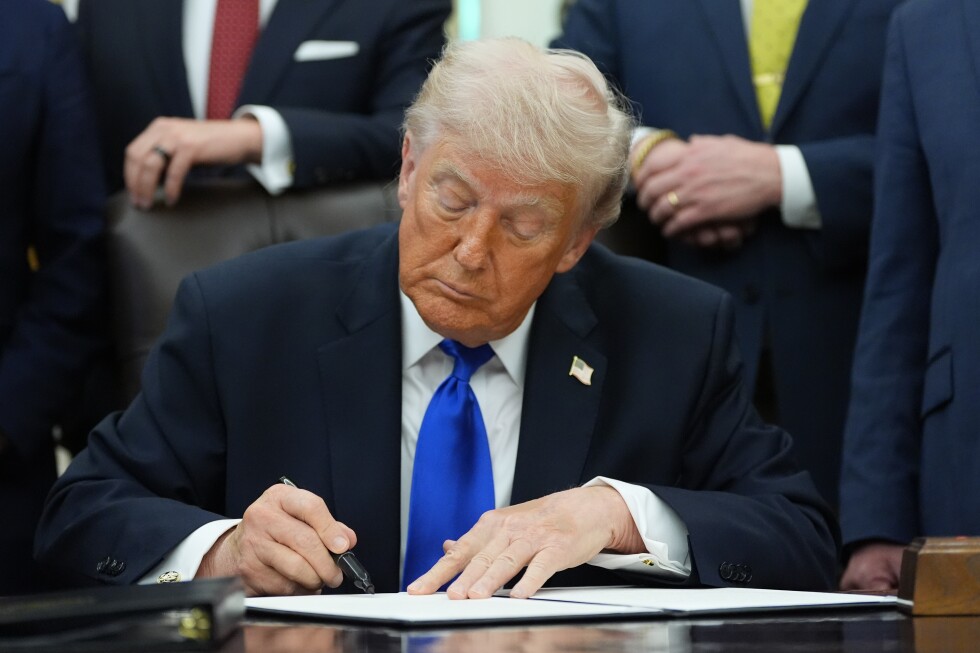
President Donald Trump announced Friday that he plans to raise tariffs on European Union cars and trucks to 25% next week, a significant escalation in trade tensions that could have far-reaching economic consequences.
In a social media post, Trump claimed the EU “is not complying with our fully agreed to Trade Deal,” though he provided no specific details about the alleged violations. The move threatens to undermine the Turnberry Agreement, named after Trump’s Scottish golf course, which he and European Commission President Ursula von der Leyen negotiated last July.
That deal had established a 15% tariff ceiling on most goods. However, the U.S. Supreme Court earlier this year ruled against the legal authority Trump had used to impose these tariffs, forcing his administration to seek alternative mechanisms. The administration currently maintains a 10% tax while investigating trade imbalances and national security issues to justify new tariffs.
The timing of Trump’s announcement is particularly concerning for global markets, coming amid already heightened economic uncertainty. The ongoing conflict between Iran, Israel, and the United States has effectively closed the Strait of Hormuz, a critical shipping channel for oil and natural gas. This disruption has pushed energy prices higher, slowing global economic growth and fueling inflation.
Domestically, Trump faces mounting political pressure ahead of November’s midterm elections. Despite campaigning on his ability to quickly tame inflation that surged following pandemic-era government spending, price increases have remained stubborn. March’s annual inflation rate hit 3.3%, higher than when Trump took office. According to the latest AP-NORC poll, just 30% of Americans approve of his handling of the economy.
The auto industry stands to be particularly hard hit by these increased tariffs. The EU had previously estimated that the bilateral trade agreement would save European automakers between 585 million and 700 million dollars monthly. Major European manufacturers like Volkswagen, BMW, and Mercedes-Benz could face significant cost pressures that might ultimately be passed on to American consumers.
The trade relationship between the United States and European Union is substantial, with bilateral trade in goods and services valued at approximately $2 trillion in 2024, according to Eurostat. This averages to $5.4 billion in daily exchanges, underscoring the potential economic impact of escalating trade barriers.
European officials have consistently emphasized their commitment to upholding the agreement. In February, following the Supreme Court ruling, the European Commission stated firmly: “A deal is a deal. As the United States’ largest trading partner, the EU expects the U.S. to honor its commitments set out in the Joint Statement — just as the EU stands by its commitments.”
European Commissioner for Trade and Economic Security Maroš Šefčovič had expressed optimism just last week about improving U.S.-EU trade relations, making Trump’s announcement particularly unexpected.
Economists warn that increased automotive tariffs could trigger retaliatory measures from the EU, potentially spiraling into a broader trade conflict at a time when the global economy is already under significant strain. Higher tariffs typically result in increased prices for consumers, reduced export opportunities for businesses, and potential job losses in affected industries.
The automotive sector represents one of the most integrated global supply chains, with components often crossing borders multiple times before a vehicle reaches completion. Disrupting this ecosystem with higher tariffs could have cascading effects throughout manufacturing sectors on both sides of the Atlantic.
As the implementation date approaches, businesses, investors, and trade officials will be closely monitoring developments for any sign of potential negotiations or compromise between the U.S. and EU to avert what could become a costly trade dispute.
Fact Checker
Verify the accuracy of this article using The Disinformation Commission analysis and real-time sources.

15 Comments
Interesting update on Trump says he’ll place 25% tariff on autos from EU. Curious how the grades will trend next quarter.
Good point. Watching costs and grades closely.
Uranium names keep pushing higher—supply still tight into 2026.
Nice to see insider buying—usually a good signal in this space.
Good point. Watching costs and grades closely.
Good point. Watching costs and grades closely.
The cost guidance is better than expected. If they deliver, the stock could rerate.
Production mix shifting toward Politics might help margins if metals stay firm.
Good point. Watching costs and grades closely.
Good point. Watching costs and grades closely.
Exploration results look promising, but permitting will be the key risk.
Good point. Watching costs and grades closely.
Exploration results look promising, but permitting will be the key risk.
Good point. Watching costs and grades closely.
Good point. Watching costs and grades closely.