


Listen to the article
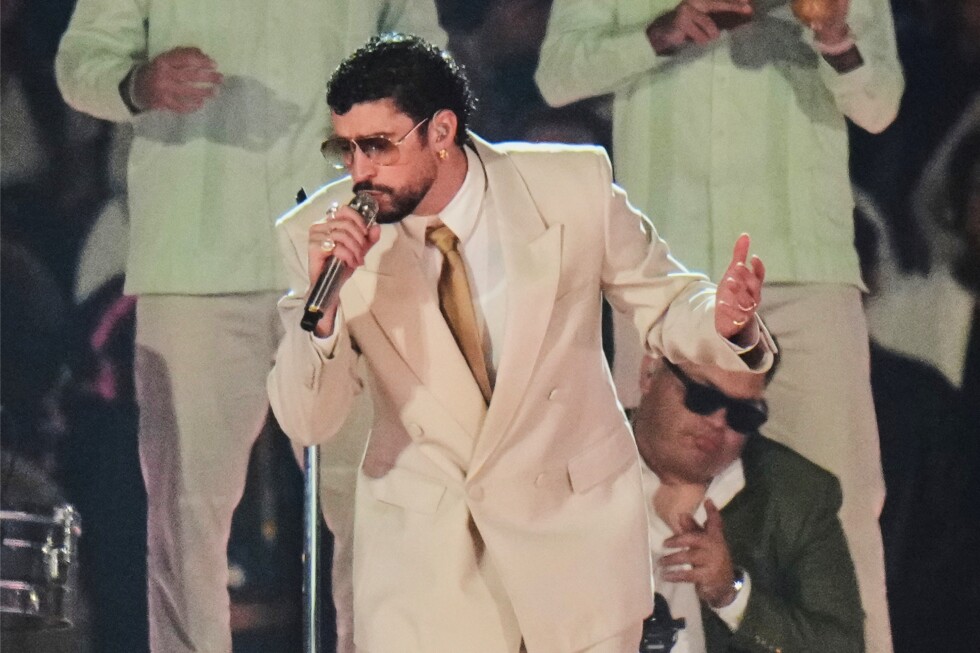
Bad Bunny’s upcoming Super Bowl halftime performance has ignited a cultural phenomenon as fans race to learn Spanish before the big show on Sunday. The Puerto Rican superstar, who is expected to perform entirely in Spanish, issued a playful challenge during his “Saturday Night Live” appearance in October, saying in English: “If you didn’t understand what I just said, you have four months to learn!”
The singer’s decision to perform in Spanish comes at a politically charged moment in the United States. Bad Bunny, born Benito Antonio Martínez Ocasio, has been vocal in his opposition to former President Donald Trump’s immigration policies. Last year, he canceled the U.S. portion of his tour, citing concerns that Immigration and Customs Enforcement (ICE) agents might target his fans.
His cultural momentum reached new heights last weekend when his album “Debí Tirar Más Fotos” made history as the first Spanish-language album to win the Grammy for Album of the Year. During his acceptance speech for an earlier award, Bad Bunny made a clear political statement, declaring: “Before I say thanks to God, I’m going to say ICE out. We’re not savage, we’re not animals, we’re not aliens. We are humans and we are Americans.”
Across social media platforms, a vibrant community has emerged with Puerto Ricans explaining slang used in Bad Bunny’s lyrics while non-Spanish speakers document their language learning journeys.
Niklaus Miller, 29, has dedicated months to learning Bad Bunny’s lyrics. “I am delusional enough to be like ‘this would be easy. I could pick it up pretty quickly,'” Miller said. For him and many others, the effort represents more than just preparation for a performance. “It felt like a form of protest,” he explained. “What can I do right now besides what everyone is doing that is trying to help? It just feels good.”
Miller noted that his videos have resonated with viewers who watch with their parents, telling him they feel seen and appreciated. While he hasn’t mastered Bad Bunny’s entire catalog, he has learned portions of six songs he believes will feature in the halftime show, including “Tití Me Preguntó,” “DtMF,” and “Baile Inolvidable.”
O’Neil Thomas, a 28-year-old New York City actor and content creator, began learning Bad Bunny’s music immediately after the halftime announcement. “I was just so excited because he wasn’t an artist that I expected,” Thomas said. “And given how we are right now with the state of the country, I think he is the perfect person to headline such a humongous stage.”
Thomas’s TikTok videos showing his learning process have garnered positive responses, particularly from Puerto Ricans who appreciate someone outside their community taking an interest in their culture.
Vanessa Díaz, associate professor of Chicano and Latino studies at Loyola Marymount University and co-author of “P FKN R: How Bad Bunny Became the Global Voice of Puerto Rican Resistance,” notes that this trend isn’t entirely new. “People were already starting to make the effort with learning Spanish as a result of their interest in Latin music,” she said. “The Super Bowl itself is an additional push for a trend that was already happening.”
Spanish is the second most spoken language at home in the United States after English, with over 13% of residents age 5 and older speaking it, according to U.S. Census data.
Both Miller and Thomas acknowledge the unique challenges of learning Puerto Rican Spanish in a compressed timeframe. “The amount of times I’ve pressed rewind just to get a phrase, I can’t even count,” Thomas said. Miller added that the Puerto Rican dialect’s speed and tendency to truncate words makes consistent practice essential.
Bad Bunny’s selection as the halftime performer has proven divisive. Trump has called the choice “ridiculous,” while some conservatives have labeled it “anti-American”—despite the fact that Puerto Ricans are U.S. citizens by birth. Turning Point USA is even staging an alternative “All-American Halftime Show” featuring Kid Rock.
This controversy unfolds against a backdrop of increased targeting of Latino and Spanish-speaking communities in immigration enforcement actions. NFL Commissioner Roger Goodell has defended the selection, citing Bad Bunny’s immense popularity.
Petra Rivera-Rideau, associate professor of American studies at Wellesley College and co-author of “P FKN R,” points to a long history of Spanish being stigmatized in the U.S. Bad Bunny’s prominence is changing that narrative, making Spanish something people aspire to learn.
While Díaz doesn’t expect the performance to completely transform perceptions of Latinos in America, she believes it will spark important conversations, especially given Bad Bunny’s visibility “at a time when the U.S. is targeting Latinos and migrants and Spanish speakers or even those who are just perceived to be any of those things in a way that we haven’t seen in our lifetimes.”
Fact Checker
Verify the accuracy of this article using The Disinformation Commission analysis and real-time sources.

12 Comments
Bad Bunny’s political activism and championing of the Latin community is really admirable. Performing in Spanish at the Super Bowl is a bold statement that could inspire more inclusive representation in mainstream US media.
Agreed, it’s great to see an artist using their platform to make a meaningful social and political impact.
As someone who appreciates Latin music and culture, I’m really looking forward to seeing Bad Bunny take the Super Bowl stage. This could be a breakthrough moment for Spanish-language artists in the US.
This is a really exciting cultural moment. I hope Bad Bunny’s performance inspires more diverse representation and language inclusivity in mainstream American media and entertainment.
The fact that a Spanish-language album won the Grammy for Album of the Year is a major milestone. Bad Bunny is really helping to elevate Latin music and culture on the global stage.
I’m curious to see how fans respond to the challenge of learning Spanish before the halftime show. Will this spark a new wave of Spanish language learning in the US?
Fascinating to see a Latin artist like Bad Bunny take the Super Bowl stage and challenge fans to learn Spanish. This could be a major cultural moment that bridges language gaps and celebrates diversity.
Bad Bunny’s decision to perform in Spanish is a bold political statement against Trump’s harsh immigration policies. I admire his commitment to representing the Latin community.
Absolutely, it’s great to see artists using their platform to take a stand on important social and political issues.
As someone who doesn’t speak Spanish, I’m a bit apprehensive about not understanding the lyrics during the halftime show. But I’m open to learning and experiencing something new!
Bad Bunny’s Grammy win for a Spanish-language album is a huge milestone. It shows that Latin music is gaining more mainstream recognition and popularity in the US.
I’m a bit skeptical about how many fans will actually take the time to learn Spanish before the halftime show. But I’m intrigued to see how this all plays out and what kind of response it generates.