


Listen to the article
U.S. and Israeli strikes against Iran are testing Democratic unity as the party navigates complex political terrain heading into midterm elections. While Democrats have maintained relative cohesion in opposing President Donald Trump’s policies on immigration and the economy in recent months, the military action threatens to expose divisions within the party.
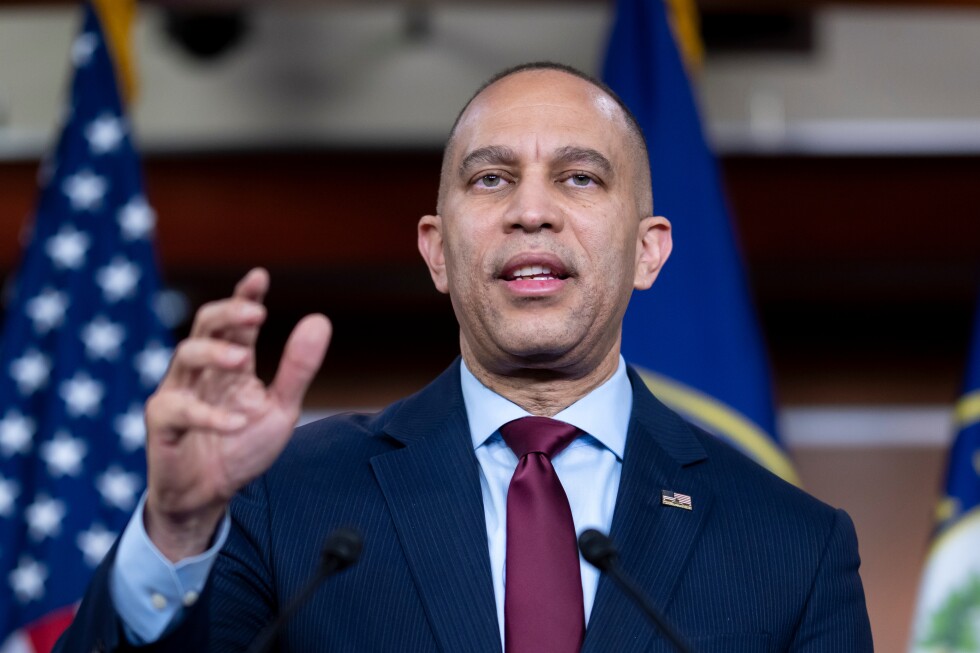
Initially, Democratic leaders balanced condemnation of Iran’s Supreme Leader Ayatollah Ali Khamenei, who was killed over the weekend, with calls for Congress to quickly pass a war powers resolution to limit Trump’s military options. House Democratic Leader Hakeem Jeffries has pushed for an Iran vote this week, emphasizing the party’s desire to place a check on presidential war powers.
“We need a strong, clear, vocal united opposition party to fight back and put a check on his power,” said Daniel Biss, mayor of Evanston, Illinois, who is competing in a Democratic congressional primary.
However, fissures have emerged as some Democrats, particularly those with strong pro-Israel stances, express reservations about restraining military action. Representatives Greg Landsman of Ohio and Josh Gottheimer have indicated they won’t support the war powers measure. Pennsylvania Senator John Fetterman, who previously backed a similar resolution regarding Venezuela, has broken ranks with fellow Democrats on the Iranian measure, drawing criticism from party leadership.
“John Fetterman knows better,” Jeffries remarked Monday on CNN.
The situation is equally challenging for Republicans, with supporters of Trump’s “America First” movement questioning how the strikes align with his previous criticism of military interventions abroad. Trump’s statement that operations could last four to five weeks without articulating a clear exit strategy has raised concerns about American casualties and public support for a prolonged conflict.
Economic implications could potentially benefit Democrats, as rising gas prices and market volatility might reinforce their argument that Trump is disconnected from everyday financial struggles facing Americans.
The military action comes at a particularly delicate moment for Democrats, who have faced intense internal debate over the party’s relationship with Israel during the Gaza war. Former President Joe Biden’s unwavering support for Israel during the 2024 campaign alienated younger voters critical of Palestinian treatment in Gaza. Vice President Kamala Harris subsequently struggled to recapture support from these younger demographics that are vital to Democratic electoral success.
Recent polling suggests American attitudes toward Israel have shifted significantly. Three years ago, 54% of Americans sympathized more with Israelis compared to 31% for Palestinians, according to Gallup polling. Now, support is nearly evenly divided, with 41% expressing greater sympathy for Palestinians and 36% for Israelis.
Early polls indicate Americans’ initial reactions to the airstrikes lean negative. A CNN poll conducted via text message over the weekend found approximately 60% of U.S. adults disapproved of the military action in Iran. A Washington Post snap poll showed about half opposed the strikes, with 39% supporting and roughly 10% undecided. Democrats and independents drove most of the disapproval, while Republicans were more supportive.
The CNN poll also revealed that a majority of Americans believe Trump should be required to get congressional approval for further military action in Iran—a position held by about 80% of Democrats and 70% of independents, compared to just 30% of Republicans.
The political impact of the Iran strikes could emerge as soon as Tuesday during the first primary elections of this year’s midterm campaign. In North Carolina, Durham County Commissioner Nida Allam is challenging two-term Representative Valerie Foushee with backing from progressive groups. While Foushee has rejected contributions from pro-Israel groups this cycle and opposes “Trump’s illegal war with Iran,” Allam—who would be North Carolina’s first Muslim member of Congress—quickly released a video criticizing Trump for “starting another endless war.”
In Illinois, the American Israel Public Affairs Committee (AIPAC) and affiliated groups have criticized Biss ahead of the March 17 primary as he seeks to succeed retiring Representative Jan Schakowsky. Biss noted the “backlash I’m hearing people have against AIPAC, their MAGA-aligned money and their Trump-aligned policy agenda.”
AIPAC spokesman Patrick Dorton defended the organization’s stance, saying “the key distinction will be between those who recognize that Iran is a murderous regime that tortures women for leaving their hair uncovered, hangs gay people, and executes peaceful democratic protestors, and those who will turn a blind eye to the regime’s atrocities.”
As both parties navigate the complex political implications of military action in Iran, the emerging dynamics could significantly shape the upcoming midterm elections where Democrats hope to reclaim the House majority.
Fact Checker
Verify the accuracy of this article using The Disinformation Commission analysis and real-time sources.

7 Comments
The strikes on Iran are certainly a test for Democratic unity, especially with some representatives expressing reservations about restraining military action. It will be interesting to see how they reconcile the need for checks on presidential power with concerns over Iran’s behavior.
You raise a good point. Finding the right approach that addresses Iran’s actions while upholding democratic principles is crucial. It will require nuance and compromise from all sides.
This is a complex geopolitical issue with no easy answers. I’m curious to see how the Democrats navigate this – maintaining unity on this Iran situation while also holding the administration accountable could be a delicate balance.
This is a pivotal moment for the Democrats to demonstrate their ability to provide coherent, principled opposition while also acknowledging the gravity of the situation with Iran. It will be worth watching closely how they approach this test of their unity.
I appreciate the Democrats’ desire to limit presidential war powers, but I can understand the concerns of representatives with strong pro-Israel stances. This is a delicate balancing act with high stakes.
Agreed. Navigating the competing interests and priorities here will be challenging for the Democrats. Thoughtful, nuanced leadership will be key to maintaining unity while addressing the complexities of the situation.
As someone who follows energy and geopolitics, I’m quite interested in how this situation develops. The Democrats’ response could have significant implications for the party’s positioning ahead of the midterms.