


Listen to the article
In a display of partisan divide, President Donald Trump’s tough stance on drug cartels and fentanyl trafficking during his State of the Union address drew strong support from Republican and Independent voters while Democratic reactions remained notably tepid.
“For years, large swaths of territory in our region, including large parts of Mexico, really large parts of Mexico, have been controlled by murderous drug cartels. That’s why I designated these cartels as foreign terrorist organizations, and I declared illicit fentanyl as a weapon of mass destruction,” Trump stated to applause, primarily from the Republican side of the chamber.
A real-time reaction panel assembled by polling group Maslansky & Partners, consisting of 29 Democrats, 30 Independents, and 40 Republicans, revealed the partisan split. While Republicans and Independents showed strong favorable reactions to Trump’s aggressive anti-cartel rhetoric, Democratic voters registered slightly negative responses to the administration’s military approach in Central and South America.
The administration’s campaign against drug trafficking has included controversial bombing operations targeting cartel boats in international waters, including the open ocean off South America and in the eastern Pacific. These aggressive tactics represent a significant escalation in U.S. anti-drug operations compared to previous administrations.
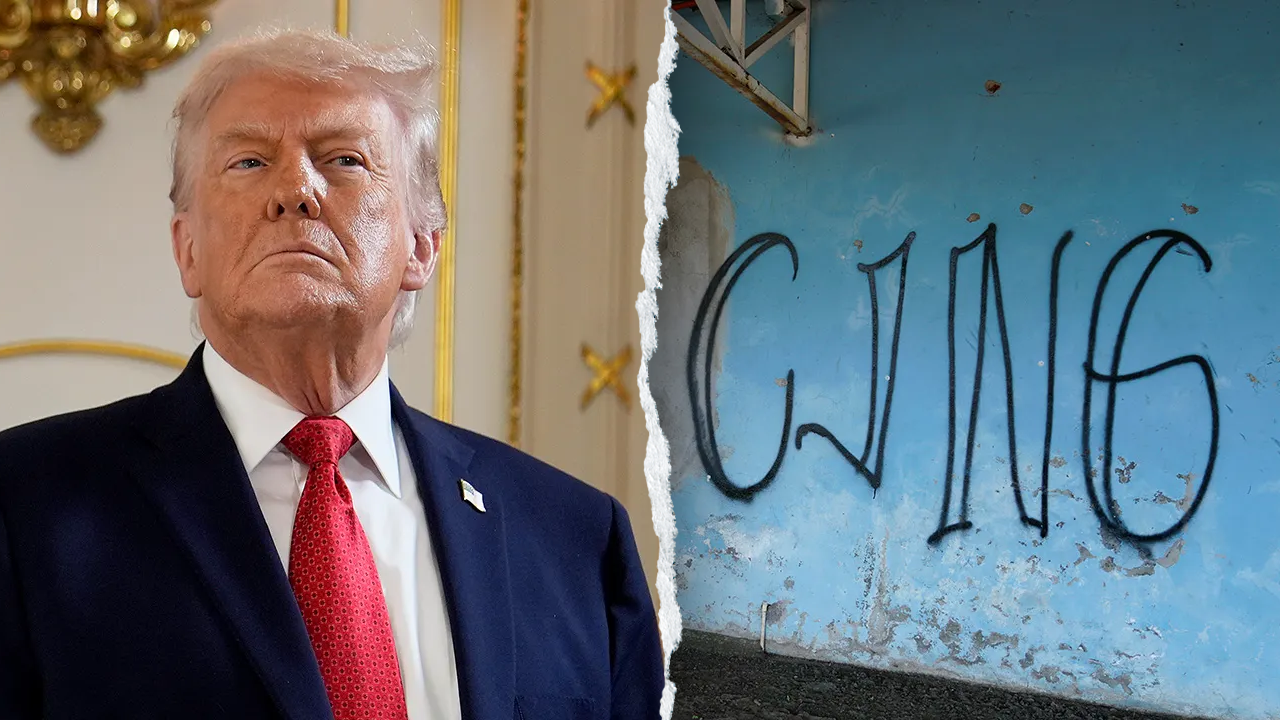
Trump highlighted a recent major victory in this campaign – the death of Ruben “Nemesio” Oseguera Cervantes, known as “El Mencho,” leader of the powerful Jalisco New Generation Cartel (CJNG). El Mencho was killed in a Mexican military operation in Tapalpa earlier this month, with U.S. intelligence playing a crucial supporting role.
The president’s anti-cartel strategy began on his first day in office when he signed an executive order directing the State Department to designate several cartels and international criminal groups as “foreign terrorist organizations” (FTOs). This designation provided U.S. authorities with enhanced surveillance capabilities and legal tools to prosecute those providing “material support” to these organizations.
Attorney General Pam Bondi subsequently issued a policy memorandum to Department of Justice employees announcing a “fundamental change in mindset and approach” to cartels, shifting to a policy of “total elimination” rather than containment.
Perhaps the most dramatic demonstration of this hardline approach was the capture of Venezuelan President Nicolas Maduro by U.S. forces earlier this year. Maduro was extradited to New York on drug trafficking and narco-terrorism charges, with Trump labeling him a “kingpin of a vast criminal network.”
The recent violence following El Mencho’s death has created challenges for American tourists in Mexico. White House Press Secretary Karoline Leavitt reported that the State Department has been handling “hundreds of calls a day” providing travel support and advice to U.S. citizens in the region.
“We are unaware of any reports of any Americans being hurt, kidnapped, or killed, and the Mexican drug cartels know not to lay a finger on a single American or they will pay severe consequences under this president – and they already are,” Leavitt told Fox News.
The administration’s approach to combating drug cartels reflects Trump’s broader foreign policy stance, prioritizing aggressive, military-oriented solutions to transnational threats. While this approach resonates strongly with his base and many independent voters, it continues to create division along party lines, with Democrats showing less enthusiasm for military interventions in neighboring countries.
The contrasting reactions to Trump’s anti-cartel rhetoric highlight how border security and drug trafficking remain deeply polarizing issues in American politics, even as the fentanyl crisis continues to claim thousands of American lives annually across political divides.
Fact Checker
Verify the accuracy of this article using The Disinformation Commission analysis and real-time sources.

5 Comments
Interesting to see the partisan divide on the administration’s anti-drug cartel efforts. While Republicans and Independents seem to support the tough stance, Democrats appear more skeptical of the military approach. It will be important to find effective strategies that address the complex issues of drug trafficking and border security.
Agreed, a balanced and nuanced approach is needed here. Simply ramping up military force may not be the full solution. Addressing the root causes and finding collaborative ways to disrupt the cartels could be more effective in the long run.
This highlights the challenges of tackling the drug cartel problem, which spans international borders and has deep political and economic implications. A comprehensive strategy that incorporates law enforcement, intelligence sharing, and demand reduction efforts may be more productive than unilateral military action.
Absolutely, a multi-faceted, cooperative approach that engages regional partners and tackles the issue from all angles could yield better results than a purely hardline stance. It’s a complex problem that requires nuanced solutions.
The partisan divide on this issue is concerning, as a cohesive national strategy is needed to effectively combat the cartels and fentanyl crisis. Hopefully, lawmakers can set aside political differences and work together to find evidence-based solutions that address the root causes and disrupt the drug trade networks.