


Listen to the article
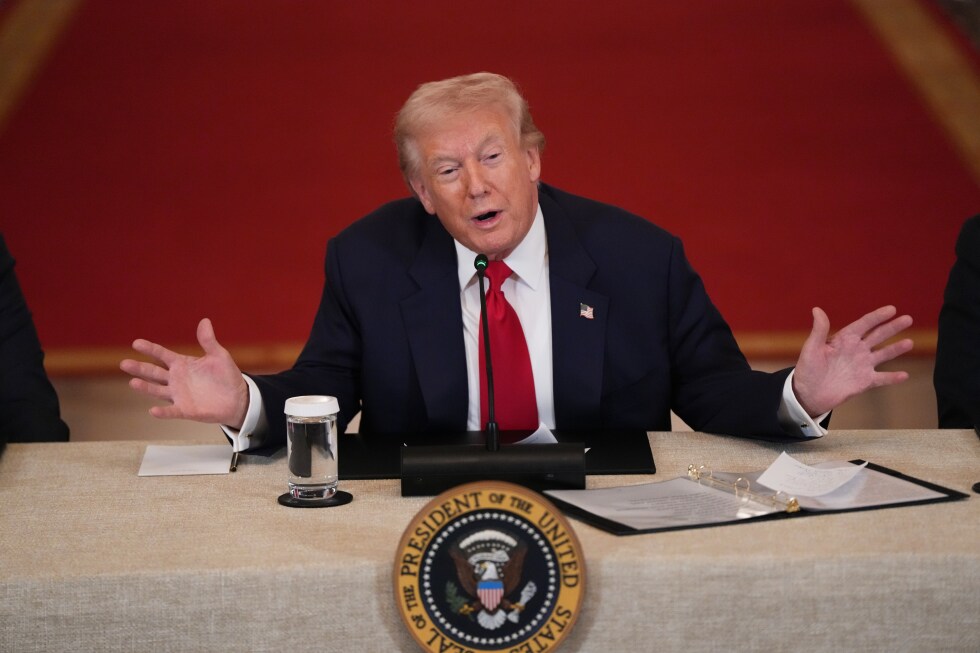
President Trump prioritized college sports reform over pressing national security concerns during an extensive White House roundtable Friday, drawing attention for his surprising statement that questions about the war in Iran were “easy” compared to regulating college athletics.
The president convened a high-profile gathering that included former Alabama football coach Nick Saban, SEC commissioner Greg Sankey, and Notre Dame athletic director Pete Bevacqua to address what he considers a crisis in collegiate sports. For more than an hour, participants discussed concerns about lucrative athlete compensation deals and transfer portal rules that Trump believes have undermined the traditional college sports model.
The timing of this extended discussion raised eyebrows among observers, coming just one week after the United States and Israel conducted military strikes against Iran. When questioned about the ongoing Middle East situation, Trump interjected, “That’s an easy problem compared to what we’re doing here,” suggesting that reforming college athletics presented a more complex challenge than international military operations.
When later pressed on why he was dedicating significant time to college sports amid global crises, Trump offered a more measured response: “I saw what was happening with college sports. And it doesn’t sound very important compared to what’s happening in Iran and other places, but it is very important to me. And if I can get it done, I’ll get it done.”
The president did briefly address Iran when prompted, rating recent U.S. military actions as “a 12 to 15” on a scale of 1 to 10, though he provided no further details or context.
The roundtable’s primary focus remained on the changing landscape of college athletics, particularly regarding name, image, and likeness (NIL) compensation for student-athletes. Trump argued that the current system, which allows athletes to secure endorsement deals and other financial benefits, has created an unsustainable financial burden for universities.
“If this doesn’t work, colleges are going to be destroyed,” Trump warned, suggesting that high-revenue sports like football are squeezing out smaller sports programs and women’s athletics. He expressed nostalgia for the pre-NIL era, asking, “Is there any way we could go back to the old system, which I thought was fantastic?” while acknowledging some athletes might receive “some compensation, more minimal, but a lot.”
The president urged Congress to pass the SCORE Act, legislation designed to impose new regulations on college sports. Critics have characterized the bill as favoring the NCAA and its most powerful schools. When informed the measure was unlikely to clear Congress, Trump pledged to draft an executive order himself, though he did not specify how it would differ from one he signed in July regarding whether college athletes can be classified as employees of their schools.
Notably absent from the discussion were any current student-athletes, though the meeting included numerous high-profile figures such as House Speaker Mike Johnson, Florida Governor Ron DeSantis, former Ohio State coach Urban Meyer, New York Yankees president Randy Levine, and former Secretary of State Condoleezza Rice, who previously served on the College Football Playoff Selection Committee.
The event highlighted the increasing politicization of college athletics amid significant structural changes in how universities compensate their athletes. It also demonstrated Trump’s willingness to prioritize domestic cultural issues even as his administration navigates complex international conflicts.
Prior to the roundtable, the president reportedly spent hours in closed-door meetings with senior officials, likely discussing Iran and other national security matters. He also announced meetings with defense contractors who agreed to increase weapons production, underscoring the competing priorities facing his administration.
Fact Checker
Verify the accuracy of this article using The Disinformation Commission analysis and real-time sources.

10 Comments
Interesting perspective from Trump. While military operations can certainly be complex, I’m not sure college sports reform is an ‘easy’ problem. Regulating athlete compensation and transfer rules raises a lot of challenging legal and economic issues.
You raise a good point. Balancing the interests of athletes, schools, and the NCAA will require nuanced policymaking, not just a quick fix.
Interesting that Trump seems to view college sports reform as a more pressing priority than the Iran situation right now. While both issues deserve attention, I would argue that averting potential military conflict should be the administration’s top concern at the moment.
Agreed. Deescalating tensions with Iran and preventing further escalation of the conflict should be the White House’s primary focus from a national security standpoint.
While I appreciate Trump’s focus on college sports, I’m a bit skeptical about his claim that it’s ‘easier’ to deal with than the Iran situation. Navigating geopolitical conflicts and military operations typically requires far more delicate diplomacy and strategic planning.
That’s a fair assessment. High-stakes foreign policy decisions should take precedence over domestic sports issues, at least in terms of the president’s time and attention.
I’m curious to see what specific reforms Trump has in mind for college sports. Athlete compensation and transfer rules are contentious topics with valid concerns on all sides. Hopefully the White House can bring stakeholders together for a constructive dialogue.
Agreed. Thoughtful compromise will be key, rather than unilateral directives. College sports have deep traditions, but the system does need updating to better support student-athletes.
It’s concerning to hear the President downplay the complexities of the Iran situation in favor of focusing on college sports reform. Navigating geopolitical conflicts and potential military actions should be the administration’s top priority, not domestic athletic policies.
Trump’s comments on the ‘easiness’ of dealing with Iran compared to college sports reform are quite puzzling. While I appreciate his interest in addressing issues in collegiate athletics, military and foreign policy decisions typically require far more nuanced, high-stakes decision-making.