


Listen to the article
In a move that could significantly impact public discourse on abortion, a United Nations agency is advocating for stricter controls on what it terms abortion “misinformation” across digital platforms. The stance has ignited fresh debate about the intersection of free speech, reproductive rights, and content moderation in online spaces.
The UN’s Human Reproduction Program (HRP), operating within the World Health Organization (WHO), recently published the first in a series of papers examining abortion information through a human rights lens. The publication presents abortion access as an established right within the framework of “sexual and reproductive health and rights,” despite this terminology lacking formal definition in internationally negotiated agreements.
Critics note that the paper relies heavily on recommendations from independent experts and committees as sources for human rights standards, though these bodies lack authority to establish new human rights beyond existing treaty language. Notably absent from the analysis is any reference to the consensus reached at the 1994 International Conference on Population and Development in Cairo, which affirmed that decisions regarding abortion’s legal status remain the sovereign prerogative of individual governments.
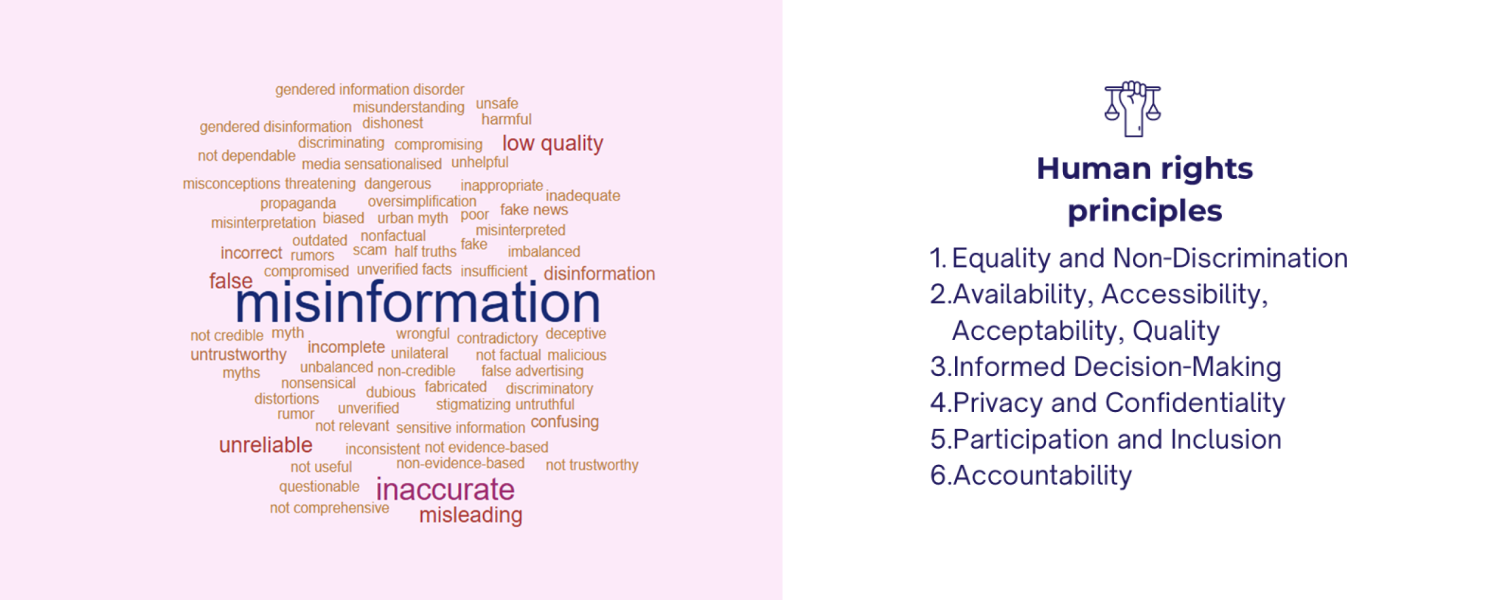
The HRP document distinguishes between “misinformation,” defined as false or misleading content shared without deceptive intent, and “disinformation,” which it describes as deliberately deceptive content that can “erode human rights protections and restrict access to evidence-based care.” This distinction forms the foundation of their argument for increased platform accountability.
In identifying examples of misinformation, the paper cites research claiming links between “inaccurate beliefs about fetal pain” and anti-abortion views. However, the research itself has drawn criticism for presenting a medical consensus on fetal pain perception that remains scientifically contested, while employing politically charged terminology like “anti-choice” to characterize certain survey participants.
The document specifically targets the U.S.-based Project 2025, alleging it contains strategies to “embed misinformation into federal governance” by altering agency mandates and policy language related to reproductive health. For this assertion, the HRP cites an article from Ms. Magazine, a publication with an established pro-abortion rights editorial position.
Religious institutions also fall under scrutiny, with the paper highlighting a Canadian Catholic hospital that blocked abortion clinic websites from its network. The authors express concern about what they describe as “a rising anti-rights movement in Ethiopia, aligned with the US Christian Right,” working to restrict abortion access. The paper suggests that religious ideologies, cultural beliefs, and gender stereotypes are routinely deployed to undermine established human rights standards.
While the document does address commonly recognized forms of health misinformation—such as unqualified individuals offering medical advice on platforms like TikTok or scammers marketing ineffective treatments—critics argue that its broader framing appears designed to categorize traditional religious and conservative viewpoints on abortion as harmful misinformation deserving of censorship.
The push comes amid growing global debates about content moderation and the responsibilities of digital platforms in monitoring and restricting potentially harmful information. Public health officials worldwide have increasingly called for stronger measures to combat health misinformation following the COVID-19 pandemic, though extending such frameworks to contentious social issues like abortion introduces complex questions about viewpoint diversity and free expression.
As subsequent papers in this series emerge, the recommendations may significantly influence how digital platforms approach content related to abortion and reproductive rights, potentially reshaping online discourse on one of society’s most divisive moral and political issues.
Fact Checker
Verify the accuracy of this article using The Disinformation Commission analysis and real-time sources.

16 Comments
This is a concerning development that could set a troubling precedent for restricting free speech, even on sensitive topics like abortion. I hope the UN’s proposals receive rigorous scrutiny and that any policy changes are carefully considered to avoid unintended consequences for public discourse.
I share your concerns. It’s crucial that the balance between protecting rights and preserving open dialogue is thoroughly examined before any policy changes are implemented. The implications of this move could be far-reaching.
While I understand the UN’s aim to protect reproductive rights, I have concerns about the potential chilling effect on free speech, especially around a sensitive and polarizing topic like abortion. This warrants careful consideration of the balance between rights.
I agree. Striking the right balance between protecting rights and preserving open dialogue is crucial. There are valid arguments on both sides that deserve a thorough, nuanced discussion.
This seems like a concerning precedent that could set a dangerous path for restricting important public discourse. I hope there is robust debate and scrutiny of the UN’s proposals before any policies are implemented.
Well said. The implications of this move could be far-reaching, and it’s crucial that all perspectives are heard and carefully weighed before any decisions are made.
While I understand the UN’s rationale, I worry that these kinds of restrictions could open the door to broader censorship and a chilling effect on important public discussions. Abortion is a highly contentious topic, and maintaining open dialogue is crucial, even if some views are controversial.
The UN’s stance on this issue is thought-provoking, but I have reservations about the potential impact on free speech. Abortion is a highly contentious and sensitive topic, and maintaining open, respectful dialogue is essential, even if some views are controversial.
Well said. It will be important to carefully monitor how this debate unfolds and ensure that any policy changes strike the right balance between protecting rights and preserving the free exchange of ideas.
This is a complex issue that touches on free speech, reproductive rights, and the role of international institutions. I’m curious to see how the debate unfolds and what the broader implications might be for online discourse.
You raise a good point. It will be interesting to follow how the UN’s stance is received and whether it leads to any tangible policy changes around content moderation.
This is a complex and sensitive issue that touches on fundamental rights and freedoms. I hope the UN’s proposals receive rigorous scrutiny and that any policy changes are carefully considered to avoid unintended consequences for free speech and public discourse.
Well said. It’s crucial that any actions in this area are thoroughly debated and that all stakeholders have a voice in the process. The balance between rights and freedoms needs to be thoughtfully maintained.
While I understand the UN’s intentions, I’m concerned about the potential for these kinds of restrictions to be applied more broadly and to have a chilling effect on important public discussions. Abortion is a highly contentious issue, and maintaining open dialogue is crucial, even if some views are controversial.
It’s interesting to see the UN taking this stance, though I share the concerns about the potential impact on free speech. Abortion is a complex, sensitive issue, and any efforts to regulate related discourse should be approached with great caution and stakeholder input.
I agree. This is a delicate balance, and it will be important to closely monitor how this issue evolves and whether the UN’s approach is well-received or faces significant pushback.