


Listen to the article
Brazil’s Supreme Court Begins Trial of Alleged Disinformation Operatives in Coup Conspiracy
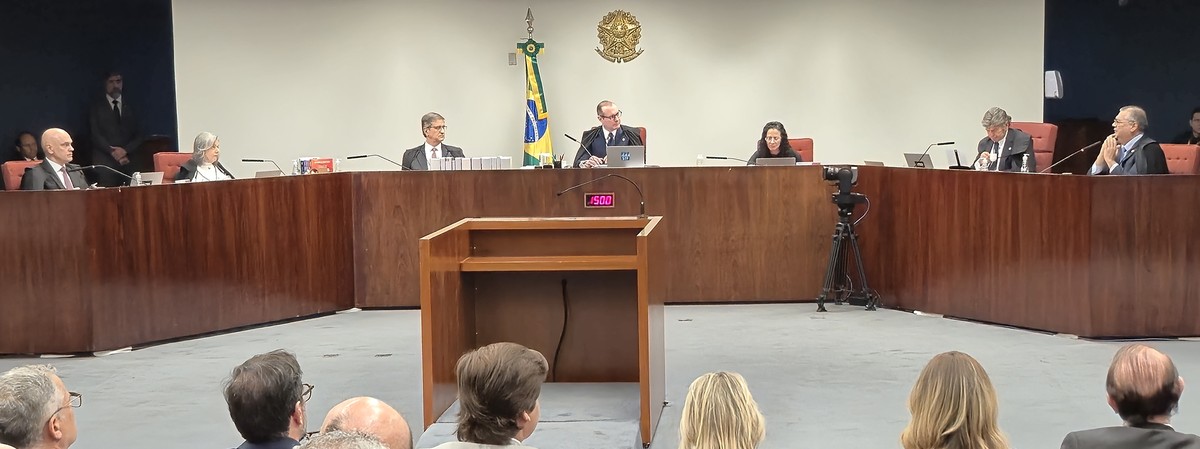
Brazil’s Supreme Court First Panel commenced on Tuesday the trial of seven defendants accused of orchestrating disinformation campaigns as part of the broader conspiracy to overthrow the country’s democratically elected government.
The defendants belong to what prosecutors have labeled the “fourth core” of the coup plot that sought to invalidate the 2022 presidential election results. According to the Office of the Prosecutor General (PGR), this group was specifically tasked with developing and implementing disinformation strategies targeting Brazil’s electoral system, democratic institutions, and public officials who refused to participate in the coup plan.
This trial marks the second group to face judgment in the sprawling case. In September, the court convicted all members of the “central core,” including former President Jair Bolsonaro, who received a 27-year prison sentence for his role in orchestrating the attempted coup.
The defendants in this phase include a mix of military officers and intelligence operatives: retired Army majors Ailton Gonçalves and Ângelo Martins Denicoli; engineer Carlos César Moretzsohn Rocha, who heads Instituto Voto Legal; Army sub-lieutenant Giancarlo Gomes Rodrigues, a former intelligence agent; Army Lieutenant Colonel Guilherme Marques de Almeida; federal police officer and former intelligence operative Marcelo Araújo Bormevet; and Army Colonel Reginaldo Vieira de Abreu.
All face serious charges including armed criminal organization, attempted violent abolition of the Democratic Rule of Law, attempted coup d’état, qualified property damage, and destruction of protected heritage sites.
Prosecutor General Paulo Gonet has characterized the group as a “misinformation cell” that operated in coordination with the central plotters, leveraging state resources to “distort sensitive information against Brazil’s electronic voting system and public authorities.” The prosecution’s case details how each defendant allegedly contributed to the conspiracy.
According to court documents, Ailton Barros acted under directives from General Walter Braga Netto, Bolsonaro’s 2022 running mate, to launch disinformation campaigns targeting military commanders who refused to support the coup plot. These attacks allegedly moved beyond online defamation to physical harassment outside the commanders’ homes, functioning as intimidation tactics.
The prosecution claims Denicoli produced fraudulent materials targeting Brazil’s electronic voting machines, while Rocha allegedly drafted the technical report that Bolsonaro’s Liberal Party used in its failed legal challenge to the election results before the Superior Electoral Court.
Intelligence operatives Gomes and Bormevet are accused of misusing the Brazilian Intelligence Agency’s (Abin) infrastructure to gather data beneficial to Bolsonaro’s efforts. Almeida allegedly transmitted false information about the voting system to Argentine influencer Fernando Cerimedo, who then broadcast claims questioning the election results.
Perhaps most alarming are the allegations against Colonel Abreu, who prosecutors say had knowledge of a plan dubbed “Green and Yellow Dagger” that contemplated the assassination of then-President-elect Luiz Inácio Lula da Silva, Vice-President-elect Geraldo Alckmin, and Supreme Court Justice Alexandre de Moraes, who oversees the coup-related cases.
Defense attorneys have submitted closing statements seeking full acquittal for all defendants. They argue the prosecution lacks proof of criminal elements in the alleged acts, has failed to establish organizational ties among the accused, and relies on weak evidence, particularly regarding statements made by Lieutenant Colonel Mauro Cid, Bolsonaro’s former aide-de-camp who turned state’s witness.
Several defense teams have challenged the validity of Cid’s plea bargain agreement, alleging procedural irregularities. They have also complained about violations of due process, claiming delayed access to evidence and insufficient time to review case materials.
The Supreme Court has already scheduled trials for the remaining components of the conspiracy. The “third core,” accused of pressuring military commanders to join the coup attempt, will face trial in November. Justice Flávio Dino has scheduled the trial for the “second core,” alleged to have drafted the actual “coup decree” and attempted to suppress voter turnout in Brazil’s Northeast during the 2022 elections, for December.
These proceedings represent a significant phase in Brazil’s judicial reckoning with the most serious threat to its democracy since the end of military rule in 1985.
Fact Checker
Verify the accuracy of this article using The Disinformation Commission analysis and real-time sources.

20 Comments
It’s encouraging to see the Supreme Court taking this case seriously and holding those responsible for the alleged coup plot accountable. Transparency and the rule of law are essential for a healthy democracy.
I agree. The court’s willingness to tackle this complex case demonstrates a commitment to upholding democratic principles and the peaceful transfer of power.
This trial will shed important light on the role of disinformation and propaganda in undermining democratic institutions. It’s critical that we understand the tactics and networks used to sow confusion and erode public trust.
Absolutely. Disinformation can be a potent weapon, and we must remain vigilant against its spread, especially when it aims to subvert the democratic process.
Disinformation campaigns can have far-reaching consequences, eroding public trust and sowing division. I hope this trial sends a strong message that such actions will not be tolerated.
Absolutely. Combating the spread of misinformation should be a top priority for governments and civil society alike to protect the integrity of democratic systems.
The defendants’ alleged roles in this misinformation cell are deeply concerning. If proven guilty, they should face serious consequences to deter others from engaging in such subversive activities.
I concur. Undermining public trust and democratic institutions through the spread of disinformation is a grave offense that must be met with firm and appropriate punishment.
The prosecution will likely need to present compelling evidence to establish the defendants’ involvement in this alleged misinformation cell. I’m curious to see how they make their case and what the defense arguments will be.
Agreed. This will be a complex trial, and the court will need to carefully weigh the evidence to determine culpability. Transparency and due process will be crucial.
The involvement of military and intelligence personnel in this alleged misinformation cell raises serious questions about the professionalism and political neutrality of these institutions. Their conduct must be thoroughly investigated.
You make a valid point. The impartiality and democratic accountability of the military and intelligence services are critical foundations of a healthy democracy that must be protected.
This trial will likely have significant implications for Brazil’s political landscape and the broader fight against disinformation. I’m interested to see how it unfolds and what lessons can be drawn from this experience.
Absolutely. The outcome of this trial could set an important precedent for how countries address the threat of coordinated disinformation campaigns targeting democratic processes.
This trial will likely shine a light on the complex web of actors involved in the broader coup plot. It’s crucial that the court’s findings are transparent and accessible to the public.
Agreed. Public access to information and a clear understanding of the court’s reasoning will be essential for maintaining trust in the judicial process and its outcomes.
This trial will be a test of Brazil’s democratic resilience. I hope the court’s findings will help strengthen the country’s institutions and safeguards against the manipulation of information for political ends.
Absolutely. The outcome of this trial could have far-reaching implications for how Brazil and other democracies address the threat of coordinated disinformation campaigns in the future.
The role of the military and intelligence operatives in this plot is concerning. We must ensure that these institutions remain apolitical and committed to upholding democratic values.
You raise a valid point. The involvement of military and intelligence personnel in undermining democratic processes is a serious issue that deserves close scrutiny.