


Listen to the article
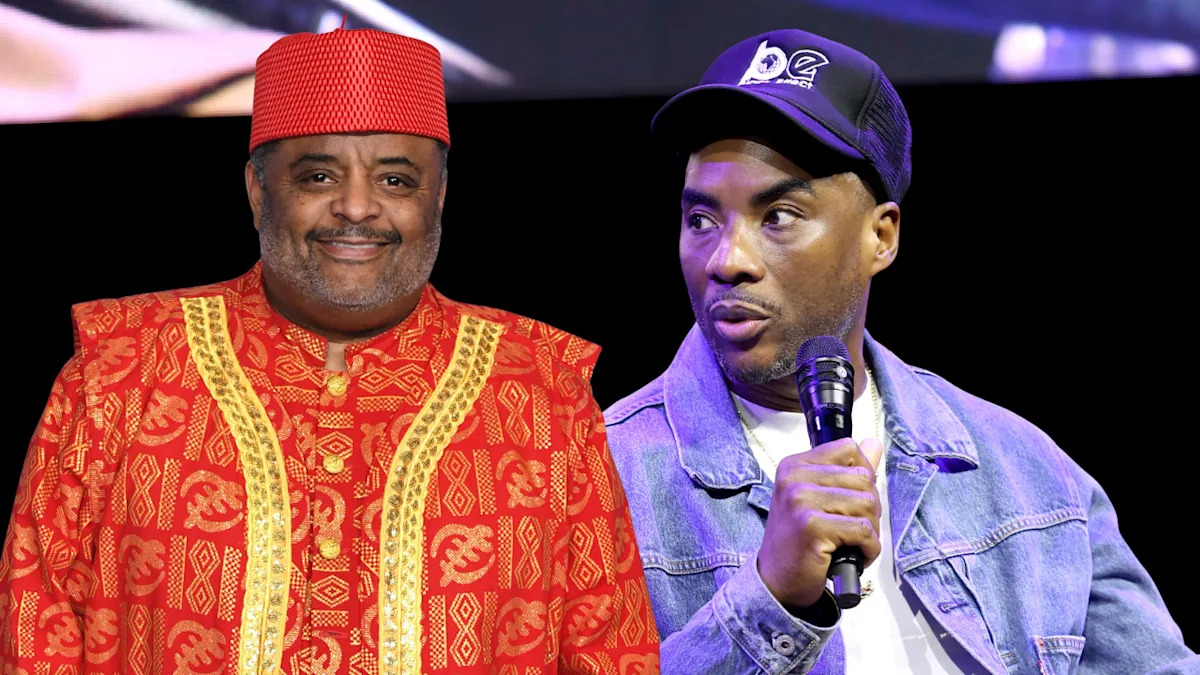
In a heated exchange that has captivated social media audiences, radio personality Charlamagne tha God and journalist Roland Martin have found themselves at odds over the interpretation of political commentary, raising important questions about the nature of opinion versus misinformation in Black media.
The dispute erupted in the wake of the recent government shutdown, which created divisions across political lines. The confrontation began when Martin labeled Charlamagne’s comments about Democrats needing to “give it up” regarding the congressional standoff as “beyond idiotic” during a YouTube segment titled “Beyond Idiotic Roland Tears Down Charlamagne’s Shutdown Misinformation.”
Martin, founder and owner of Black Star Network, and his panel of experts criticized Charlamagne for allegedly spreading misinformation to his predominantly Black audience on “The Breakfast Club,” one of the nation’s most influential urban radio programs.
The accusation prompted Charlamagne to designate Martin as his “Donkey of the Day,” a regular segment on his show where he calls out public figures for actions he deems questionable. In his response, Charlamagne defended his position, drawing a clear distinction between sharing an opinion and spreading false information.
“Roland, you may not agree that Democrats should concede and vote for the government to be reopened. But don’t say it’s misinformation,” Charlamagne stated during his broadcast. “Maybe I gave too short an explanation. Maybe I oversimplified it. Maybe I should be clearer for the audience. And I will.”
The radio host explained that his stance was rooted in concern for vulnerable Americans affected by the shutdown, including federal workers, SNAP beneficiaries, and those facing potential insurance premium increases. “That’s my opinion, not misinformation,” he emphasized, adding that Martin’s characterization was “intentional to discredit me and ‘The Breakfast Club.'”
Martin quickly responded with a video addressing Charlamagne’s criticism. “Today on ‘The Breakfast Club,’ Charlamagne took exception to a segment we did last week where two panelists said that he speaks or provides some misinformation. And so he made a whole bunch of comments, some personal attacks,” Martin explained, dismissing the personal aspects of Charlamagne’s critique.
“I am speaking to and addressing and confronting larger issues at play that have a profound and significant impact on our community,” Martin continued. “I always go hard for the truth and facts, whether white or Black. And this is why I tell Black folks to pick credible Black-owned media.”
The public disagreement has highlighted deeper questions about responsibility in media, particularly among influential voices in the Black community. As both men command significant audiences, their dispute underscores the challenges of navigating political commentary in polarized times.
Media analysts note that this exchange reflects broader tensions in contemporary journalism, where the line between factual reporting and opinion can sometimes blur. For Black media specifically, the stakes are particularly high given historical underrepresentation and the crucial role these platforms play in addressing issues affecting Black Americans.
Social media reaction to the feud has been mixed, with supporters on both sides. However, a common thread among comments suggests a desire for more direct dialogue. “I think you need to have @rolandsmartin on the show instead of giving DOTD,” wrote one Instagram user, suggesting that a face-to-face conversation might be more productive than trading criticisms on separate platforms.
As the government shutdown continues to affect millions of Americans, this media clash serves as a reminder of how political events can spark important conversations about journalistic standards, responsibility, and the vital role of informed discourse in democratic society.
Whether Charlamagne and Martin will eventually engage in direct conversation remains to be seen, but their public dispute has already stimulated important discussions about the responsibilities of influential voices in media, particularly those serving Black audiences during politically consequential moments.
Fact Checker
Verify the accuracy of this article using The Disinformation Commission analysis and real-time sources.

12 Comments
This clash highlights the challenges of navigating complex political topics, especially when speaking to a large, diverse audience. Both sides raise valid points, but the goal should be to inform and empower, not divide.
Absolutely. Responsible media figures have a duty to provide accurate, nuanced information, even when opinions differ. Hopefully, this dialogue will lead to a more informed and engaged community.
Debates like this can be valuable if they prompt deeper engagement and understanding, rather than just scoring points. Both sides seem to have valid concerns, and it would be helpful to hear more of the underlying reasoning.
Absolutely. Constructive dialogue that focuses on the substance of the issues, rather than personal attacks, is crucial for maintaining a healthy, informed public discourse.
The government shutdown has been a contentious issue, and it’s understandable that reasonable people may interpret the events differently. Fact-checking and respectful debate are important, but so is maintaining civility.
Well said. Disagreement is natural, but it’s crucial that influential voices in the media model constructive engagement and avoid escalating tensions unnecessarily.
While I don’t have a strong opinion on the specifics of this debate, I appreciate the willingness of both parties to engage and address the concerns of their audience. Nuanced discussions on complex political topics are important, even when opinions differ.
Well said. Maintaining a level of civility and openness to different perspectives is key, even when dealing with sensitive political issues. Hopefully, this exchange will lead to more thoughtful, balanced coverage moving forward.
This clash highlights the importance of critical thinking and fact-checking, especially when it comes to political commentary. While opinions may differ, it’s important to ground discussions in verifiable information.
I agree. Responsible media figures should strive to provide their audiences with context and nuance, rather than inflaming divisions. Hopefully, this exchange will lead to more thoughtful, nuanced coverage.
Interesting debate between two influential Black media personalities. While opinions may differ, it’s important to engage in respectful, fact-based dialogue to avoid misinformation, especially on important political issues like the government shutdown.
Agreed. Constructive criticism and fact-checking can help strengthen the discourse, but it should be done in a thoughtful manner that avoids personal attacks.