


Listen to the article
Horror Floods Social Media, Raising Concerns Over Misinformation and Brand Safety
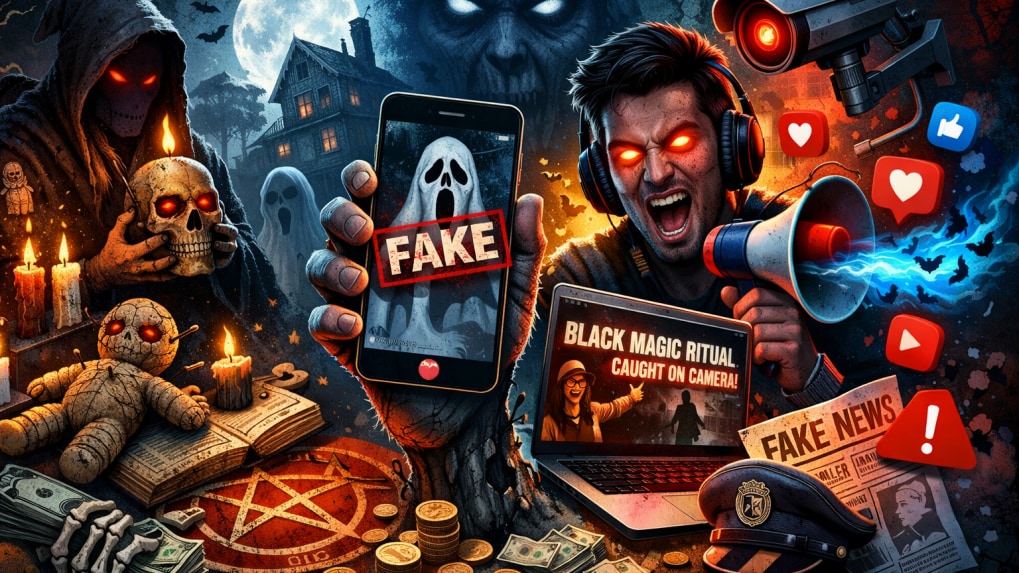
On India’s hyperactive social media feeds, horror content is experiencing an unprecedented surge in popularity. From alleged ghost sightings on CCTV footage circulating on YouTube to black magic “exposure” reels on Instagram and occult-themed live sessions across Facebook and X, fear-driven content is generating millions of views while simultaneously triggering concerns about misinformation, advertiser reluctance, and potential regulatory scrutiny.
Content creators have increasingly blended traditional horror elements with unverified claims. Videos featuring allegedly haunted hostel rooms, midnight tantrik rituals, possession narratives, and shape-shifting spirits have become commonplace. Many creators even promote viral challenges encouraging viewers to summon supernatural entities in their homes. These videos typically feature dramatic thumbnails, AI-generated visuals, and cliffhanger captions specifically designed to maximize discovery and engagement.
Media analysts attribute this trend to three key factors. First, horror and occult content offers a high return on minimal investment—requiring basic sets and simple storytelling while generating strong viewer retention. Second, platform algorithms naturally amplify fear-based narratives that generate comments, shares, and repeat viewings. Third, the proliferation of AI-generated synthetic content has made it easier to produce manipulated footage presented as evidence, blurring distinctions between fiction and deliberate deception.
Recent examples demonstrate the widespread nature of this phenomenon. Videos claiming certain abandoned hospitals are haunted have later been revealed as staged productions. Social media reels offering step-by-step black magic rituals promise viewers revenge or wealth. Other clips declaring specific villages, schools, or apartment buildings as cursed have created real panic among residents. Some content creators have even circulated AI-generated footage of mythological or demonic figures while presenting it as authentic CCTV evidence.
A recent controversy highlighted how quickly such claims can have real-world consequences. During a podcast hosted by entrepreneur Riya Upreti, financial influencer Abhishek Kar claimed that women in Assam’s Mayong possessed supernatural abilities to transform humans into goats through tantric practices. The remarks sparked public outrage, leading to a police complaint and Kar’s subsequent arrest. The incident demonstrated how sensationalized claims based on folklore can trigger legal repercussions when presented as factual information.
Despite fact-checking organizations flagging numerous videos and podcast segments as misleading, similar content continues to resurface in modified formats across platforms.
For advertisers, the primary concern has shifted from content genre to governance standards. Actress and travel vlogger Shenaz Treasury noted, “Misinformation and horror can get clicks but brands will not back influencers or creators who are spreading fear and anxiety, as brands want to go with somebody people trust. The clickbait may work short-term, but for the long term, such content is not advisable.”
Amit Relan, Co-Founder and CEO of mFilterIt, emphasized the importance of comprehensive media supply chain intelligence. “The solution isn’t avoiding certain categories anymore; it’s about building intelligence into the entire media supply chain. Brands must validate inventory before buying, audit placements after delivery, and measure suitability as rigorously as performance.”
Nishant Das, Co-Founder of Cheerio, highlighted the distinction between engagement and trust: “Fear-based narratives, including black magic or horror-driven storytelling, create reactive attention and not trust. Brands must prioritize contextual relevance, audience quality, and trust-led engagement over algorithmic virality. In the long run, credibility compounds and controversy does not.”
The monetization model driving this content is straightforward—higher engagement translates into increased advertising revenue through platform monetization tools, paid promotions from smaller advertisers, and direct viewer contributions during live sessions.
However, mainstream brands across sectors such as FMCG, BFSI, and consumer technology have increasingly deployed brand safety filters to avoid association with violent, adult-themed, or misinformation-linked horror content. Industry measurement firms indicate that monitoring such content is particularly challenging in short-form video formats, where contextual moderation is more difficult and content velocity is extremely high.
This trend reflects a broader tension within India’s creator economy between viral reach and credibility. While horror and occult-themed content may deliver rapid follower growth, increasing advertiser scrutiny and regulatory oversight call into question the sustainability of fear-driven monetization strategies. As industry experts emphasize, engagement without trust ultimately represents a fragile currency for both creators and the brands they seek to attract.
Fact Checker
Verify the accuracy of this article using The Disinformation Commission analysis and real-time sources.

15 Comments
As someone interested in the paranormal, I understand the appeal of this kind of content. However, the blurring of fact and fiction is deeply concerning. Platforms need to do more to separate entertainment from misinformation.
The rise of horror and black magic content on social media is very worrying. Platforms must take a more proactive stance in moderating this type of material to prevent the spread of dangerous pseudoscience and conspiracy theories.
Absolutely. Responsible content moderation and clear labeling of speculative or unverified claims should be a top priority for social media companies.
From a consumer perspective, I’m worried that young or impressionable viewers could be unduly influenced by unverified paranormal claims. Platforms should do more to provide context and fact-checking for this kind of speculative content.
Absolutely. Responsible content moderation is critical to protect vulnerable audiences from harmful misinformation, especially around sensitive topics like the occult.
This trend of sensationalized horror and black magic content is quite alarming. Brands should be wary of associating with this type of material, as it could seriously damage their reputation and credibility.
I agree. Advertisers need to vet the content they sponsor very thoroughly to avoid being caught up in controversies around misinformation or public safety risks.
From a brand safety perspective, I can see why advertisers would be wary of associating with this trend. The reputational risks are simply too high, given the prevalence of unsubstantiated claims and speculation.
I agree. Brands have to be extremely selective about the content they choose to support, lest they be caught up in the fallout from potential misinformation scandals.
The surge in horror and black magic content is deeply concerning. I hope regulators and industry bodies take a close look at this trend and implement stricter guidelines to limit the spread of unsubstantiated claims.
This is a troubling development. The potential for this kind of content to sow fear, distrust, and even incite panic in vulnerable communities is very real. Stronger safeguards are needed to protect the public.
While some ‘horror’ content may be harmless entertainment, I’m concerned about the potential for misinformation and public safety risks. Spreading unverified claims about the paranormal could lead to fear-mongering and undermine public trust.
You raise a fair point. Social platforms should carefully moderate such content to prevent the spread of dangerous pseudoscience or occult-related misinformation.
While I understand the entertainment value, the reckless blending of horror tropes with unverified occult claims is irresponsible. Platforms need to find a better balance between creative expression and public safety.
Well said. There’s a fine line between harmless spooky fun and content that actively promotes dangerous misinformation. Responsible curation is crucial.