


Listen to the article
Peak Cluster Chair Claims AI and Social Media Driving Misinformation About Pipeline Project
The chairman of a controversial £5 billion carbon pipeline project has blamed artificial intelligence and social media for fueling opposition to the scheme, arguing that misinformation is making it increasingly difficult to gain public support.
Dave Parkin, who chairs Peak Cluster, acknowledged the significant local resistance to the proposed 120-mile pipeline that would transport carbon dioxide emissions from cement production in the Peak District to depleted gas fields off the Morecambe coast. The project also includes plans for a four-to-five-storey compression facility near Meols or Moreton on the Wirral.
“I think it’s pretty clear there is not a huge amount of public support, if any public support, on the Wirral,” Parkin admitted following a public engagement event at the Floral Pavilion Theatre in New Brighton. “That is something we are just going to need to work through, but it is a challenging environment for us to take the project forward.”
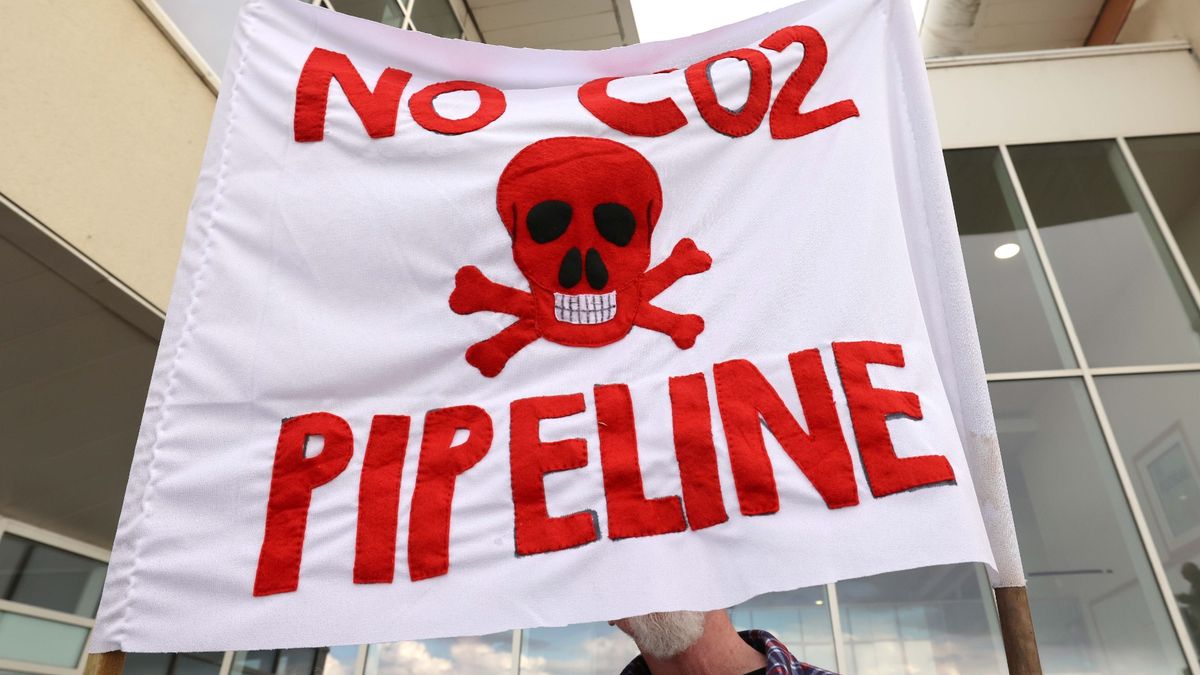
During the April 20 event, hundreds of protesters gathered outside the venue calling for the project to be scrapped. Inside, Peak Cluster representatives attempted to explain the project’s rationale and potential local impact, though many attendees remained unconvinced.
Parkin highlighted his concerns about how information spreads in the digital age. “Social media is a very powerful agent. It is largely used for social good. We do have our concerns about it. It is proving reasonably challenging for us, I’ll be very blunt about that,” he said.
“I spent the last decade delivering another big project and I think social media use has moved on quite considerably. There’s a lot more use of AI and probably a little bit less fact checking. Whether deliberate or otherwise, there is a good deal of stuff out there on Facebook which we would not agree with.”
The Peak Cluster project, which has already received £28.6 million in government funding, would begin construction in 2029 if approved and could be completed by 2032. The proposal has faced significant pushback, with councillors across all political parties in Wirral opposing it and local MPs facing pressure to speak out against the scheme.
One point of contention involves the impact on farmland. Parkin clarified that contrary to some claims circulating online, the 300-meter corridor where the pipeline could be built would be narrowed down during construction, and afterward, “farmers can go back to largely what they were doing previously.”
He expressed frustration that alternative technologies were frequently cited as reasons to abandon the project. “There seems to be a very strong sense online that there are alternative technologies,” Parkin said, adding that scientific consensus indicates carbon capture is necessary for decarbonizing cement production at scale.
“One of the key things about the climate crisis is we need to act urgently with the technology we have on the shelf today,” he emphasized. “We can tackle climate change, we can solve it, with a relatively small proportion of GDP and with the technology we have today if we just got out there and built it.”
Parkin framed the project as essential for the UK’s industrial future: “The UK has a choice. Either we can decarbonise our existing industries and get to net zero, or we can shut them down and buy those products from overseas. Our view is we should decarbonise and preserve the UK’s industry rather than deindustrialise.”
While acknowledging the concerns of local residents, Parkin suggested that infrastructure projects inevitably face resistance: “The challenge the UK faces is we need infrastructure, we need roads, we need railways, we need power stations. They all have to go somewhere, and if all of that was subject to local democracy, nothing would ever get built.”
Peak Cluster plans to spend the coming months developing more detailed plans and conducting environmental surveys before returning to the public with updated proposals in late 2026 or early 2027. The final decision will ultimately rest with planning inspectors who will determine “whether the national interest outweighs the local disruption.”
Fact Checker
Verify the accuracy of this article using The Disinformation Commission analysis and real-time sources.

18 Comments
This is a complex issue with valid concerns on both sides. While the economic benefits of the project are important, the local community’s objections regarding environmental and visual impacts cannot be dismissed. A collaborative, transparent approach may be the best path forward.
Agreed. Addressing misinformation and building trust with the community will be critical if Peak Cluster hopes to gain support for this project. Clear, factual communication and a willingness to address concerns will be key.
The challenges facing this carbon pipeline project highlight the difficulties of balancing economic development and environmental protection. While the company’s concerns about misinformation are understandable, the local community’s objections also deserve serious consideration. Transparent dialogue and a collaborative approach may be the best way forward.
That’s a fair assessment. Maintaining open communication and a willingness to address community concerns will be crucial if Peak Cluster hopes to gain broader public support for this endeavor.
Interesting take on the challenges facing this carbon pipeline project. I can understand the local community’s concerns about the environmental and visual impacts. It will be important for Peak Cluster to engage transparently and address those issues head-on.
You raise a fair point. Misinformation on social media can certainly complicate public discourse on major infrastructure projects like this. Clear, factual communication from the company will be crucial.
This highlights the challenges of balancing economic needs with environmental protection. While carbon capture could play a role, the local community’s objections deserve serious consideration. Careful planning, transparent communication, and constructive dialogue will be essential.
You make a good point. Misinformation can certainly complicate public discourse, but the company must also be willing to genuinely engage with the community and address their legitimate concerns.
The challenges facing this carbon pipeline project highlight the ongoing tensions between economic development and environmental protection. While the company’s concerns about misinformation are understandable, the local community’s objections also deserve serious consideration. A collaborative, transparent approach may be the best path forward.
Agreed. Addressing misinformation and building trust with the community will be critical if Peak Cluster hopes to gain support for this project. Clear, factual communication and a willingness to address concerns will be key.
The role of social media and AI-driven misinformation in shaping public opinion on infrastructure projects is concerning. However, the local community’s skepticism also seems understandable given the potential impacts. A transparent, collaborative approach may be the best path forward.
That’s a fair assessment. Maintaining open communication and a willingness to address community concerns will be crucial if Peak Cluster hopes to gain broader public support for this endeavor.
This is a complex issue with valid arguments on both sides. While carbon capture could play a role in emissions reduction, the local community’s concerns about environmental and visual impacts deserve a fair hearing. Careful planning, transparent communication, and constructive dialogue will be essential.
You raise a good point. Misinformation on social media can certainly complicate public discourse, but the company must also be willing to genuinely engage with the community and address their legitimate concerns.
This highlights the delicate balance between economic development and environmental protection. While carbon capture could play a role in emissions reduction, the local community’s objections deserve a fair hearing. Careful planning and dialogue will be key.
Agreed. It’s a complex issue without easy answers. The company will need to demonstrate the project’s benefits while also addressing legitimate community concerns to build trust and support.
This is a complex issue with valid arguments on both sides. While the economic benefits of the carbon pipeline project are important, the local community’s concerns about environmental and visual impacts cannot be ignored. Transparent dialogue and a collaborative approach may be the best way to navigate this challenge.
That’s a fair assessment. Maintaining open communication and a genuine willingness to address community concerns will be crucial if Peak Cluster hopes to gain broader public support for this endeavor.