


Listen to the article
Nepal’s Communications Minister Reaffirms Commitment to Press Freedom While Urging Responsible Journalism
Nepal’s Minister for Communications and Information Technology, Dr. Bikram Timilsina, has strongly reaffirmed the government’s commitment to press freedom while emphasizing the need for responsible journalism in an era of rampant misinformation.
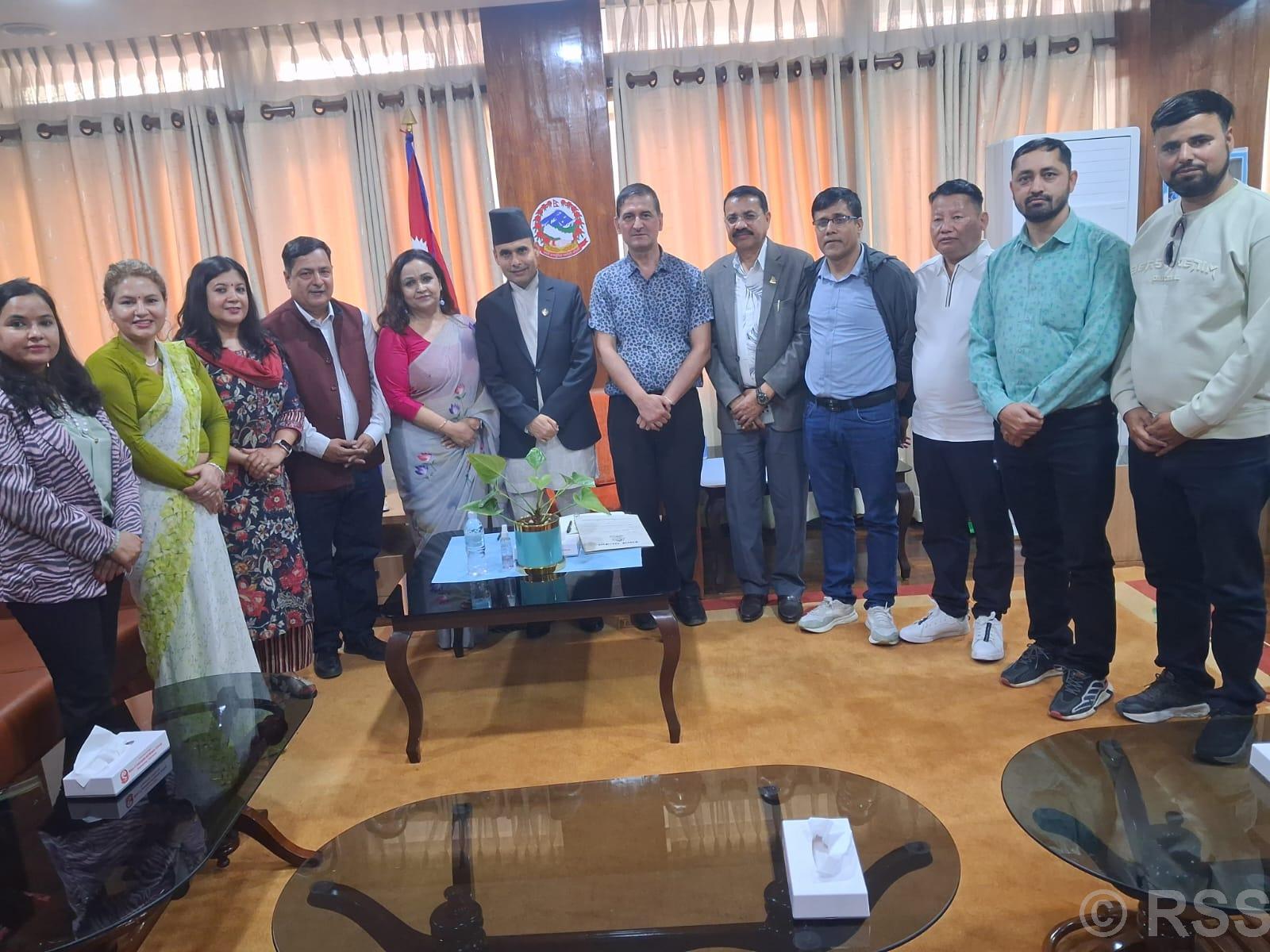
During a high-level discussion with a delegation from the Federation of Nepali Journalists (FNJ) at the ministry headquarters in Kathmandu on Thursday, Dr. Timilsina addressed several pressing issues facing Nepal’s media landscape.
“Government is clear on its stand for promotion of free press and freedom of expression. Even the media sector should be responsible for it,” the minister stated during the meeting, which covered topics ranging from press freedom and responsible journalism to government advertising policies and the rights of working journalists.
The minister expressed particular concern about the proliferation of misleading content across social media platforms. His ministry has reportedly received numerous complaints about misinformation and content designed to damage reputations.
“Publication and dissemination of such contents is detrimental to social, entrepreneurial and mental aspects of people,” Dr. Timilsina noted, highlighting the real-world consequences of irresponsible media practices in Nepal’s increasingly connected society.
The discussion comes at a critical time for Nepal’s media industry, which has experienced significant transformation in recent years with the rapid growth of digital platforms. Traditional media outlets have faced increasing financial pressure while social media has created new challenges for information integrity.
Dr. Timilsina called for greater self-regulation within the journalism community, emphasizing that freedom of expression carries responsibilities. “One’s exercise of free speech must be sensitive if it jeopardizes others’ rights,” he said, suggesting that journalism has a crucial role in combating fake news and exaggerated information.
The minister specifically called upon the FNJ to take a “leading role in making journalism accountable with self-regulation,” reinforcing the idea that fact-based reporting remains the foundation of media credibility.
The meeting also addressed the contentious issue of government advertising distribution. Media outlets in Nepal, as in many developing countries, often rely heavily on government advertising revenue to remain operational. Dr. Timilsina acknowledged past opacity in the government’s advertising distribution system and promised a thorough review.
“It would be studied in depth again and decision forwarded accordingly,” he said, while assuring that public welfare advertisements would continue but with improved systematic distribution.
From the journalists’ side, FNJ Chairperson Nirmala Sharma highlighted the need for legal and institutional reforms in Nepal’s media sector. She advocated for effective enforcement of the Working Journalists Act and inclusion of journalists in the country’s social security fund – key protections that would strengthen the independence and sustainability of journalism as a profession in Nepal.
Sharma also suggested strengthening the Press Council Nepal to better regulate media and social media regarding free speech issues, indicating the FNJ’s willingness to work within a regulated framework.
FNJ General Secretary Ram Prasad Dahal raised concerns about the financial crisis facing media organizations and professionals following the government’s decision to stop providing advertisements to private media. He called for a fair investigation into alleged financial irregularities in the previous distribution of government advertisements.
The meeting reflects the ongoing tensions between press freedom, regulation, and financial sustainability that characterize Nepal’s media environment, as the country continues to develop its democratic institutions following years of political transition.
Fact Checker
Verify the accuracy of this article using The Disinformation Commission analysis and real-time sources.

7 Comments
The minister’s emphasis on responsible journalism in the face of misinformation is commendable. Social media has certainly exacerbated the spread of false and misleading content, so news outlets must be diligent in fact-checking and maintaining high editorial standards.
I agree. With the rise of social media, the role of professional journalists in verifying information and combating disinformation has become even more crucial.
I’m curious to learn more about the specific steps the government plans to take in promoting responsible journalism and addressing misinformation concerns. Providing clear guidelines and support for media outlets could go a long way.
That’s a fair point. Proactive engagement with the media industry to develop ethical frameworks and fact-checking protocols would be a constructive approach.
This news portal launch is an important milestone for Nepal’s digital media landscape. I hope it will contribute to greater transparency and accountability, while also upholding the principles of press freedom enshrined in the country’s constitution.
It’s good to see the Nepali government acknowledging the importance of press freedom, while also recognizing the need for journalists to report responsibly. Striking this balance will be key to fostering a healthy, vibrant media ecosystem.
This is exciting news for Nepal’s media landscape. Establishing an online news portal is an important step towards expanding access to information and promoting digital journalism. I hope the government will continue to uphold press freedom while also encouraging responsible reporting practices.