


Listen to the article
Mauritania Denies Reports of Malian Troops Crossing Border Amid Regional Tensions
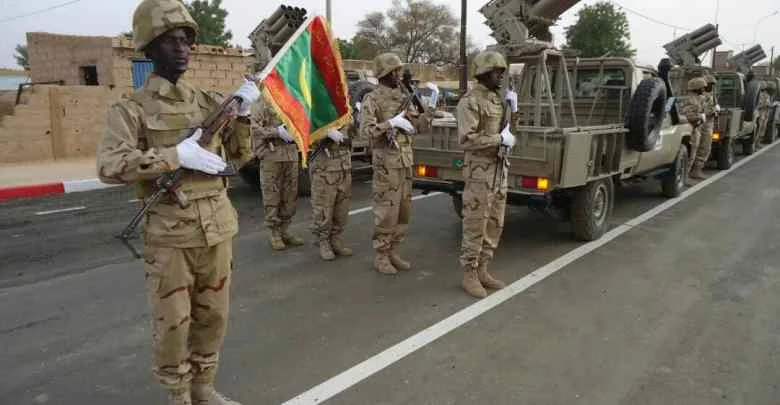
Mauritanian military officials have issued a strong denial regarding claims that Malian soldiers crossed into their territory, countering reports circulated by media outlets in Nouakchott. In an official statement, the army’s communications and public relations department clarified: “All movements of Malian forces have taken place outside Mauritania’s borders.”
The military statement confirmed that while Malian soldiers have been operating in several villages within Mali’s territory, these operations remained firmly on the Malian side of the border. The villages in question—Lebezia, Kat’a al-Dafou, Ahl Ibrahim, and Fossat—are situated between 6 and 10 kilometers from the Mauritanian border, according to official cartography.
Mauritanian authorities emphasized that such military movements near the border are not unusual, noting that similar operations have occurred previously without compromising Mauritanian sovereignty. The statement appears aimed at calming potential concerns about border violations in a region where territorial integrity remains a sensitive issue.
In their communication, the Mauritanian armed forces urged both media organizations and social media users to exercise caution when sharing information about military movements. The appeal called for responsible reporting to prevent the spread of misinformation that could “cause unnecessary alarm and confusion among the public.”
The border controversy emerges against a backdrop of shifting regional politics. According to military sources, the false border violation allegations originated from supporters of the Polisario Front based in Algeria’s Tindouf camps before spreading to Mauritanian media circles. The timing coincides with Mali’s recent diplomatic decision to withdraw its recognition of the self-proclaimed “Sahrawi Arab Democratic Republic” (SADR), marking a significant policy shift for Bamako.
This diplomatic realignment adds another layer to the complex geopolitical dynamics in Northwest Africa. Mali’s decision represents a setback for the Polisario Front, which has long sought international recognition for its claims to Western Sahara, a territory largely controlled by Morocco.
Further complicating regional relations, the Mauritanian government notably abstained from sending official representation to the 50th anniversary celebration of the SADR held in the Tindouf camps last week. This absence came despite Polisario leader Brahim Ghali publicly commending Nouakchott for its purported “support” of the movement during a speech on Thursday.
Mauritania’s position remains delicately balanced. While historically maintaining diplomatic relations with the SADR, its absence from such a significant commemorative event may signal a subtle recalibration of its stance amid changing regional alignments.
The controversy highlights the fragile nature of borders and relationships across the Sahel region, where security concerns, separatist movements, and shifting alliances create a complex political landscape. Mali itself has been navigating multiple challenges, including jihadist insurgencies and political transitions following military coups in recent years.
For Mauritania, maintaining clear communication about border integrity remains essential for national security and regional stability. The country has largely managed to avoid the extremist violence affecting many of its neighbors, making border security a top priority for authorities in Nouakchott.
As regional powers reconfigure their relationships with various political actors in Northwest Africa, incidents like these alleged border crossings—even when denied—demonstrate how information and misinformation can become tools in broader geopolitical contests.
Fact Checker
Verify the accuracy of this article using The Disinformation Commission analysis and real-time sources.

14 Comments
The Mauritanian military’s swift denial and explanation of the border situation is a responsible approach. Maintaining good communication is crucial to avoid escalation of regional conflicts.
It’s good to see the Mauritanian authorities taking a proactive stance to address reports of border violations. Fact-based communication is essential for managing regional security challenges.
Absolutely. Transparency and open dialogue between neighboring countries can go a long way in preventing misunderstandings and defusing tensions.
This seems like a prudent move by the Mauritanians to address potential misinformation and ease regional tensions. Transparency around border activity is key in this volatile situation.
Agreed. Providing clear, factual information can help counter the spread of false claims that could further inflame the situation.
Interesting to see the Mauritanian military denying reports of border incursions by Mali. Maintaining territorial integrity is clearly a priority in this tense regional context.
Yes, the statement emphasizing that Malian military operations have remained on their side of the border is an important clarification.
The Mauritanian military’s swift denial and explanation of the border activity is a responsible approach. Fact-based information is crucial for managing complex regional security dynamics.
This seems like a sensible move by the Mauritanian government to address potential misinformation and provide clarity on the border situation. Maintaining stability in the region is paramount.
Agreed. Transparent communication from authorities can help counter the spread of rumors and unsubstantiated reports that could escalate tensions.
It’s encouraging to see the Mauritanian authorities taking a proactive stance to address the reports of border violations. Maintaining open communication is key to preventing further escalation of regional conflicts.
Absolutely. Transparency and a commitment to facts can go a long way in building trust and stability in this volatile region.
The Mauritanian military’s statement provides a clear and measured response to the claims of border incursions. Careful management of such sensitive issues is critical in this volatile region.
The Mauritanian military’s clear statement on the border situation is a prudent move to address potential misinformation. Careful management of such sensitive issues is critical in this complex regional context.