


Listen to the article
Victoria City Council’s recent rejection of a development permit for a James Bay property has sparked debate about building safety regulations and their interpretation, with experts pointing to misinformation clouding the discussion.
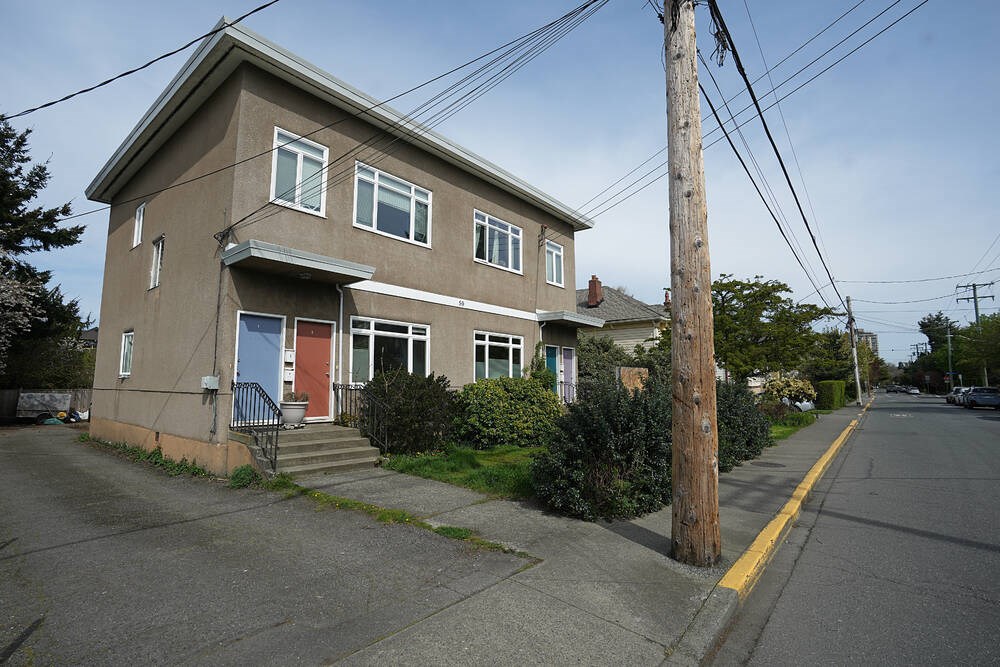
On April 9, council declined a development permit with variances for 50 Government Street. While the decision itself has garnered attention, urban planning experts and building safety professionals are more concerned about the misinformation that influenced the deliberations.
One significant misconception centers around the required nine-meter side setbacks for the property. Contrary to claims during discussions, these setbacks were not primarily designed for fire safety. Rather, they were mandated because the sides had windows or doors facing living or dining rooms, classifying them as “primary facades” under local zoning regulations.
“The regular side setback is 1.5 meters for facades up to four storeys, and three meters for facades above that,” explains a retired software developer familiar with the case. “Simply swapping a dining room for a bedroom can change the requirement from nine meters to three meters, which demonstrates this isn’t fundamentally about fire safety.”
Another point of contention involves buildings with single stairwells. While relatively new to British Columbia, single-egress buildings taller than two storeys are common throughout much of the world and have established safety records.
The B.C. government has conducted extensive research on single-egress designs, leading to regulations that limit building height, occupants per floor, and distance to exits. These structures must also include automatic sprinklers, smoke management systems in stairwells, and undergo regular fire system inspections.
During council deliberations, one councillor referenced the 2017 Grenfell Tower disaster in London, which claimed 72 lives, to emphasize fire safety concerns. However, building safety experts note this comparison overlooks critical distinctions. Grenfell Tower, constructed in 1974, stood 24 storeys tall and had been renovated with flammable plastic-core exterior cladding—factors that significantly contributed to the tragedy.
Post-Grenfell inquiries revealed additional issues, including a flawed “stay put” evacuation plan and delayed evacuation orders. In response to the disaster, British authorities implemented reforms that actually permit single-egress buildings up to six storeys—similar to B.C.’s current regulations—because safety data supports such designs when properly implemented.
Housing affordability advocates also challenge the notion that rejecting development proposals preserves existing affordable housing. In Victoria’s tight housing market, properties rarely remain unchanged after rejection. Developers typically respond with revised proposals that comply with zoning codes but often result in more expensive housing options.
“Whatever gets built—condos, larger apartments, townhouses—will cost more than the rejected proposal because there will be fewer homes on the same expensive piece of land,” notes the urban planning expert. “That’s not greed—it’s arithmetic.”
Victoria’s ongoing housing shortage carries its own safety implications, with many residents living in substandard conditions in illegal suites with mold issues and questionable safety standards. Housing advocates argue these situations present greater immediate risks than modern buildings with single stairwells.
While Victoria has recently adopted new Official Community Plans and zoning bylaws—making council’s hesitancy to grant major exceptions understandable—experts stress that effective policy implementation requires decisions based on factual information rather than misconceptions.
As Victoria continues to navigate its housing crisis, the debate surrounding the Government Street project highlights the importance of evidence-based decision-making in urban development and the need to distinguish between legitimate safety concerns and misinformation when addressing the city’s pressing housing needs.
Fact Checker
Verify the accuracy of this article using The Disinformation Commission analysis and real-time sources.

13 Comments
The role of misinformation in this case is troubling. Zoning and building codes exist for good reasons, even if they may not be immediately intuitive. I hope this serves as a lesson for policymakers to scrutinize claims and seek expert input before making impactful decisions.
This highlights the importance of fact-checking and due diligence when it comes to development approvals. While safety is paramount, policies need to be based on technical merits, not hearsay. Kudos to the experts for clarifying the actual rationale behind the setback requirements.
Absolutely. It’s concerning when misinformation sways important decisions that impact communities. Transparency and reliance on objective data should be the foundation for urban planning, not political narratives.
This case highlights the need for rigorous fact-checking and reliance on expert input in the policymaking process. While public input is valuable, decisions should ultimately be based on technical merits, not misconceptions. Transparent communication is key to avoid unintended consequences.
Absolutely. Policymakers have a responsibility to make decisions that serve the public interest, which requires carefully weighing all the evidence rather than succumbing to misinformation. Kudos to the experts for providing clarity on the actual rationale behind the regulations.
This is a cautionary tale about the dangers of misinformation in the policymaking process. While safety should be the top priority, decisions need to be grounded in facts, not misconceptions. Kudos to the experts for providing clarification on the actual rationale behind the setback requirements.
Well said. Policymakers have a responsibility to make informed decisions that serve the public interest, not succumb to unfounded narratives. Relying on technical expertise is crucial for effective urban planning.
Misinformation can have serious consequences when it comes to urban planning and development approvals. While public safety is paramount, policies need to be grounded in facts, not hearsay. This case study underscores the importance of transparent communication and reliance on technical expertise.
It’s concerning to see how misinformation can sway important decisions like this. Zoning and building codes exist for good reasons, even if the rationale isn’t always obvious. Kudos to the experts for setting the record straight on the actual purpose of the setback requirements.
Interesting case study on the role of misinformation in urban planning decisions. Setback requirements can be complex, and it’s concerning if key facts were misunderstood during the deliberations. Transparent communication and reliance on expert input are crucial for sound policymaking.
Agreed. Zoning and building codes are often nuanced, and it’s important that decision-makers have accurate information to avoid unintended consequences. Proper consultation with planners and safety professionals can help avoid these kinds of issues.
This is a concerning example of how misinformation can influence important decisions. Zoning and building codes may not always be intuitive, but they exist for good reasons. Kudos to the experts for clarifying the actual rationale behind the setback requirements. Policymakers should seek out objective data and technical input to make well-informed decisions.
Well said. Transparent communication and fact-based policymaking are crucial for effective urban planning that serves the public interest. It’s troubling to see how misinformation can sway important decisions with real-world consequences.