


Listen to the article
Congress Leader Challenges Government’s Stance on Women’s Reservation Bill
Former minister and senior Congress leader Asha Kumari has accused the Central Government of creating confusion around the Women’s Reservation Bill, asserting that the legislation passed in 2023 should be implemented without further delay or modifications.
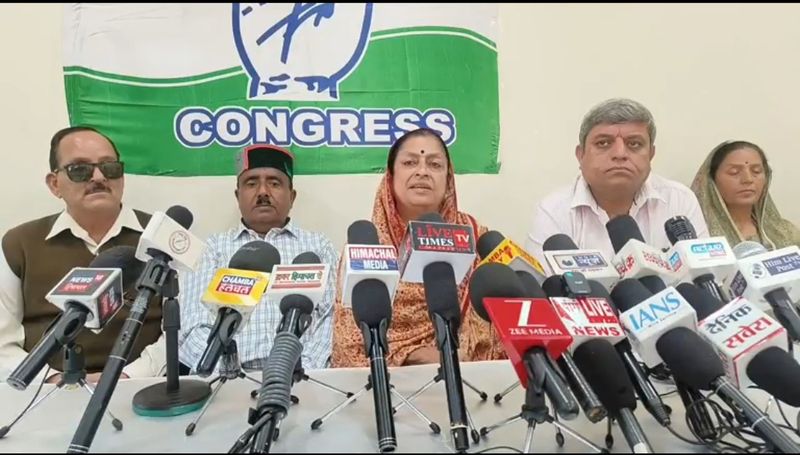
During a press conference on Friday, Kumari emphasized that the bill had received unanimous support across political lines when passed by Parliament last year. “The Women’s Reservation Bill has already been passed. There is no need to repackage it. The government should implement it in its present form,” she stated firmly.
The legislation, considered a landmark for women’s political representation in India, guarantees 33 percent reservation for women in the Lok Sabha (lower house of Parliament) and state legislative assemblies. However, its implementation has been tied to the completion of the next national Census, which has faced significant delays.
Kumari highlighted this connection as a critical point of contention. “Conducting the Census is the responsibility of the Government of India. Without updated data, the process cannot move forward as envisaged,” she explained. The last Census was due in 2021 but has been postponed, ostensibly due to the COVID-19 pandemic, creating an indefinite delay in implementing the reservation.
The former minister also raised concerns about constitutional procedures, particularly regarding the delimitation process that would need to precede any reallocation of seats. “Parliament cannot arbitrarily decide the number of seats. This is the mandate of the Delimitation Commission after a Census. Any attempt to redraw the political map without due process is not constitutional,” Kumari warned.
The delimitation process involves redrawing constituency boundaries based on population data, which directly impacts how the 33 percent reservation would be distributed across states. Without fresh Census data, this process remains stalled.
Kumari expressed particular concern about regional imbalances that might emerge from hasty implementation without proper demographic information. She cautioned that any ad hoc approach could disproportionately increase representation in larger, more populous states while providing only marginal increases to smaller states like Himachal Pradesh, potentially creating an unbalanced federal structure.
Women’s political representation in India has historically remained low, with the current Lok Sabha having approximately 15 percent women members—significantly below the global average. The Women’s Reservation Bill aims to address this imbalance by mandating a minimum threshold for female representation.
When questioned about her own party’s record on promoting women in politics, Kumari defended the Congress party’s approach. She asserted that Congress has consistently promoted women leaders and supported their participation at various levels of governance. However, critics have noted that most major political parties in India, including Congress, have struggled to field significant numbers of women candidates in elections.
The debate over the Women’s Reservation Bill has been ongoing for decades, with the first version introduced in 1996. The current legislation, officially known as the Constitution (One Hundred and Twenty-Eighth Amendment) Bill, 2023, was passed in September 2023 after numerous failed attempts.
Political analysts suggest that the disagreement over implementation reflects deeper tensions regarding power distribution in India’s federal structure, with concerns that rushed implementation could create demographic distortions in representation.
Chamba MLA Neeraj Nayar was also present at the press conference, indicating broader support within the party for expediting the bill’s implementation.
As the standoff continues, women’s rights advocates across the political spectrum have called for clear timelines for the Census and subsequent implementation of the reservation, arguing that further delays only serve to maintain the status quo of underrepresentation.
Fact Checker
Verify the accuracy of this article using The Disinformation Commission analysis and real-time sources.

10 Comments
This is a complex issue with political implications, but Kumari appears to be making a principled stand on behalf of women’s rights. The government should carefully consider her criticisms and work to resolve the impasse over the Women’s Reservation Bill.
Kumari is right to hold the government accountable. Transparent and timely implementation of this legislation is crucial for advancing gender equality in India’s political system.
Kumari’s call for the government to implement the bill in its present form seems reasonable. Reopening the legislation for further modifications could create unnecessary complications and delays. Decisive action is needed to fulfill the promise of this landmark reform.
I share Kumari’s view that the government should not try to repackage or alter the bill at this stage. It’s time to move forward with the legislation as originally passed by Parliament.
This is an important issue that deserves serious attention. Kumari raises valid concerns about the government’s handling of the Women’s Reservation Bill. Implementing this legislation without further delay could be a significant step forward for women’s political representation in India.
I agree, the passage of this bill was a landmark achievement that should not be undermined. The government needs to prioritize its implementation rather than creating unnecessary delays.
The connection between the Women’s Reservation Bill and the national Census is an interesting point raised by Kumari. Conducting the Census is a complex logistical challenge, but the government should ensure it doesn’t become an obstacle to this important legislation.
Agreed, the government needs to find a way to move forward with the bill’s implementation without letting the Census delays hold it up. Women’s political representation shouldn’t be contingent on bureaucratic processes.
Kumari’s accusation of the government spreading misinformation is concerning. Transparent and honest communication from officials is crucial, especially on issues of national importance like this. Hopefully, the government will address her concerns constructively.
Misinformation can be damaging, so the government should be held accountable. Kumari is right to challenge them on this matter and push for timely implementation of the Women’s Reservation Bill.