


Listen to the article
Russia Plans Information Campaign to Support Orbán in Hungary’s 2026 Elections
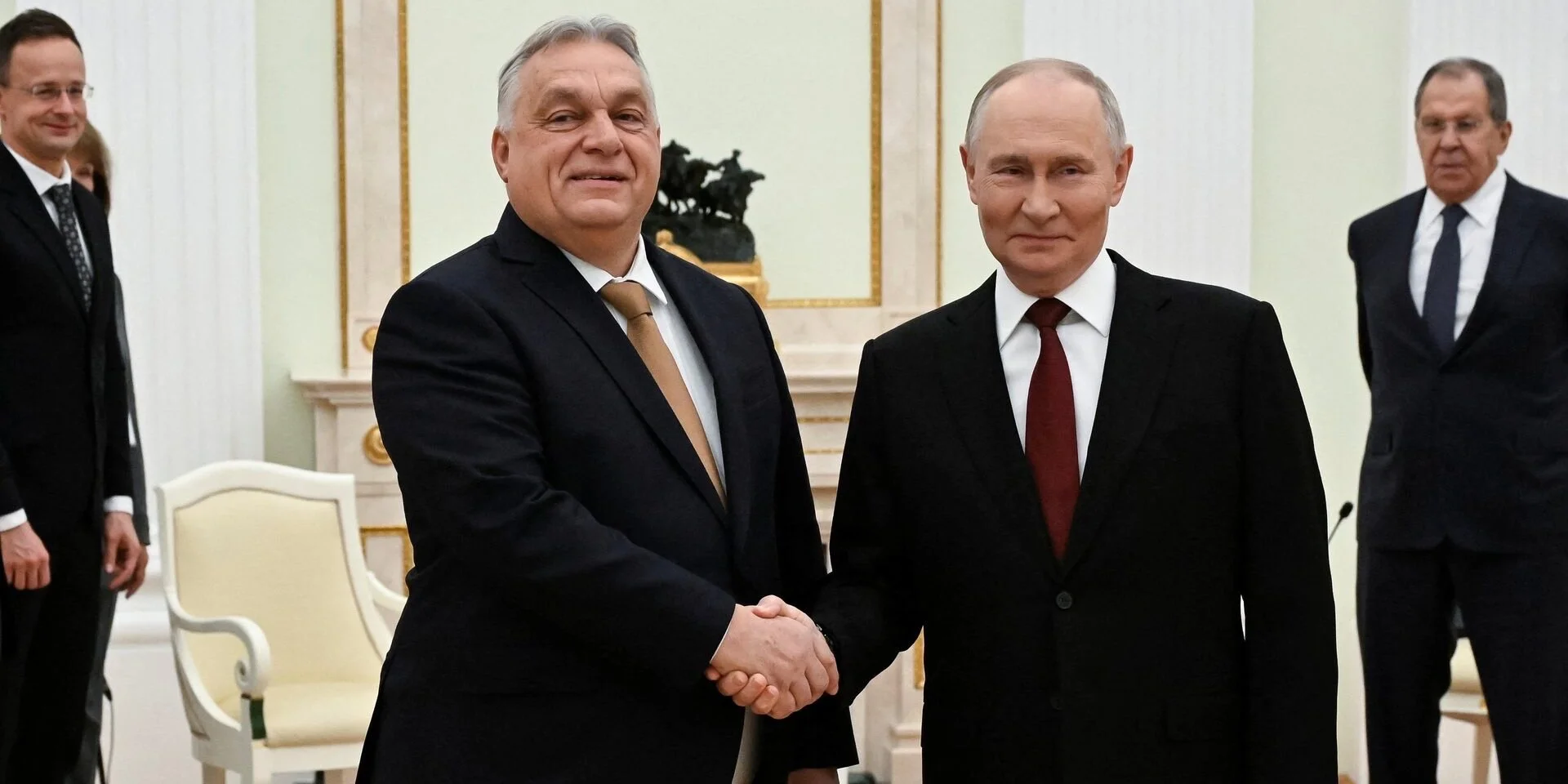
Russian operatives are preparing to launch a sophisticated information campaign to influence Hungary’s upcoming parliamentary elections in support of incumbent Prime Minister Viktor Orbán, according to an investigation by VSquare published on March 5.
Multiple European national security sources have revealed that the Kremlin has assembled a team of political technologists specifically tasked with interfering in Hungary’s April 2026 elections. The operation’s goal is clear: ensure Orbán maintains his grip on power, which he has held since 2010.
The initiative is reportedly being overseen by Sergey Kiriyenko, first deputy chief of staff to Russian President Vladimir Putin. Kiriyenko’s involvement is particularly noteworthy, as he recently led a similar operation in Moldova, where Russian operatives attempted to influence elections against pro-European President Maia Sandu through vote buying, troll farms, and activation of local assets. While that effort wasn’t entirely successful, investigators believe the operational framework has been preserved and will now be repurposed for Hungary.
Working alongside Kiriyenko is Vadim Titov, head of Russia’s Main Directorate for Strategic Partnership, suggesting the high-level strategic importance the Kremlin places on maintaining Orbán’s position in Hungary, one of the EU’s most Russia-friendly member states.
European intelligence agencies have already shared information about these plans with EU and NATO partners, who are reportedly monitoring the situation closely. Sources indicate that the operation will likely be coordinated through the Russian embassy in Budapest, where social media manipulation specialists will be deployed under diplomatic cover, providing them immunity from prosecution.
The investigation revealed that a team of three operatives with links to Russia’s GRU military intelligence may already be operating in Budapest, though it remains unclear if they have begun their activities. Previous reports have noted the presence of Russian military diplomats with potential GRU connections in Hungary’s capital, maintaining contacts with Orbán’s propaganda apparatus.
This environment is particularly conducive to Russian influence operations, as pro-Russian media outlets in Hungary have been consistently disseminating Kremlin-backed anti-Ukrainian narratives. According to one Central European source, Kiriyenko’s team has established active communication channels with electoral teams connected to the Orbán government, though the specific mechanisms of this cooperation are still being determined.
The timing of Russia’s planned intervention comes at a critical moment for Orbán. Recent polling data released in March shows the opposition Tisza party leading Orbán’s Fidesz by 38% to 32% among all voters, indicating potential vulnerability for the long-serving prime minister ahead of the April 2026 elections.
Orbán himself seems to be preparing a counternarrative. On February 16, during a press conference with U.S. Secretary of State Marco Rubio, he accused Ukraine of interfering in Hungarian elections, potentially laying groundwork to deflect attention from Russian involvement.
Hungary has increasingly positioned itself as an outlier within the European Union regarding Russia policy. Under Orbán’s leadership, the country has maintained close ties with Moscow despite Russia’s invasion of Ukraine, frequently obstructing EU sanctions and military aid packages to Kyiv while echoing Russian talking points about the conflict.
The planned Russian information operation highlights the Kremlin’s ongoing strategy of supporting politically aligned leaders within EU member states, potentially undermining the bloc’s unity on critical issues like support for Ukraine and sanctions against Russia. It also demonstrates Russia’s continued commitment to using information warfare as a key component of its foreign policy toolkit despite increasing Western awareness of such tactics.
Fact Checker
Verify the accuracy of this article using The Disinformation Commission analysis and real-time sources.

9 Comments
Trying to influence elections through disinformation campaigns is a serious threat to democracy. Voters deserve accurate, unbiased information to make their own choices. I hope international monitors can help ensure transparency in the Hungarian elections.
Yes, independent election monitoring is crucial. Maintaining the integrity of the democratic process should be a priority for all.
This is very concerning. Protecting the integrity of elections should be a top priority for all democracies. I hope the Hungarian government takes robust measures to counter any foreign interference efforts and ensure a fair electoral process.
While I’m no fan of Orbán, foreign interference in elections is a serious threat to democracy. Hungarians should be able to choose their leaders freely, without the influence of Russian disinformation campaigns or other undue influence.
This is deeply concerning if true. I hope Hungary’s democratic institutions can withstand any foreign interference. It’s critical that elections remain free and fair, regardless of the candidates involved.
While I’m no fan of Orbán, foreign meddling in elections is never acceptable. Hungarians should be able to choose their leaders without outside manipulation. I hope the authorities take strong action to counter any Russian interference efforts.
Attempts to sway elections through information warfare are unacceptable. Voters in Hungary deserve to have their voices heard without outside manipulation. I hope the international community closely monitors the situation there.
It’s disturbing to see Russia apparently targeting Hungary with another disinformation campaign. Voters deserve to make their own choices without foreign influence. Transparency and impartial election monitoring will be key.
This is deeply troubling news. Interfering in another country’s elections is a serious breach of sovereignty. I hope the international community closely monitors the situation in Hungary and takes appropriate steps to protect the democratic process.