


Listen to the article
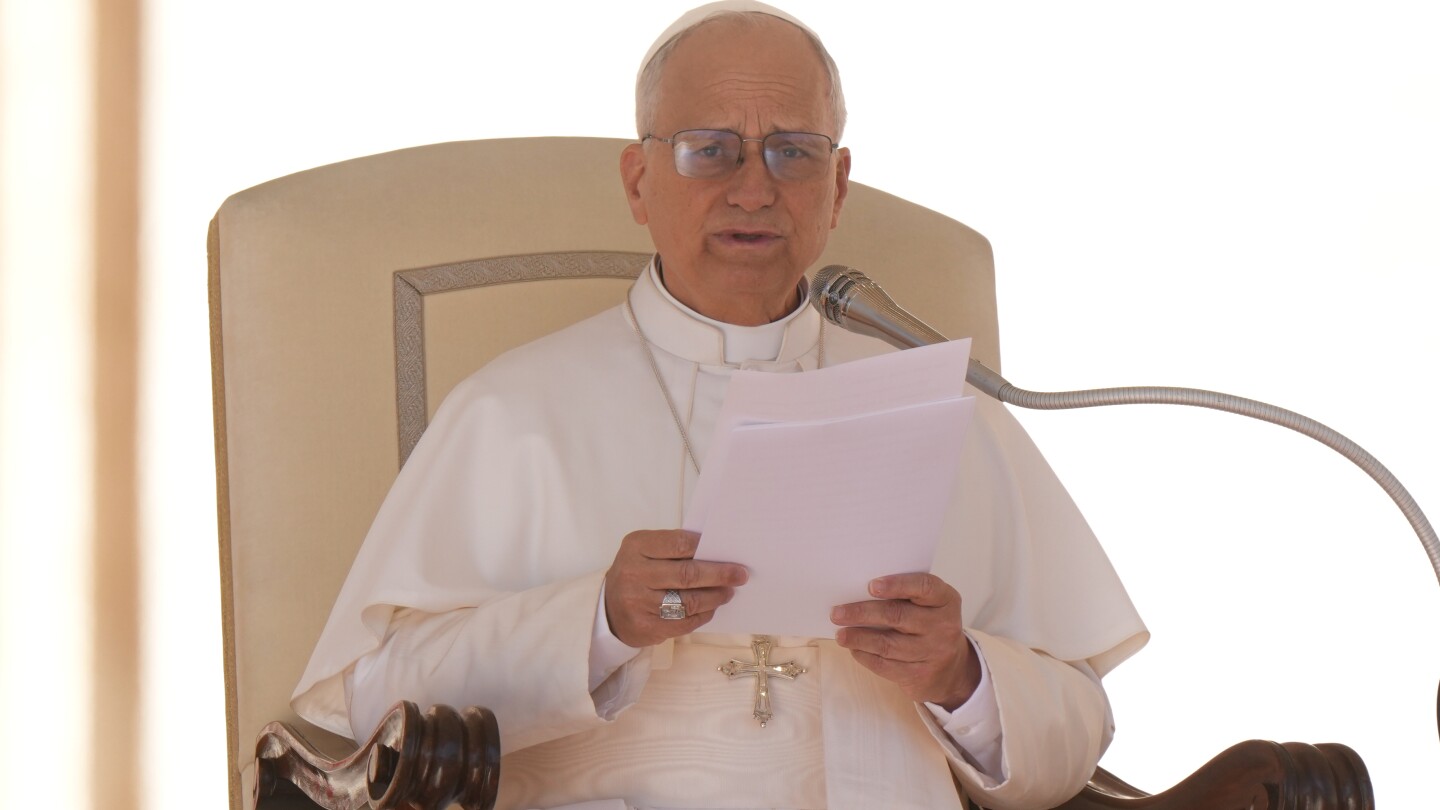
Pope Leo XIV made a compelling plea to international news agencies Thursday, urging them to remain steadfast against disinformation and manipulation while championing press freedom in an era of mounting challenges to journalism.
Speaking to executives from MINDS International, a consortium of leading global news organizations including The Associated Press, the pontiff described journalism as a fundamental right and cornerstone of democratic societies that must be vigorously protected.
“If today we know what is happening in Gaza, Ukraine and every other land bloodied by bombs, we largely owe it to them,” Leo said, praising journalists who risk their safety to document global conflicts. “These extraordinary eyewitness accounts are the culmination of the daily efforts of countless people who work to ensure that information is not manipulated for ends that are contrary to truth and human dignity.”
The Chicago-born pontiff, who became the first American pope in history when elected five months ago, has consistently positioned himself as a defender of press freedom. During his initial meeting with reporters following his election, Leo called for the release of imprisoned journalists worldwide and affirmed the “precious gift of free speech and the press.”
His advocacy has continued throughout his papacy. In a recent letter to a Peruvian journalist facing legal harassment for her investigative work, Leo described press freedom as an “inalienable common good.” He has repeatedly framed quality journalism not merely as beneficial but essential for “a solid and participatory democracy.”
Thursday’s address acknowledged the dual crises confronting news organizations: economic pressures threatening their viability and a media environment where consumers struggle to distinguish fact from fiction. Drawing on political philosopher Hannah Arendt’s warnings about totalitarianism, Leo emphasized that society’s ability to differentiate truth from falsehood serves as a bulwark against autocracy.
“The ideal subject of totalitarian rule is not the convinced Nazi or the convinced Communist, but people for whom the distinction between fact and fiction and the distinction between true and false no longer exist,” he quoted from Arendt’s seminal work, “The Origins of Totalitarianism.”
The pope’s remarks come at a particularly challenging moment for journalism globally. According to the Committee to Protect Journalists, 320 journalists were imprisoned worldwide for their work in 2022, representing a record high. Meanwhile, news organizations continue to grapple with declining revenue streams, staff reductions, and the proliferation of misinformation across digital platforms.
Leo also addressed emerging concerns about artificial intelligence’s impact on information ecosystems. Despite these technological challenges, he emphasized the irreplaceable role of human journalism in maintaining social cohesion.
“With your patient and rigorous work, you can act as a barrier against those who, through the ancient art of lying, seek to create divisions in order to rule by dividing,” he told the news agency representatives. “You can also be a bulwark of civility against the quicksand of approximation and post-truth.”
His impassioned appeal concluded with a direct entreaty to the assembled media executives: “I urge you: Never sell out your authority!”
The pope’s remarks align with a longstanding tradition of Vatican support for ethical journalism, though Leo has been particularly vocal in connecting press freedom to broader democratic values and human dignity. His advocacy reflects growing concern within religious and civic leadership about the deterioration of shared facts in public discourse.
The MINDS International consortium represents many of the world’s leading news agencies responsible for much of the foundational reporting that informs global understanding of major events, making them a strategically important audience for the pontiff’s message about journalism’s vital societal role.
Fact Checker
Verify the accuracy of this article using The Disinformation Commission analysis and real-time sources.
