


Listen to the article
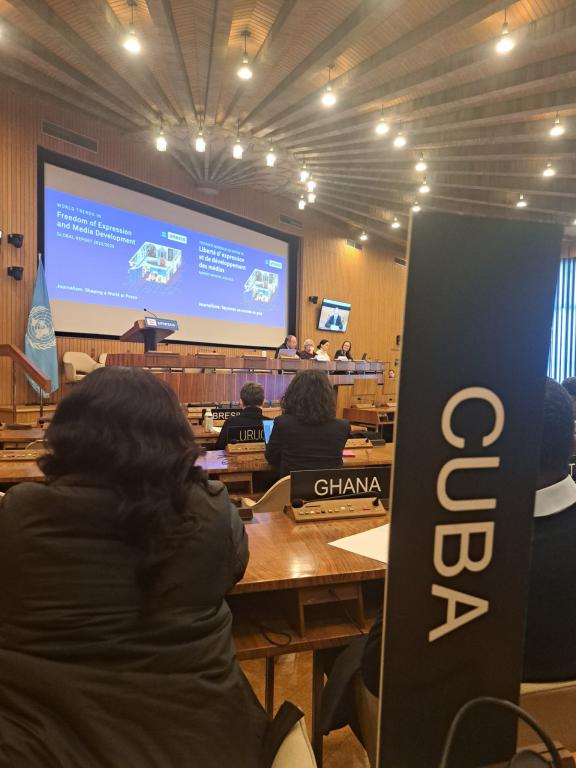
In a strong rebuke delivered at UNESCO headquarters, Cuba has condemned escalating U.S. economic sanctions as a direct threat to communication rights and information access. The statement came during a UNESCO Information Meeting presenting the “Global Trends in Freedom of Expression and Media Development 2022-2025” report in Paris.
Laura Alvarez Delgado, Third Secretary of Cuba’s Permanent Delegation to UNESCO, described the recent tightening of the U.S. blockade as “a flagrant violation of International Law” that fundamentally undermines Cubans’ ability to exercise their rights to communication and information.
The diplomat highlighted the stark contrast between Cuba’s domestic progress and what she characterized as external economic aggression. According to Alvarez Delgado, Cuba has recently implemented its Law on Transparency and Access to Public Information, which establishes formal guarantees for citizens requesting public information while promoting institutional accountability in alignment with the country’s constitution and Sustainable Development Goal 16.
However, she emphasized that these domestic advances face significant external challenges, stating that “freedom of expression and access to information cannot be separated from the economic and technological conditions in which countries operate.” Her comments specifically targeted a January 29 Executive Order that reportedly seeks to restrict fuel supplies to Cuba and pressure third countries to limit economic engagement with the island nation.
The Cuban delegation claimed these measures directly impact the country’s technological infrastructure, stating that the sanctions “aggravate economic constraints that also affect access to technologies, connectivity, and international cooperation essential for communication, education, and scientific exchange.”
The UNESCO report that framed the meeting revealed concerning global trends, including serious deterioration in freedom of expression conditions and rising disinformation worldwide. This context gave particular resonance to Cuba’s complaints about what Alvarez Delgado called a “campaign of disinformation and manipulation of facts” accompanying the economic measures.
Of particular concern to the Cuban delegation were characterizations in the U.S. executive order allegedly portraying Cuba as an “unusual and extraordinary threat.” The delegation referenced a February 1 Declaration from Cuba’s Ministry of Foreign Affairs that categorically rejects such characterizations, asserting the country’s “zero tolerance” policy toward terrorism and money laundering.
The Cuban statement emphasized that the island “constitutes no threat to the security of the United States or any other nation” and expressed willingness to engage in “serious and respectful technical cooperation to confront common transnational threats.”
The intervention placed Cuba’s concerns within broader international frameworks of sovereignty and development rights, connecting economic sanctions directly to information access challenges. The delegation concluded by aligning with UNESCO’s calls to protect journalists, promote information integrity, and ensure equitable knowledge access globally.
The UNESCO meeting occurs amid ongoing tensions between the United States and Cuba, with sanctions that have spanned decades but have seen periodic tightening and loosening under different U.S. administrations. Critics of the sanctions have long argued they disproportionately impact Cuban citizens rather than achieving policy objectives, while supporters maintain they represent important leverage for promoting political changes.
This latest diplomatic exchange highlights how economic measures can have cascading effects across multiple sectors, including media, technology access, and information rights—issues at the heart of UNESCO’s mandate for promoting global communication development and cross-border cooperation.
Fact Checker
Verify the accuracy of this article using The Disinformation Commission analysis and real-time sources.

9 Comments
This is a complex geopolitical issue, but it’s clear the US blockade of Cuba is hurting ordinary Cubans and undermining their ability to access information and communicate freely. Cuba’s efforts to improve transparency and accountability are admirable given the external pressure they face.
Kudos to Cuba for calling out the media distortion around this issue. It’s important to get the facts out there and not let the US narrative go unchallenged. This blockade has caused immense harm to the Cuban people for far too long.
While I understand the geopolitical tensions, the US economic blockade of Cuba seems like an outdated and harmful policy. Cuba’s progress on transparency and information access is commendable, and the blockade only serves to undermine those efforts.
I agree, the blockade appears to be more about politics than any genuine security concerns. It’s time for a rethink of US-Cuba relations and an end to this counterproductive embargo.
The US blockade of Cuba is clearly a violation of international law and human rights. Cuba is right to condemn this at the UNESCO meeting and demand that its citizens’ communication and information rights be respected.
Interesting to see Cuba highlighting its domestic progress on transparency and access to information, despite the external challenges posed by the US blockade. This raises questions about the true motivations behind the blockade.
I agree, the contrast between Cuba’s domestic reforms and the US economic aggression is quite stark. It suggests the blockade may have more to do with politics than genuine concerns.
Kudos to Cuba for standing up to the US on this issue at UNESCO. The economic blockade is a blatant violation of Cuba’s sovereignty and its citizens’ rights. This needs to be a wake-up call for the international community to pressure the US to lift these unjust sanctions.
This is an important issue that deserves more attention. The US economic blockade of Cuba has been an unjust and counterproductive policy for decades. It’s good to see Cuba standing up for its rights and calling out the media distortion.