


Listen to the article
Trump’s Executive Order on Psychedelics Sparks Hope and Concern in Mental Health Treatment
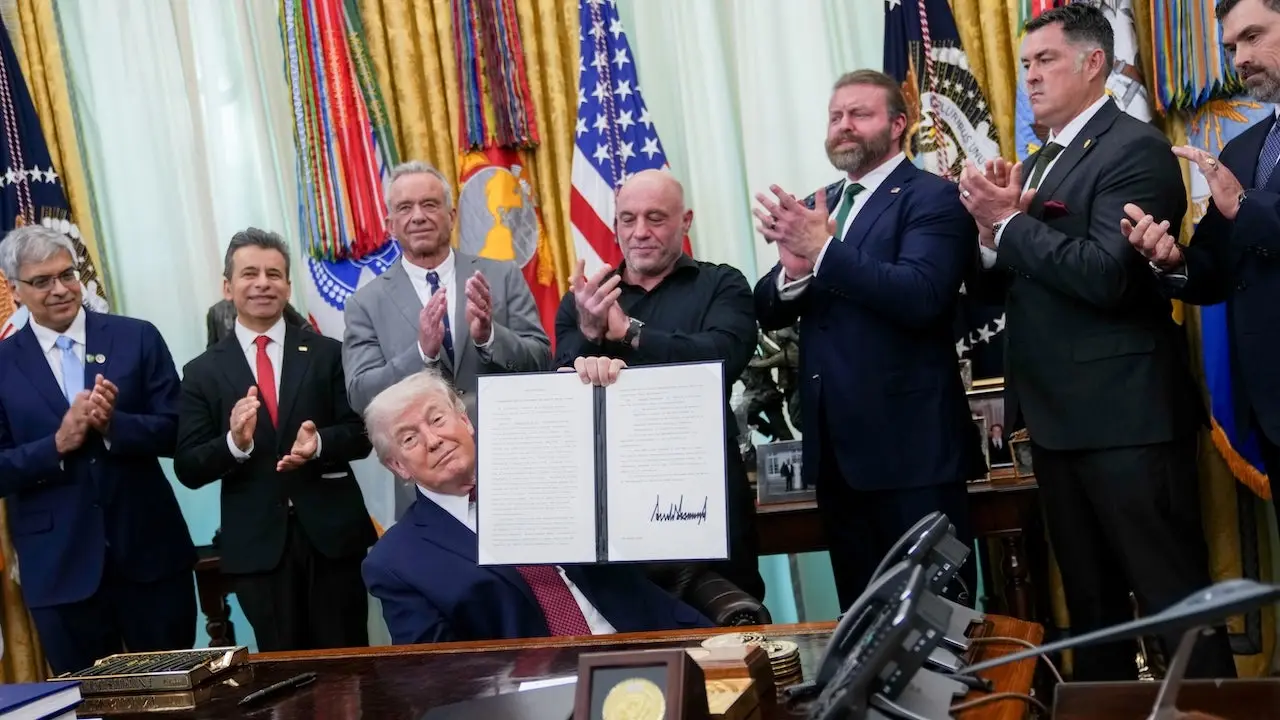
President Donald Trump has signed an executive order aimed at fast-tracking research, funding, and potential FDA approval of psychedelic drugs for treating mental health conditions, drawing mixed reactions from medical professionals and veterans’ advocates.
The executive order, signed Friday, focuses on compounds including ibogaine, psilocybin, LSD, and MDMA, primarily targeting treatment of PTSD, depression, and addiction. These psychoactive substances act largely through serotonin pathways and are currently being studied in controlled clinical settings as potential breakthrough therapies.
“The president’s action opens a pathway to research that will further open doors to expedited approval of this life-saving medicine as a treatment for our veterans — and society — who have suffered for decades from treatment-resistant PTSD, TBI, and depression,” said Jay Kopelman, former Marine Corps lieutenant colonel and CEO of Mission to Live Foundation in San Diego.
The order specifically requires the Veterans Affairs Health System to begin psychedelics research and clinical trials, potentially offering new options to veterans for whom traditional treatments like selective serotonin reuptake inhibitors (SSRIs) and talk therapy have proven ineffective.
Dr. Marc Siegel, Fox News senior medical analyst, expressed support for Trump’s commitment to funding more research in this field, noting the “big potential” psychedelics hold for severe depression and PTSD treatment.
“It changes brain chemistry in a way that can provide more modulation of dopamine, serotonin and other neurochemicals, making a patient less fearful,” Siegel explained. “At the same time, the psychiatric impact of psychedelics can be useful to change perception in a positive way.”
Juliana Mercer, a 16-year Marine Corps veteran and executive director of Healing Breakthrough, a San Diego-based nonprofit advancing MDMA-assisted therapy for veterans with PTSD, called the president’s move a “meaningful step” forward.
“The people who need this most are those who have already tried everything and found no real relief,” Mercer said. “I think about veterans I served with, people who have done years of therapy, cycled through medications, and are still carrying the weight of their service. Too many are still losing that fight at home.”
However, not all experts share this optimism. Kevin A. Sabet, Ph.D., president and CEO of the Foundation for Drug Policy Solutions in Washington, D.C., expressed significant concerns about the order.
“While we support rigorous research for treatment discovery, President Trump’s executive order on ibogaine puts politics and hype ahead of science by suggesting that a dangerous, unapproved hallucinogen can somehow be a medical treatment,” Sabet said. “Ibogaine remains a Schedule I substance with serious safety concerns, including documented cardiotoxicity and deaths. [The government] should not normalize unproven and risky drugs under the guise of helping those who have served our country.”
Dr. Siegel also cautioned against improper prescribing by unqualified practitioners, warning that “unfettered recreational use and microdosing can increase the risk of psychosis and other anxiety disorders.”
Kopelman acknowledged specific risks associated with ibogaine, particularly its “cardiotoxicity properties.” He explained that the drug “can prolong the QT interval in the heartbeat, which can lead to arrhythmia or even heart attack,” though he noted that these risks can be mitigated through rigorous medical examinations and monitoring during treatment.
Mercer agreed that these treatments aren’t appropriate for everyone. “They can have significant psychological effects and, in some cases, physiological risks, which is why they should only be administered in controlled clinical settings by trained providers,” she said. “Continued research is essential to better understand who these therapies are right for, and who they’re not, before broader implementation.”
Despite the presidential order, these substances still need to complete clinical trials and navigate the standard regulatory pathway, including potential rescheduling from their current status as Schedule I drugs.
“Veterans and others will still be waiting unless we also build the systems to provide this safely at scale, trained providers, reimbursement pathways and clinical care models,” Mercer cautioned. “This is the gap we’ve been highlighting for years, and it still needs to be closed.”
Kopelman emphasized the importance of proper implementation, warning that “one misstep could overturn and sink this entire effort.”
“Most important is the post-medicine integration work that requires multiple therapy sessions overseen by a trauma-informed psychedelic therapist,” he explained. “It’s not like prescribing someone a Tylenol and sending them home — these medicines require medical oversight.”
He added a final caution: “Psychedelics are not a panacea. They are a gateway to healing — but the real work begins after treatment.”
Fact Checker
Verify the accuracy of this article using The Disinformation Commission analysis and real-time sources.

9 Comments
This is an interesting initiative to accelerate psychedelic research and therapy approval. The potential benefits for treating PTSD, depression, and addiction could be significant, but there are also valid concerns that need to be carefully considered.
I agree, the risks and regulatory oversight will be critical as this moves forward. Balancing innovation and safety will be key.
This is an intriguing development in the emerging psychedelics industry. I’ll be watching closely to see how the regulatory landscape evolves and whether this leads to new investment opportunities in related sectors like mining and materials.
While the potential therapeutic benefits of psychedelics are promising, I have some concerns about the Trump administration’s involvement and potential political motivations behind this executive order. Maintaining scientific integrity will be crucial.
That’s a fair point. The political context and implementation details will be important to monitor closely as this initiative progresses.
As a long-term investor in mining and metals, I’m curious to see if this psychedelics initiative could have any indirect impacts on the commodities market. Certain psychedelic compounds are derived from natural sources like psilocybin mushrooms.
That’s an interesting angle I hadn’t considered. Any increase in psychedelic research and production could potentially impact the supply and demand dynamics for relevant minerals and ores.
As someone who has experienced the effects of PTSD, I’m hopeful that this research could lead to new and more effective treatment options. However, the risks and side effects of psychedelics need to be thoroughly understood before widespread adoption.
I agree, safety and responsible use are critical priorities. Careful clinical trials and regulation will be essential.