


Listen to the article
Concerns Mount Over Viral Misinformation on Israel-Iran Conflict
A controversial video by Gazan content creator Bisan Owda has sparked debate among Middle East analysts and media watchdogs for allegedly spreading misinformation about the ongoing Israel-Iran conflict while claiming to correct the record.
The video, which has garnered millions of views across social media platforms, purports to clarify misconceptions about the conflict but contains several disputed claims that regional experts have quickly challenged.
Security analysts point out that one of the video’s central assertions—that Israel has no legal right to defend itself—contradicts established international law. Article 51 of the UN Charter explicitly recognizes a nation’s inherent right to self-defense when facing armed attack. While legal scholars debate the specifics of Israel’s claims regarding preemptive strikes, the blanket denial of Israel’s self-defense rights misrepresents the legal framework governing international conflicts.
“The legal questions around proportionality and imminence are legitimate areas for debate, but dismissing a nation’s fundamental right to self-defense oversimplifies complex international law,” said Dr. Sarah Levinson, professor of international relations at Georgetown University, who reviewed the content of the viral video.
Another misleading claim in the video suggests Iran’s military actions are narrowly targeted at U.S. military installations in Arab countries. Recent reporting from multiple news agencies contradicts this assertion. Iranian missiles and drones have reportedly struck or threatened civilian infrastructure across several Gulf states, including Saudi Arabia, the United Arab Emirates, Qatar, Kuwait, Bahrain, and Oman.
Gulf state officials have expressed alarm about attacks affecting ports, oil infrastructure, and urban areas—not just military targets. The widespread nature of these strikes has heightened tensions throughout the region and raised concerns about regional stability.
The video also portrays Israel as uniquely expansionist while omitting mention of Iran’s extensive proxy network that spans multiple countries. Security experts note that Tehran has established and supported armed groups across the Middle East for decades, including Hezbollah in Lebanon, various militias in Iraq, the Houthis in Yemen, and Hamas in Gaza.
“Iran’s strategy of regional influence through proxy forces represents one of the most significant geopolitical developments in the Middle East over the past forty years,” explained regional analyst Robert Kaplan. “Any discussion of regional power projection that ignores this reality presents an incomplete picture.”
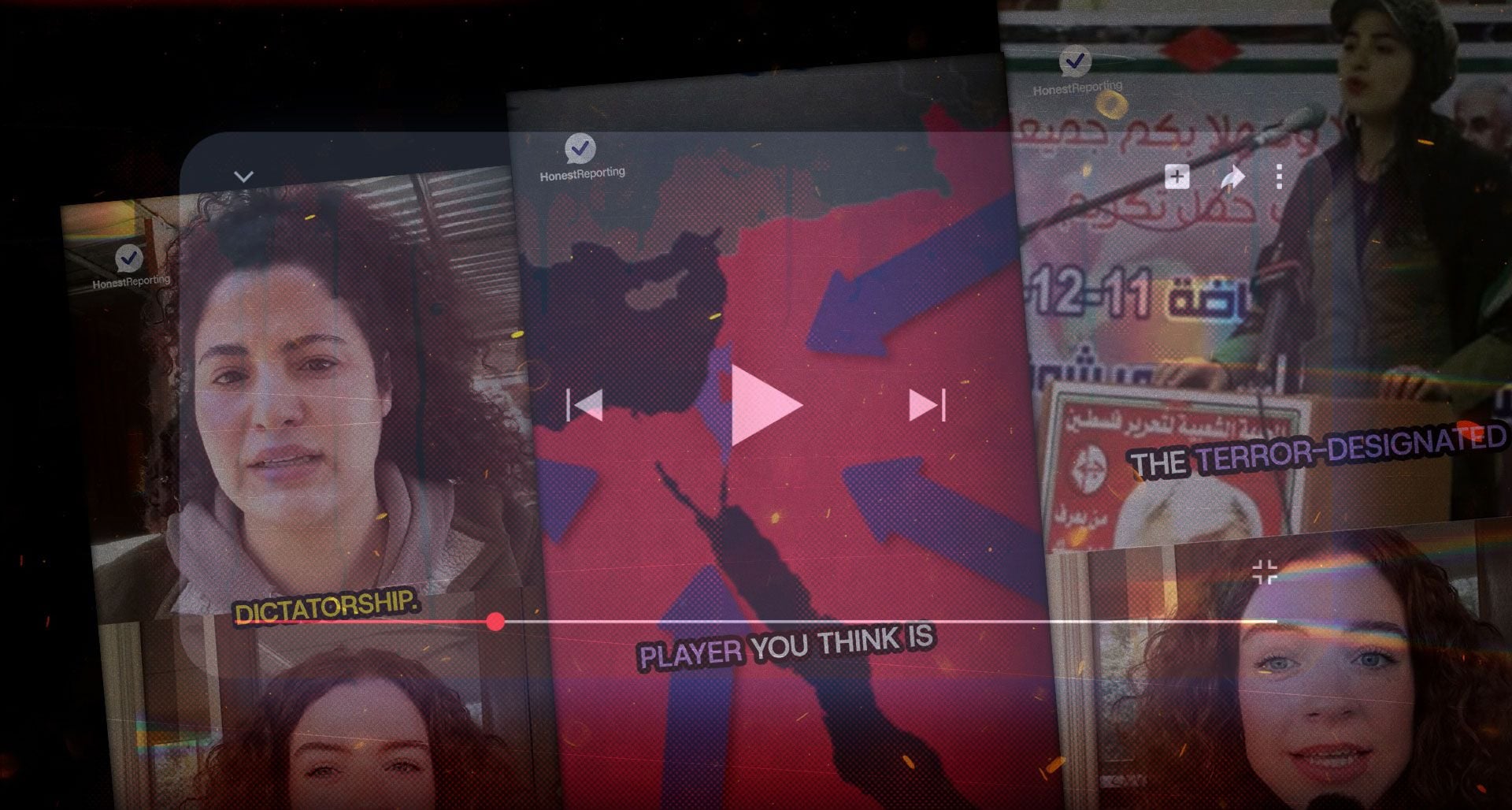
Background checks on Owda have raised additional questions about potential biases in her presentation. Reports from earlier this year indicated her previous appearances at events organized by the Popular Front for the Liberation of Palestine (PFLP), a group designated as a terrorist organization by the United States, the European Union, and several other countries. She has allegedly been photographed wearing PFLP insignia and militant attire.
Media literacy experts warn that such viral content can significantly impact public understanding of complex geopolitical situations, especially when packaged as educational correction.
“When misinformation reaches millions under the guise of setting the record straight, it can be particularly damaging to public discourse,” said media analyst Jennifer Torres. “The appearance of authority combined with simplified narratives makes these distortions difficult to counter once they’ve spread.”
The viral spread of the video comes at a particularly sensitive moment in Middle East relations, as tensions between Israel and Iran have escalated to direct military exchanges for the first time in decades. Diplomatic efforts to prevent further escalation remain ongoing, with several world powers urging restraint.
As social media platforms continue to grapple with the challenge of misinformation, analysts emphasize the importance of consulting diverse, credible sources when forming opinions on complex international conflicts.
Fact Checker
Verify the accuracy of this article using The Disinformation Commission analysis and real-time sources.

12 Comments
The article raises valid concerns about the spread of misinformation on this sensitive topic. It’s crucial that we rely on authoritative sources and expert analysis when discussing matters of international law and security.
Agreed. Debunking false claims and providing context is important to prevent the further proliferation of misinformation, which can have real-world consequences.
This is an important issue, and I appreciate the effort to fact-check the viral claims. Clarifying the legal framework around self-defense is key to having a nuanced discussion on this complex conflict.
You’re right, dismissing Israel’s self-defense rights oversimplifies the situation. The legal debates around proportionality and imminence are worth examining closely.
This is an important topic that deserves careful analysis. I appreciate the effort to examine the legal framework around self-defense and challenge the oversimplified claims in the viral video.
You’re right, the legal debates around proportionality and imminence are legitimate areas for discussion. Dismissing a nation’s fundamental self-defense rights is problematic.
While the legal intricacies of this conflict may be complex, I appreciate the effort to clarify the fundamental rights of nations to self-defense. Nuanced discussions are needed to address these issues responsibly.
Exactly. Oversimplifying the situation or dismissing established legal principles is counterproductive. This analysis helps provide a more balanced perspective on a contentious issue.
As someone interested in geopolitics and international relations, I found this article to be a valuable contribution to the ongoing discourse around the Israel-Iran conflict. Fact-checking viral claims is crucial.
I agree. Addressing misinformation and providing context from security analysts and legal experts is essential for informed discussions on this complex and sensitive topic.
As someone who follows news and analysis on Middle East geopolitics, I found this article to be a thoughtful and well-researched examination of the viral claims surrounding the Israel-Iran conflict.
Absolutely. Fact-checking and providing context from security experts is crucial to counter the spread of misinformation on such a sensitive and complex issue.