


Listen to the article
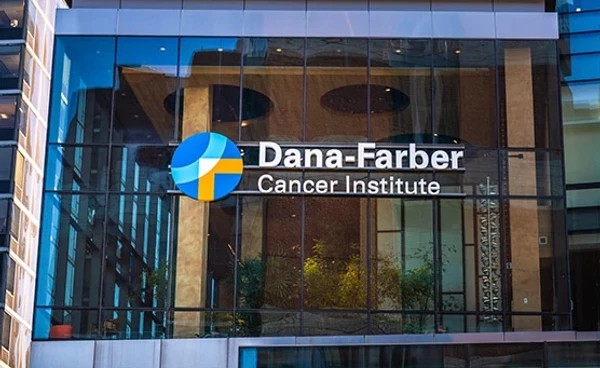
Dana-Farber Cancer Institute has agreed to pay $15 million to settle a lawsuit filed under the False Claims Act, acknowledging that researchers used images and data that were “misrepresented and/or duplicated” in applications for National Institutes of Health grants.
The claim was filed in April 2024 by data sleuth Sholto David, roughly three months after he published allegations of research irregularities that ultimately led Dana-Farber to retract or correct dozens of studies. As part of the settlement, David will receive $2.63 million, or 17.5 percent of the total amount, while more than $8.5 million “shall constitute restitution to the United States.”
“I’m very pleased with the settlement,” said Eugenie Reich, one of David’s attorneys. “And the main thing is that the lion’s share goes back to NIH and should go back out for science.”
The False Claims Act enables plaintiffs to sue on behalf of the government, with whistleblowers eligible to receive up to 30 percent of settlements. The mechanism has proven effective against research institutions in recent years, with similar cases involving Columbia University, Brigham and Women’s Hospital, and Duke University. In the Duke case, which resulted in a $112.5 million settlement, whistleblower Joseph Thomas received $33.8 million.
Legal experts note that the Dana-Farber settlement, while consistent with typical research misconduct settlements of around $10 million, came unusually quickly.
“This is a really quick settlement,” said Eva Gunasekera, a whistleblower attorney at Tycko & Zavareei LLP and former DOJ senior counsel for healthcare fraud. “The case was filed in 2024. In False Claims Act-speak, usually cases take at least three years from the filing to some resolution, and usually much longer than that.”
David’s investigation began while writing blog posts for For Better Science. After examining papers from Memorial Sloan Kettering researcher Sam Yoon in late 2023, David followed connections to Dana-Farber researchers. His January 2024 blog post highlighted image similarities and possible data manipulation in dozens of papers authored by Dana-Farber affiliates, including William Hahn, the institute’s chief operating officer, and Irene Ghobrial, senior vice president for experimental medicine.
Shortly after David’s blog post, Dana-Farber requested journals retract six of the 58 studies he identified and correct dozens more, as reported by the New York Times.
The original complaint filed in April 2024 included 95 studies by Dana-Farber researchers that allegedly reflected “a pattern of fraud” and listed several grants that relied on data from those papers. While the settlement does not name specific researchers, it refers to “Researcher 1” and “Researcher 2” who oversaw grants under scrutiny.
The settlement identifies 14 papers published under Researcher 1’s supervision. The senior author on 12 of these papers is Kenneth C. Anderson, director of Dana-Farber’s LeBow Institute for Myeloma Therapeutics and Jerome Lipper Multiple Myeloma Center. Anderson has 10 retractions in the Retraction Watch database, dating back to 2008.
According to the settlement, “Researcher 1 failed to exercise sufficient oversight over these researchers in the course of their preparation of the Subject Publications and their conduct of the underlying research reported in the Subject Publications. As a result, Dana-Farber spent funds from the Group 1 Subject Grants that were unallowable.”
The second group of grant applications referenced in the settlement relied on research described in a 2015 Nature Medicine article whose senior author was physician-scientist Ruben Carrasco. The settlement notes that “certain images and data in the Journal Article were misrepresented and/or duplicated.” The article received two image-related corrections in 2024.
Reich pointed out an unusual aspect of the case: “Most of the evidence is public and has been in plain sight for a long time for people tenacious enough to track it all down and bring it all together. I think often we’re playing whack-a-mole with a bad article and we’re not always seeing the patterns, and we’re not always seeing the money behind the patterns.”
For David, this was his first involvement with a False Claims Act lawsuit. “People might see it as an attack on universities or an attack on science,” David said. “At the end of the day, the purpose of this is, the money goes back to the NIH, and the NIH are going to spend on cancer research.”
He added, “Most of the stuff that is written about does not come out in a press release like this. That doesn’t make it any less important.”
Fact Checker
Verify the accuracy of this article using The Disinformation Commission analysis and real-time sources.

10 Comments
This case highlights the need for robust data integrity and transparency in medical research, especially when it involves public funding. The Dana-Farber Institute’s actions are troubling, but I’m glad the government is holding them accountable. The False Claims Act appears to be an effective tool for uncovering and addressing these issues.
You’re right, maintaining public trust is essential for medical research institutions. This settlement should serve as a wake-up call for the industry to strengthen its self-policing and whistleblower protections.
This is a concerning case of image manipulation and research misconduct at a major cancer institute. It’s good to see whistleblowers like Sholto David stepping up to expose these issues and that the government is taking action through the False Claims Act. Proper oversight and accountability are critical in medical research.
Agreed. The settlement amount and the whistleblower’s share show this was a serious case. Hopefully, it sends a strong message about the consequences of research fraud and encourages more scientists to come forward when they see unethical practices.
The Dana-Farber settlement is a cautionary tale about the dangers of research misconduct, especially when it involves the manipulation of data and images. While it’s disappointing to see this happen at a prestigious institution, I’m glad the government is taking strong action through the False Claims Act. This should serve as a wake-up call for the entire medical research community.
You make a good point. This case highlights the importance of transparency, peer review, and rigorous data validation in the scientific process. Maintaining public trust is crucial, so I hope Dana-Farber and other institutions learn from this experience and implement tighter controls.
This is a serious breach of ethics and a violation of the public’s trust in medical research. While the $15 million settlement is substantial, the real cost is to the credibility of the scientific community. Whistleblowers like Sholto David play a vital role in exposing these issues, and the False Claims Act provides an important mechanism for accountability. Hopefully, this case will spur much-needed reforms in the industry.
I agree. The damage to public confidence in medical research is perhaps the most concerning aspect of this case. Strengthening data integrity standards and whistleblower protections should be a top priority for the industry moving forward.
It’s disheartening to see a respected cancer institute like Dana-Farber engage in such unethical research practices. However, I’m encouraged that the whistleblower mechanism and False Claims Act were able to expose this and recover funds for the government. Rigorous oversight and accountability are critical to ensure the integrity of medical research.
Absolutely. The millions in restitution to the NIH is a positive outcome, as those funds can now be redirected to support legitimate, high-quality research. Whistleblowers play a vital role in keeping the scientific community honest.