


Listen to the article
In a significant development that has clarified recent political misinformation in the Philippines, fact-checkers have debunked claims that President Ferdinand Marcos Jr. faces demands for resignation from the World Bank and Philippine Supreme Court.
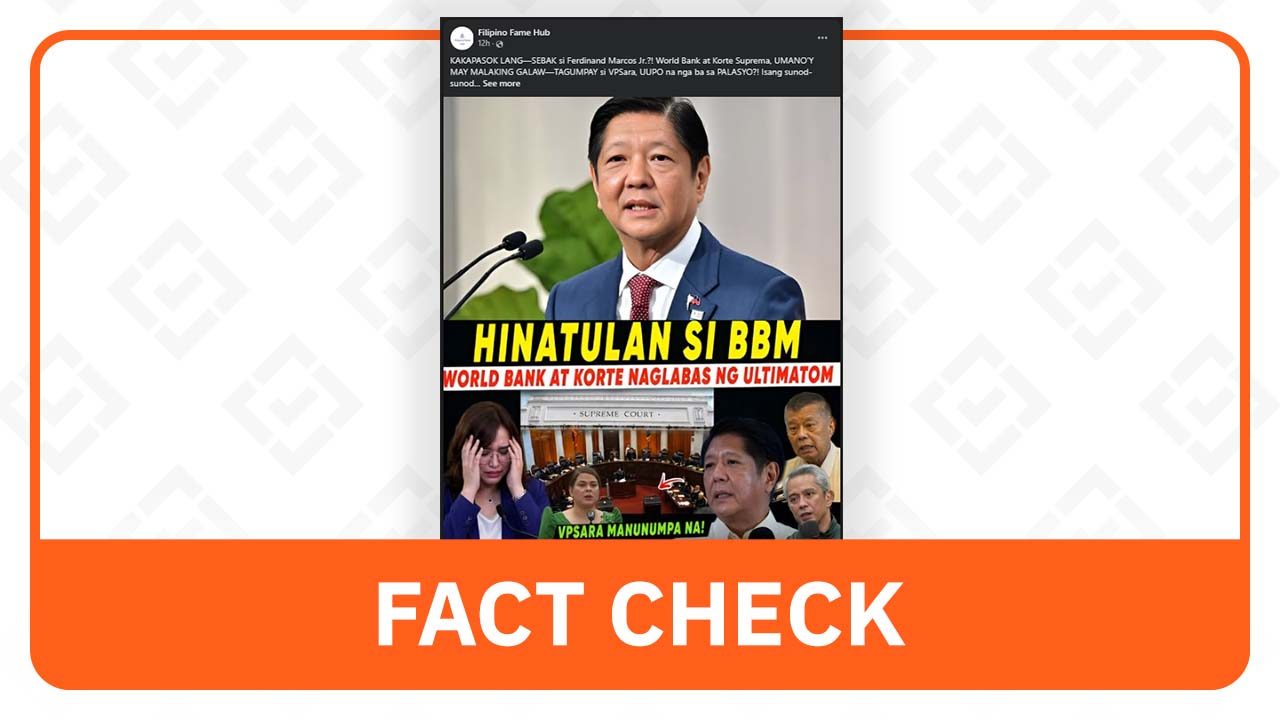
The false narrative, which gained considerable traction on social media, suggested that Vice President Sara Duterte was poised to replace Marcos following an alleged ultimatum from these institutions. The fabricated story appeared on a Facebook page called “Filipino Fame Hub,” garnering over 5,600 reactions, 3,400 comments, and 344 shares since its posting on March 2.
The misleading post featured images of both Marcos and Duterte, with superimposed text claiming: “Hinatulan si BBM, World Bank at Korte naglabas ng ultimatum, VP Sara manunumpa na!” (Bongbong Marcos has been sentenced, the World Bank and Supreme Court issued an ultimatum, VP Sara to be sworn in!). This narrative was further amplified through a YouTube video posted by “Pinas News Insider,” which has accumulated over 70,000 views.
Contrary to these assertions, President Marcos remains actively fulfilling his presidential duties. Recently, he welcomed South Korean President Lee Jae-myung to Malacañang for a two-day state visit, during which they signed multiple agreements strengthening bilateral cooperation in defense, technology, and agriculture. Malacañang Palace has also issued statements confirming that the President is “well, healthy, and working even on a Saturday,” addressing separate rumors about his health.
The constitutional process for presidential removal in the Philippines makes the claims particularly implausible. According to Section 2, Article XI of the 1987 Philippine Constitution, a sitting president can only be removed through impeachment proceedings initiated exclusively by the House of Representatives—not through directives from the World Bank or Supreme Court orders.
While two impeachment complaints were indeed filed against Marcos in January 2026, both were dismissed by the House justice committee on February 4 for being “insufficient in substance.” The House of Representatives subsequently approved the committee report rejecting these complaints on February 10, effectively granting Marcos immunity from further impeachment attempts for one year, as stipulated in the Constitution.
The first impeachment complaint, filed by lawyer Andre de Jesus, had accused Marcos of enabling the arrest of former president Rodrigo Duterte on an International Criminal Court warrant, alleged illegal drug use, and mismanagement of the national budget. The second complaint, submitted by the Makabayan bloc, charged Marcos with betrayal of public trust.
This incident highlights the ongoing challenge of political misinformation in the Philippines, particularly on social media platforms where fabricated political narratives can rapidly gain visibility. The constitutional provision preventing new impeachment complaints against Marcos until January 2027 means the president’s position remains secure from this particular form of challenge for the immediate future.
Media literacy experts continue to encourage the public to verify information from official sources and recognized news outlets, particularly when encountering dramatic claims about government leadership changes that lack supporting evidence from legitimate institutions.
Fact Checker
Verify the accuracy of this article using The Disinformation Commission analysis and real-time sources.

10 Comments
The spread of misinformation through social media is a concerning trend that can undermine public trust. This fact-check serves as an important reminder to be critical consumers of online content and to verify claims before sharing them.
Fact-checking efforts like this are essential for maintaining transparency and accountability in government. It’s good to see the authorities taking steps to address the dissemination of false narratives around the Philippine presidency.
Agreed. Fact-checking is a crucial tool for upholding democratic principles and ensuring the public has access to accurate information about their elected leaders and institutions.
The fabricated story about an ultimatum from the World Bank and Supreme Court seems to have gained significant traction online. It’s worrying to see how false narratives can proliferate, underscoring the need for robust fact-checking efforts to counter disinformation.
Absolutely. Fact-checking is vital to maintain accurate and reliable information, especially around important political developments. It’s good that this specific claim has been debunked.
This fact-check highlights the ongoing challenge of combating misinformation, particularly in the digital age. It’s a testament to the importance of rigorous journalism and fact-based reporting to counter the spread of false narratives.
It’s reassuring to see President Marcos remains in office and actively fulfilling his duties, despite the false claims of an impending resignation. Responsible journalism and fact-checking help uphold the integrity of the democratic process.
It’s concerning to see how quickly misinformation can gain traction online, even around important political developments. This fact-check serves as a valuable reminder to be vigilant and to rely on authoritative sources when seeking information.
While the Philippines faces complex political dynamics, it’s crucial that discussions are grounded in facts rather than unsubstantiated rumors. This fact-check helps provide clarity and counters the spread of misinformation.
This is an important fact-check. It’s good to see the World Bank and Philippine Supreme Court have not actually called for President Marcos’ resignation. Misinformation can spread quickly on social media, so it’s crucial to verify claims before believing them.