


Listen to the article
Viral Video of Elephant Falling onto Truck Raises Questions About Authenticity
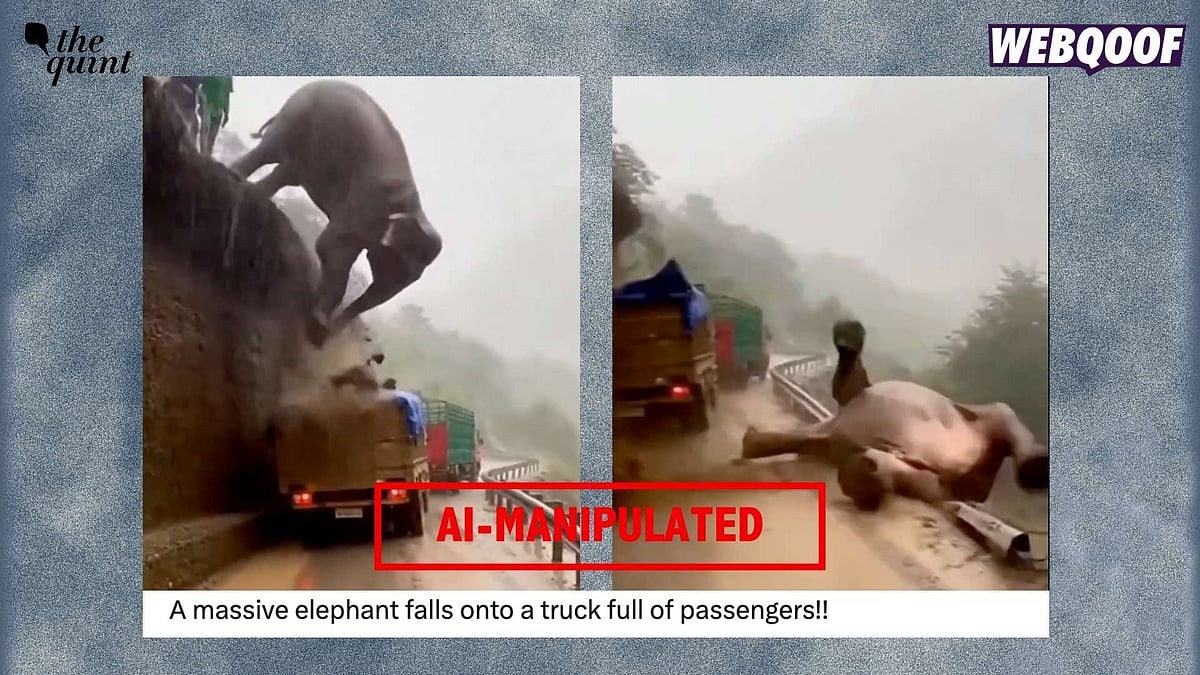
A dramatic video purportedly showing a large elephant tumbling down a steep, muddy embankment and colliding with a brown flatbed truck has gone viral across social media platforms in recent days, drawing millions of views and thousands of shares. The footage, reportedly captured during rainy conditions in an unspecified mountainous region, has prompted widespread concern about the welfare of both the elephant and any potential occupants of the vehicle.
However, a closer examination of the video by digital forensics experts and fact-checkers has uncovered several inconsistencies that call into question the authenticity of the footage.
Most notably, detailed frame-by-frame analysis revealed significant anomalies throughout the video. In multiple sequences, parts of the elephant’s body, including a leg, appear to materialize suddenly in a manner inconsistent with natural movement or physics. These abrupt transitions suggest digital manipulation rather than authentic footage.
“The way certain elements appear and disappear in the video doesn’t align with how objects would naturally move in physical space,” explained Dr. Maya Richardson, a digital forensics specialist who reviewed the footage. “These inconsistencies are common indicators of computer-generated imagery or manipulated video content.”
Another critical discrepancy involves the truck’s movement after the supposed impact. Despite the video appearing to show a multi-ton elephant crashing onto the flatbed vehicle – an event that would likely cause significant damage and potentially halt or drastically alter the truck’s trajectory – the vehicle continues moving forward with no visible reaction to such a massive collision.
Wildlife experts have also noted that the behavior of the elephant in the footage doesn’t match typical elephant movement patterns, particularly when navigating steep terrain. African and Asian elephants are generally adept at traversing difficult landscapes and tend to be cautious around steep embankments, making the scenario depicted in the video highly unusual.
This incident comes amid growing concern about the proliferation of AI-generated or manipulated wildlife videos on social media platforms. Conservation organizations have warned that such content can spread misinformation about animal behavior and potentially harm conservation efforts by normalizing dangerous human-wildlife interactions or creating false narratives about animal capabilities.
“Manufactured content involving wildlife can have real-world impacts,” said Carlos Mendez of the International Wildlife Conservation Coalition. “These videos not only spread misinformation but can affect how people perceive human-wildlife conflict situations and influence public opinion on conservation policies.”
The viral spread of the video highlights the challenges facing social media platforms and users in identifying manipulated content. Despite containing obvious visual inconsistencies when analyzed carefully, the video managed to circulate widely before being flagged by fact-checkers.
Digital media literacy experts recommend that viewers approach dramatic wildlife videos with healthy skepticism, particularly those showing unlikely scenarios or extreme situations. Red flags include unusual animal behavior, physically impossible movements, or inconsistent interactions with the environment.
As video manipulation technology becomes increasingly sophisticated and accessible, distinguishing between authentic and manipulated content continues to grow more challenging. This incident serves as a reminder of the importance of verifying the source and authenticity of viral content before sharing or accepting it as factual.
Social media platforms have implemented various measures to combat misinformation, including partnering with fact-checking organizations and developing AI tools to identify manipulated media. However, experts argue that more robust solutions and greater user awareness are needed to effectively address the problem.
The elephant video joins a growing catalog of viral wildlife content that has later been debunked, underscoring the ongoing challenges of maintaining information integrity in the digital age.
Fact Checker
Verify the accuracy of this article using The Disinformation Commission analysis and real-time sources.

6 Comments
This is a good reminder to be cautious about viral videos, especially ones that seem too dramatic or unlikely to be real. Digital forensics can uncover many cases of AI-generated or manipulated footage.
Thanks for the fact-check on this viral video. It’s always wise to dig deeper and verify claims, especially when they involve rare or extreme events like an elephant falling on a truck. Appreciating the work of digital forensics experts here.
While it’s disappointing to find out this viral video is not real, I’m glad the truth is being uncovered. Fact-checking is so important to counter the spread of misinformation, especially on social media. Looking forward to more insights from the investigation.
Interesting to see this video analyzed. The strange movement of the elephant’s limbs does seem to indicate CGI or digital manipulation. It’s important to verify the authenticity of viral content before spreading it.
This is a good example of why we should be skeptical of sensational viral videos. The detailed frame-by-frame analysis clearly shows this footage was digitally manipulated, not a real incident. Appreciate the diligence of the fact-checkers.
I’m curious to learn more about the specific anomalies and inconsistencies that the experts spotted in the video analysis. What kinds of digital manipulation techniques were likely used to create this fake footage?