


Listen to the article
Fabricated Israeli Passport of Ukrainian President Circulates on Social Media
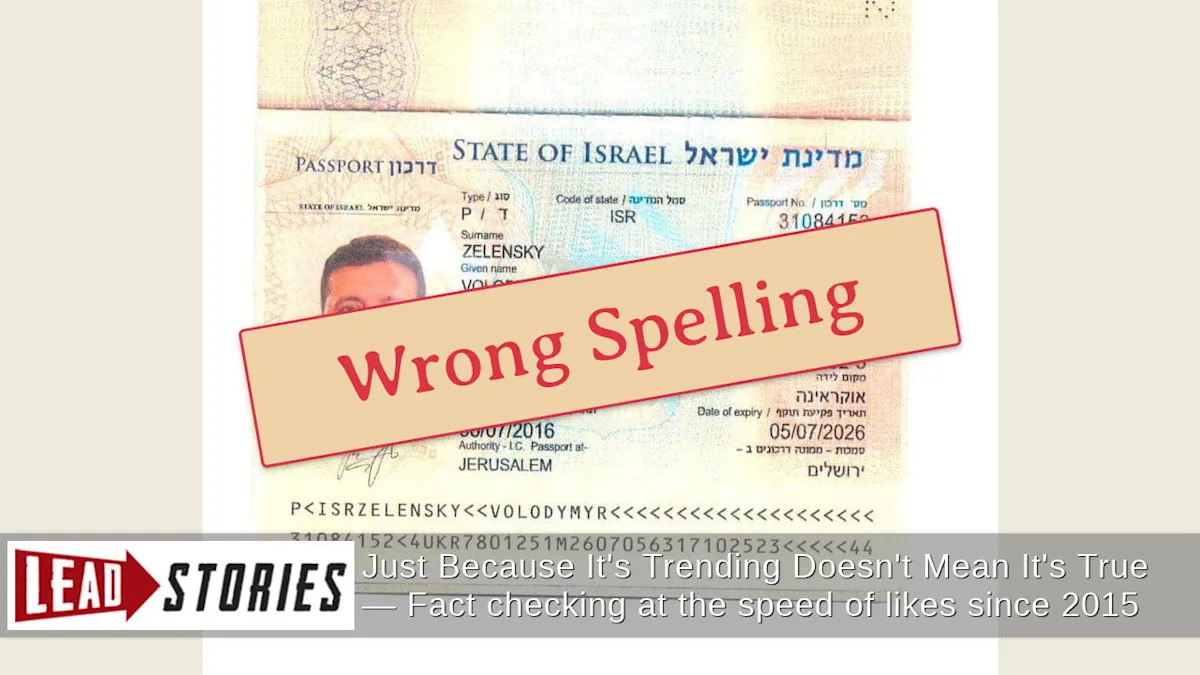
A digitally altered image purporting to show Ukrainian President Volodymyr Zelenskyy’s Israeli passport has been circulating widely on social media platforms, fueling false claims about his citizenship status prior to taking office. Analysis of the document reveals multiple inconsistencies that confirm it is a fabrication.
The manipulated image, which began spreading on X (formerly Twitter) on December 11, 2025, displays what appears to be an Israeli passport featuring Zelenskyy’s photograph. However, close examination exposes several key errors that betray its fraudulent nature.
Most notably, the document misspells the Ukrainian president’s surname as “Zelensky” rather than the correct “Zelenskyy” with two y’s at the end, as it appears on his official Ukrainian presidential website. This basic error alone raises immediate red flags about the image’s authenticity.
Further scrutiny reveals technical flaws in the passport’s machine-readable zone (MRZ) – the two lines of text at the bottom of passport pages designed for electronic scanning. According to International Civil Aviation Organization standards, these lines should consistently indicate the issuing country’s code. A legitimate Israeli passport would display “ISR” in both instances, but the fabricated document incorrectly shows “4UKR” on the second line, violating international passport protocols.
The timing and context of these social media claims are particularly significant. The posts emerged amid unconfirmed reports about a search of the apartment belonging to Andriy Yermak, one of Zelenskyy’s top advisors. While Ukraine’s anti-corruption agency NABU confirmed that a search took place, it has not released any detailed information about items discovered, contrary to what some social media posts suggest.
Ukrainian law adds another dimension to these claims. Until June 2025, Ukraine prohibited its citizens from holding multiple citizenships. Even after this policy changed, public officials and judges – including the president – remain barred from holding foreign passports. Had evidence of dual citizenship emerged during Zelenskyy’s 2019 presidential campaign, it likely would have created a significant political scandal, yet no credible reports of such controversy exist.
The fabricated passport appears to be part of a pattern of disinformation campaigns targeting the Ukrainian leadership. Similar false claims circulated in 2022 suggesting Zelenskyy held Russian citizenship, while in 2023, manipulated images allegedly showing First Lady Olena Zelenska’s Israeli passport spread online.
Disinformation analysts have noted these campaigns often align with broader efforts to undermine public trust in the Ukrainian government, particularly during its ongoing conflict with Russia. By suggesting hidden loyalties or deception among Ukraine’s leadership, such fabrications attempt to sow doubt about the government’s legitimacy.
Social media platforms have struggled to contain the spread of such manipulated content, which often proliferates rapidly even when shared by accounts clearly labeled as parody or satire.
This incident highlights the continuing challenges of digital literacy in an era where sophisticated image manipulation tools are widely available. Experts recommend that social media users verify information through multiple reliable sources before accepting or sharing potentially misleading content, particularly when it involves high-profile political figures in geopolitically sensitive regions.
As tensions in Eastern Europe continue, disinformation researchers anticipate similar fabrications will likely continue to emerge, targeting key political figures with false claims designed to create confusion and distrust among both domestic and international audiences.
Fact Checker
Verify the accuracy of this article using The Disinformation Commission analysis and real-time sources.

12 Comments
This reminds me of the importance of verifying information, especially when it comes to high-profile political figures. Obvious errors like the misspelling of Zelenskyy’s name are clear red flags.
Absolutely. Small details like that can reveal a lot about the credibility of a claim. It’s good the article dug into the technical flaws as well.
It’s good to see this false claim about Zelenskyy’s citizenship addressed so comprehensively. Fact-checking efforts like this help uphold the integrity of information.
In an era of increasing disinformation, it’s heartening to see robust fact-checking efforts like this. Identifying the specific errors in the fabricated passport image is key.
Debunking false narratives around political leaders is crucial work. I appreciate the thorough analysis provided here to expose the fraudulent nature of this passport image.
This debunking highlights the importance of scrutinizing claims, even when they may seem plausible at first glance. The technical errors identified are a clear giveaway of the fabrication.
Interesting fact check. It’s good to see these false claims about Zelenskyy’s citizenship being debunked with clear evidence. Spreading misinformation can be so damaging, so I’m glad this was addressed.
Agreed, it’s crucial to counter these kinds of fabricated stories with the facts. Fact-checking is essential in today’s information landscape.
The manipulation of images and documents to spread misinformation is a real concern these days. Kudos to the fact-checkers for taking the time to carefully examine this claim.
Yes, the level of detail in this debunking is impressive. It’s important to not let these kinds of fabrications gain traction.
Fact-checking is so crucial, especially when it comes to influential political figures. The analysis provided here is thorough and convincing in exposing this false claim.
I agree. Detailed examinations like this help maintain trust in reliable information and counter the spread of misinformation.