


Listen to the article
Trump Threatens Iran with Military Action Over Strait of Hormuz Closure
President Donald Trump issued a stark ultimatum to Iran on Easter Sunday, threatening massive military strikes against the country’s infrastructure if it fails to reopen the strategically vital Strait of Hormuz, a key global oil shipping route.
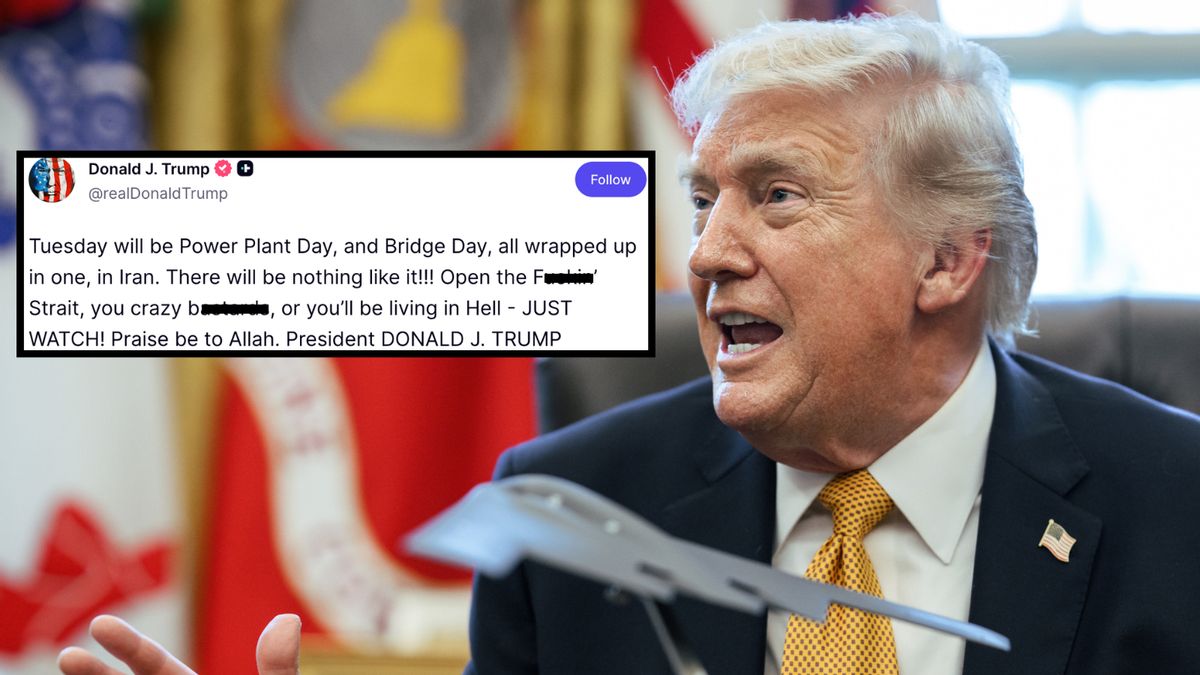
In a profanity-laced message posted on Truth Social early on April 5, Trump wrote: “Tuesday will be Power Plant Day, and Bridge Day, all wrapped up in one, in Iran. There will be nothing like it!!! There will be nothing like it!!! Open the F*kin’ Strait, you crazy bst*rds, or you’ll be living in Hell – JUST WATCH! Praise be to Allah. President DONALD J. TRUMP.”
The authenticity of the post was confirmed through archived records of the president’s Truth Social account, where it appeared shortly after 8 a.m. EST on Sunday. The message establishes a deadline of Tuesday, April 7, for Iran to comply with U.S. demands regarding the strait.
Trump doubled down on these threats in comments to ABC News later the same day, saying, “Every day, they’re gonna have to build more bridges, and they’re gonna have to build more power plants and more everything else. … There’s been no country that’s ever taken a pounding like that.”
The president then issued an explicit 48-hour ultimatum: “If it happens, it happens. And if it doesn’t, we’re blowing up the whole country. We’re blowing up, as I said, it’s going to be bridge day and it’s going to be power plant day in the country of Iran.”
The Strait of Hormuz, which connects the Persian Gulf to the Gulf of Oman and the Arabian Sea, represents one of the world’s most crucial maritime chokepoints. Approximately 20% of global oil shipments pass through this narrow waterway. Its closure during the ongoing U.S.-Israeli conflict with Iran has triggered significant disruptions in global energy markets.
According to a Reuters analysis, the strait’s closure has created economic winners and losers across the Middle East. Iran, Oman, and Saudi Arabia have reportedly benefited financially from the resulting spike in oil prices, while nations lacking alternative shipping routes have suffered billions in losses.
Global oil markets have experienced substantial volatility since the closure, with prices climbing steadily as traders factor in the reduced supply and increased shipping costs for rerouted vessels. Energy analysts have warned that a prolonged closure could further destabilize international markets already strained by the regional conflict.
The White House has not yet provided clarification regarding the president’s unusual closing phrase “Praise be to Allah” in his Truth Social post, which stands out as an atypical reference from the president. When contacted for comment about the meaning behind Trump’s statement, White House officials had not responded by press time.
This latest escalation comes amid the broader context of the U.S.-Israeli military campaign against Iran, which has generated numerous claims and reports examined by fact-checking organizations. The conflict has increasingly drawn international concern about the potential for wider regional destabilization.
Military analysts suggest that strikes against Iranian infrastructure would represent a significant escalation in the conflict, potentially triggering retaliatory measures and further endangering regional stability. The threatened targeting of civilian infrastructure like power plants raises questions about compliance with international humanitarian law.
As Tuesday’s deadline approaches, diplomatic channels remain uncertain, with no public indication of negotiations to defuse the situation. Regional allies and international organizations have yet to issue formal responses to Trump’s explicit threats of widespread destruction.
Fact Checker
Verify the accuracy of this article using The Disinformation Commission analysis and real-time sources.

8 Comments
Tensions continue to escalate between the US and Iran over the strategic Strait of Hormuz. Trump’s harsh rhetoric and threats of military action are certainly concerning. I wonder how this situation will unfold and what impact it could have on global energy markets and commodity prices.
You raise a good point. The closure of the Strait of Hormuz would have significant ramifications for global oil supply and prices. It’s a delicate geopolitical situation that requires careful diplomacy to resolve peacefully.
This dispute over the Strait of Hormuz highlights the complex and volatile nature of global energy and commodity markets. Any disruption to oil shipments through this strategic chokepoint could have far-reaching impacts. I’m curious to see how this situation evolves and what mitigating steps, if any, are taken to prevent an escalation.
You make a good point. Maintaining the free flow of energy resources through critical maritime chokepoints is essential for global economic stability. Diplomatic efforts to find a peaceful resolution should be the priority for all stakeholders involved.
The potential closure of the Strait of Hormuz is a significant geopolitical and economic risk that bears close monitoring. Trump’s threats, if accurate, seem intended to pressure Iran but could backfire and lead to unintended consequences. I hope both sides can find a way to deescalate tensions through diplomacy.
The reported threats from President Trump against Iran’s infrastructure are concerning and could potentially lead to a dangerous military confrontation. While Iran’s closure of the Strait of Hormuz would be a serious geopolitical and economic issue, responding with ultimatums and the promise of devastating attacks seems like an unwise escalation.
This is a concerning development, but I’m skeptical of the reported tone and language used in Trump’s alleged social media post. Threats of military strikes and infrastructure damage seem like an escalation that could further destabilize the region. I hope cooler heads can prevail and find a diplomatic solution.
I agree, the inflammatory rhetoric from both sides is counterproductive. Maintaining open lines of communication and finding a negotiated settlement should be the priority to avoid further conflict and potential disruptions to critical energy supply routes.