


Listen to the article
Trump Stakes Political Capital on Voter ID Bill, Faces Uphill Senate Battle
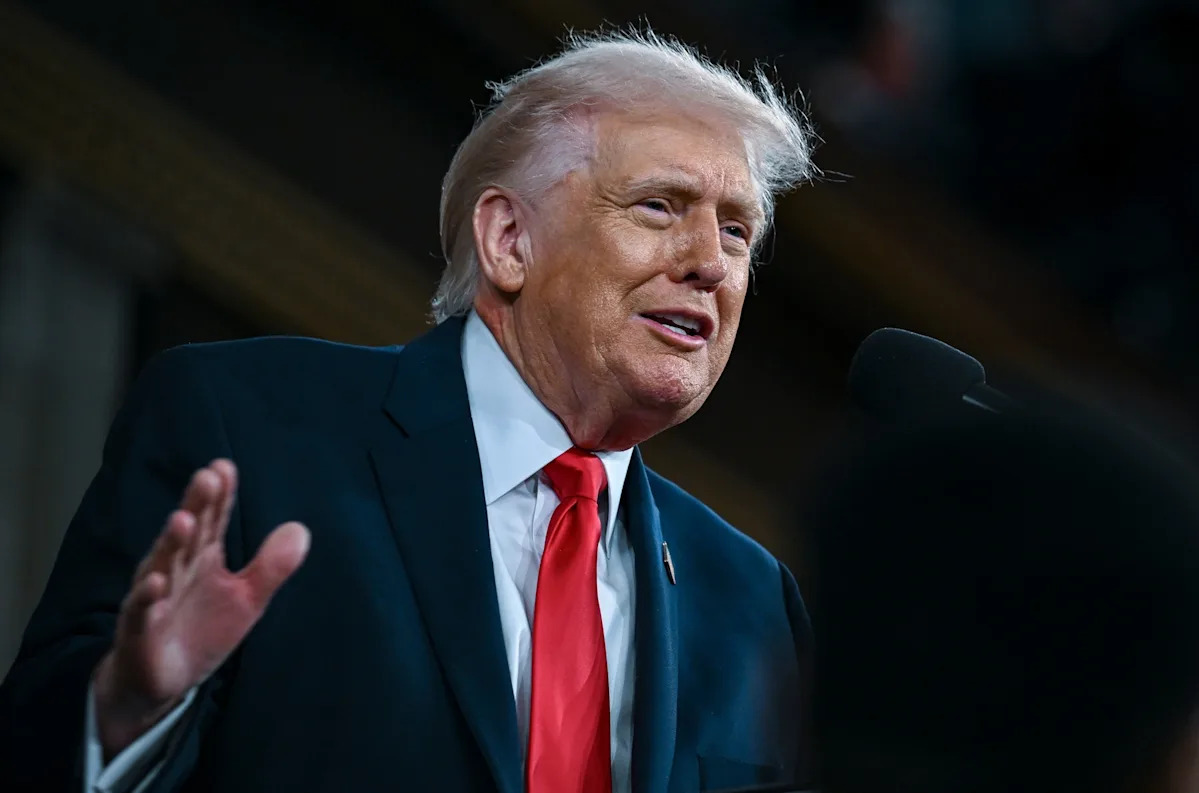
President Donald Trump has drawn a firm line in the legislative sand, announcing over the weekend that he will refuse to sign any legislation into law until Congress passes the SAVE America Act, a Republican election reform bill that would implement sweeping changes to voter ID requirements nationwide.
“The SAVE America Act supersedes everything else,” Trump declared in a social media post Sunday, adding that he “will not sign other Bills until this is passed.” The legislation, which passed the House in February, faces significant challenges in the Senate where it would need to overcome a 60-vote threshold.
Senate Majority Leader Chuck Schumer has already described the bill as “dead on arrival,” arguing it would prevent eligible Americans from voting due to document requirements. Even within Republican ranks, optimism is scarce. Senate Majority Leader John Thune acknowledged last month that securing unified Republican support on every procedural vote would be difficult, though he promised the bill would eventually receive a vote.
The SAVE America Act would mandate photo identification at polling places across all 50 states and require proof of citizenship for voter registration. Currently, 36 states have some form of voter ID requirement, according to the National Conference of State Legislatures.
Trump has made several claims about election security to bolster support for the bill, including asserting during his recent State of the Union address that American elections are “rigged, stolen, and a laughingstock all over the world.” However, evidence contradicts this narrative. Election audits and studies continue to show that noncitizen voting remains exceedingly rare.
In Georgia, pre-2024 audits identified just 20 registered noncitizens among 8.2 million registered voters, with only nine having cast ballots. Similarly, Iowa found only 87 ballots flagged as potentially cast by noncitizens out of 2.3 million registered voters. The Heritage Foundation, a conservative think tank, has documented just 1,620 instances of voter fraud nationwide since 1982.
“It amounts to a vanishingly rare phenomenon that is not going to impact the outcome of our elections in any real way,” said Sean Morales-Doyle, a voting rights expert at the Brennan Center for Justice.
While public support for voter ID requirements is indeed strong – an August 2025 Pew Research Center study found 83% of Americans favor requiring photo ID at polls, including 71% of Democrats and 95% of Republicans – critics argue the SAVE America Act goes much further than simple ID requirements.
The bill’s proof of citizenship requirements for registration have drawn particular concern. According to the Brennan Center for Justice, more than 21.3 million Americans don’t have readily available proof of citizenship documents, with at least 3.8 million lacking these documents entirely because they were lost, destroyed, or stolen.
These documentation gaps disproportionately affect certain communities. About 11% of Americans of color lack proper documentation compared to 8% of white Americans. The Movement Advancement Project found even larger disparities regarding driver’s licenses, with 21% of Black Americans and 23% of Hispanic Americans lacking valid licenses, compared to only 8% of white Americans.
“Laws like this have historically resulted in many eligible citizens being delayed or denied access to the ballot due to paperwork issues, database mismatches, or bureaucratic error,” warned ACLU senior policy counsel Xavier Persad.
The legislation has also drawn criticism for potentially creating barriers for married women whose surnames have changed. While the bill includes provisions for addressing name discrepancies through additional documentation and affidavits, Democratic critics like Rep. Dina Titus argue this creates “onerous identification requirements” that could disenfranchise voters.
Republicans counter these concerns by emphasizing the bill’s provisions for handling such situations. “The SAVE America Act offers a simple process for name changes, including an affidavit at polls if needed,” said Republican Rep. Mark Harris.
Some Republican lawmakers have expressed reservations about the timing. Alaska Sen. Lisa Murkowski cautioned that “imposing new federal requirements now, when states are deep into their preparations, would negatively impact election integrity by forcing election officials to scramble to adhere to new policies likely without the necessary resources.”
Notably, despite Trump linking the bill to mail-in voting restrictions in his weekend statements, the SAVE America Act does not ban mail-in voting. It does, however, restrict mail-in registration by requiring proof of citizenship to be presented in person. Trump’s comments appear to reference a separate proposal, the Make Elections Great Again Act, which would dramatically limit mail-in voting.
As midterm elections approach, the standoff over the SAVE America Act highlights the deepening partisan divide over election administration and voting access in America, with significant implications for the legislative agenda in the months ahead.
Fact Checker
Verify the accuracy of this article using The Disinformation Commission analysis and real-time sources.

9 Comments
As someone who follows commodity markets, I’m wondering how the SAVE America Act could impact things like mining, energy, and related equities. Stricter voter ID requirements could theoretically affect regulations and policies that impact those industries. It’s an interesting angle to consider.
As someone who follows mining and energy news, I’m intrigued by how this proposed voter ID law could impact those industries. Stricter voting rules could affect regulations and policies that impact commodity producers and energy firms. I’ll be watching this story closely.
That’s an interesting angle. Changes to voting laws can certainly have ripple effects across the economy, including for natural resource and energy companies. It’s worth considering those potential implications.
The SAVE America Act seems like a controversial piece of legislation. On one hand, stronger voter ID requirements could boost confidence in the electoral process. But on the other, there are valid concerns it could make voting harder for certain groups. I’m curious to see how the Senate debate unfolds.
Agreed, it’s a complex issue without any easy solutions. Reasonable people can disagree on the best approach to balance election integrity and voter access.
Interesting to see Trump pushing for this voter ID bill. While it aims to enhance election integrity, the concerns around disenfranchising voters are concerning. I wonder if there’s room for compromise to address both security and accessibility.
Yes, it’s a tricky balance. Voter ID laws can improve security, but they need to be implemented carefully to ensure they don’t unfairly restrict access to voting.
I’m a bit skeptical of Trump’s insistence that the SAVE America Act must be passed before he’ll sign any other legislation. Seems like a high-stakes political gambit that could backfire if he can’t rally enough Senate Republicans. Curious to see how this all plays out in Congress.
Yes, it’s a risky strategy. Holding other must-pass bills hostage is a bold move that could antagonize moderates in both parties. We’ll have to wait and see if it pays off for Trump and the GOP.