


Listen to the article
AI-Generated Trump Image Spreads Misinformation Amid Iran Tensions
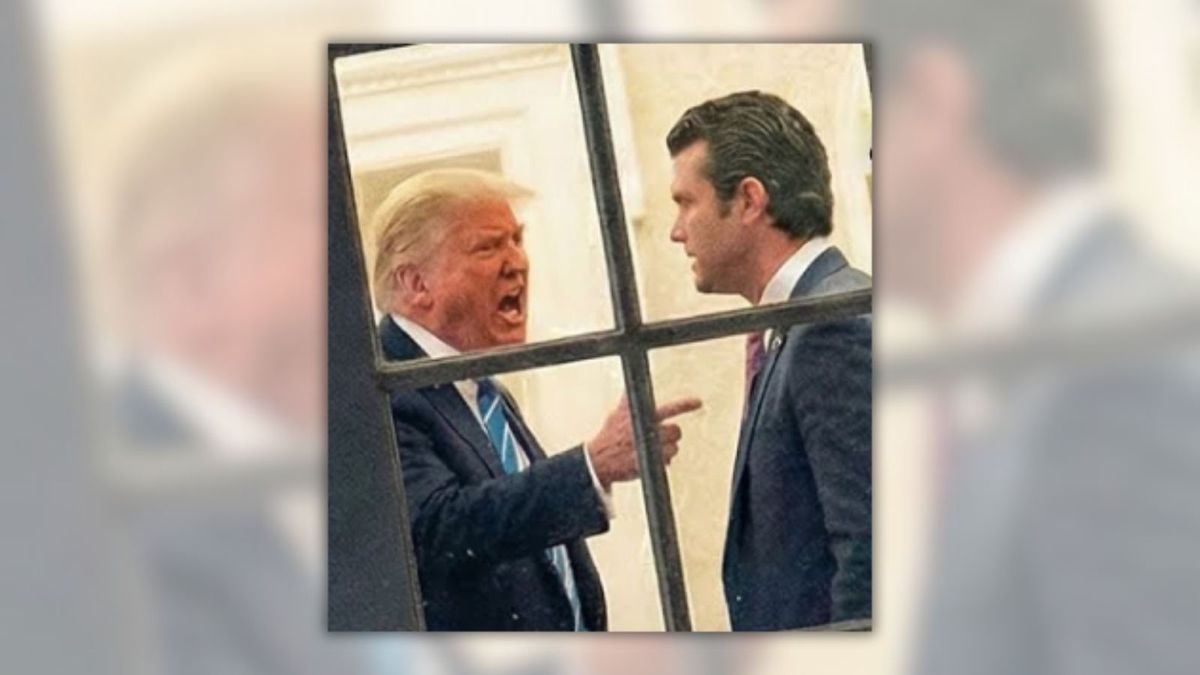
A fabricated image purportedly showing President Donald Trump angrily confronting Defense Secretary Pete Hegseth in the Oval Office has circulated widely across social media platforms, gaining millions of views despite being completely artificial.
The manipulated photo, which depicts Trump pointing and apparently yelling at Hegseth through double doors with the Resolute Desk visible in the background, gained significant traction in early March 2026. The image spread rapidly following the U.S. and Israel’s joint airstrikes against Iran on February 28, which resulted in the death of Iranian Supreme Leader Ayatollah Ali Khamenei.
After thorough investigation, fact-checkers have confirmed the image was created using artificial intelligence and has no basis in reality. The fabricated photo first appeared as a thumbnail on YouTuber Keith Edwards’ channel on December 4, 2025, nearly three months before it went viral in connection with the Iran conflict.
Several elements reveal the image’s fraudulent nature. Most tellingly, the Oval Office features a single exterior door, not the double doors shown in the AI creation. Additionally, no reputable news organizations reported on what would have been a major story had such a confrontation actually occurred.
The image’s spread illustrates the growing challenge of AI-generated misinformation during international crises. Within hours of the U.S.-Israeli airstrikes, the fake photo appeared on multiple platforms, including Threads, where one user posted it with the caption, “The Iran war seems to be going great I see.” Though that post eventually received a community note indicating the image’s questionable origins, it continued spreading.
Social media users across Bluesky, Facebook, Reddit, Tumblr and X (formerly Twitter) shared the fabricated image extensively. One post on X alone garnered more than 4 million views despite eventually receiving a community note warning about its authenticity.
Even after some users acknowledged the image might be AI-generated or manipulated, many chose to leave their posts online. One Threads user wrote, “DISCLAIMER: there are reports that this photo is old or possibly edited. Others are saying it is AI. I welcome all analysis. However, I’m leaving it up for now because it’s hilarious.”
The incident highlights persistent concerns about how rapidly AI-generated content can contaminate public discourse during sensitive geopolitical moments. Despite platform efforts to label questionable content with community notes, such measures often come after misinformation has already spread widely.
The timing of this particular fabrication proved especially problematic as it coincided with real international tensions. The U.S. and Israeli strikes against Iran, which resulted in the death of Ayatollah Khamenei, represented a major escalation in Middle East conflicts, creating a heightened information environment where fabricated imagery could potentially influence public perception of the administration’s internal dynamics.
Media literacy experts point to several warning signs that could help users identify AI-generated images, including unnatural lighting, inconsistent shadows, architectural inaccuracies, and the absence of corroborating reports from credible news sources.
As AI tools become increasingly sophisticated and accessible, distinguishing between authentic and fabricated media will require greater vigilance from both platforms and users, particularly during international crises when the potential consequences of misinformation are most severe.
Fact Checker
Verify the accuracy of this article using The Disinformation Commission analysis and real-time sources.

10 Comments
This is a good example of why we should be cautious about blindly accepting images and media we see online, especially around politically charged topics. The fact-checking process here is reassuring, but the larger challenge of AI-enabled disinformation remains daunting.
Absolutely. The ability of AI to generate highly convincing yet completely fabricated content is a real threat to informed discourse. Developing robust digital media literacy is crucial for navigating this landscape.
It’s disheartening to see how quickly misinformation can spread, even when it’s been debunked. The proliferation of AI-generated content is a serious concern that goes beyond just political issues. We need to find ways to build greater public awareness and resilience.
Agreed. Combating AI-enabled disinformation is a complex challenge that requires collaboration across technology, media, and educational spheres. Maintaining trust in information sources will be critical going forward.
The use of AI to create fake images and spread disinformation is quite concerning. While the technology has many beneficial applications, it can also be misused to sow confusion and erode trust. We need stronger safeguards and education to address this problem.
I agree. Combating AI-generated misinformation will require a multi-pronged approach involving technical, regulatory, and educational solutions. It’s an issue that deserves serious attention from policymakers and the public.
The fact that this manipulated image gained such traction before being debunked highlights the ongoing struggle against misinformation. While the fact-checking process is reassuring, the underlying issue of AI’s potential for abuse remains deeply troubling. We must stay vigilant.
Absolutely. As AI capabilities continue to advance, the threat of malicious actors using the technology to spread disinformation will only grow. Developing robust solutions to address this challenge should be a top priority for policymakers and tech leaders.
Fascinating how disinformation can spread so quickly online these days. It’s good that fact-checkers were able to verify the Trump-Hegseth image as AI-generated rather than real. We need to be vigilant about distinguishing truth from fiction, especially around sensitive political topics.
Absolutely. The proliferation of AI-manipulated media is a real challenge for maintaining an informed public discourse. Robust fact-checking efforts are crucial to combat the spread of misinformation.