


Listen to the article
The Indian government’s recent denial of a Reuters report on smartphone security requirements has sparked controversy, as digital rights watchdog Internet Freedom Foundation challenges the veracity of the official position.
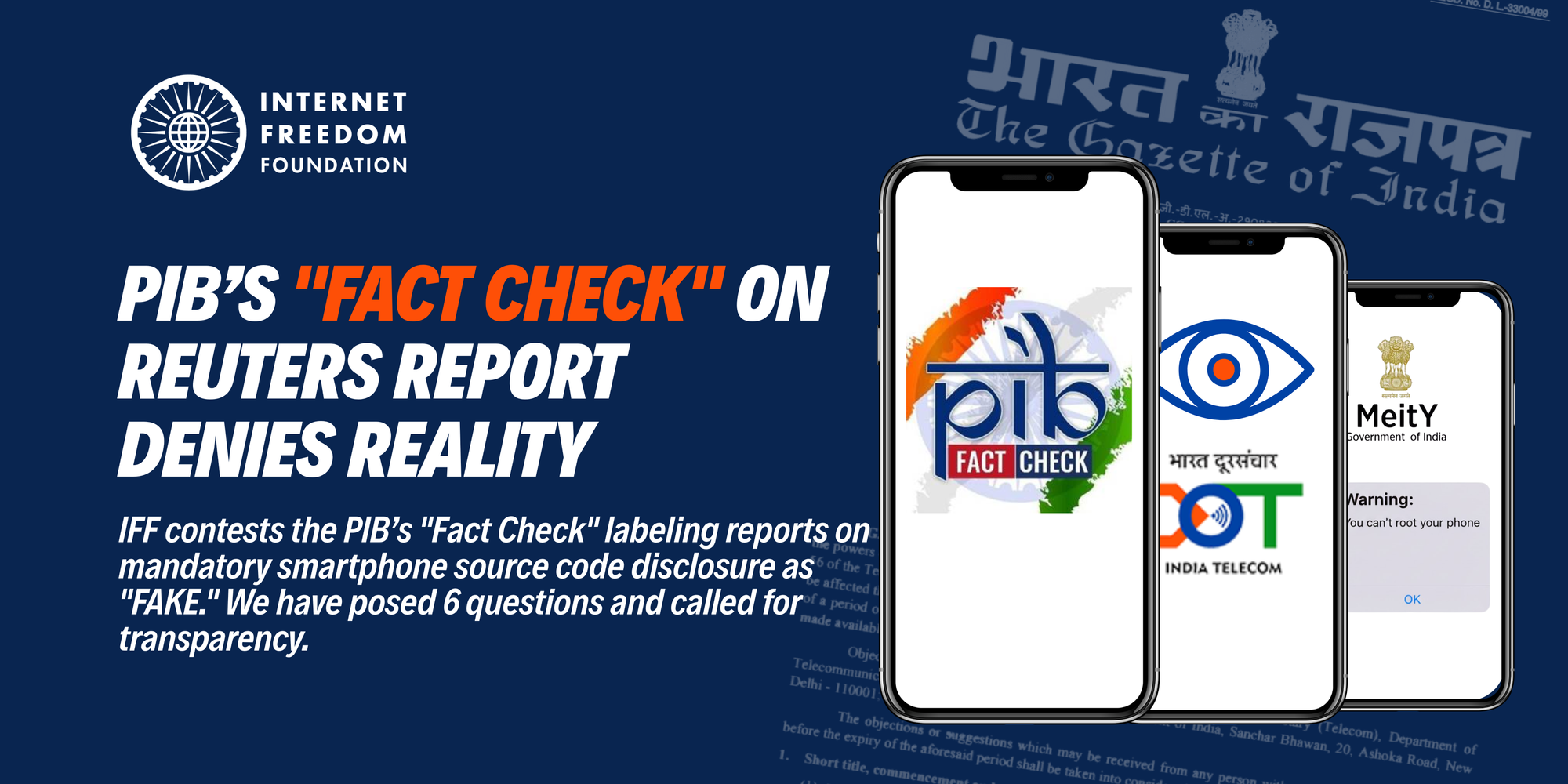
The Press Information Bureau (PIB) issued a “Fact Check” on January 13 dismissing as “FAKE” a Reuters report that claimed the government was planning to require smartphone manufacturers to share source code and implement new security measures. According to the PIB, the government has “NOT proposed any measure” to force such disclosures, characterizing any consultations as merely “routine.”
The Internet Freedom Foundation, however, points to evidence contradicting this denial. They note the existence of detailed technical documents available on government websites, specifically the “Indian Telecom Security Assurance Requirements” (ITSAR), which appears to outline precisely the kind of measures the government claims are not being proposed.
“A simple denial via social media cannot erase the existence of policy drafts that are already in the public domain or under active discussion,” the IFF stated in their response. The organization has called for greater transparency from authorities regarding these potential regulations.
The controversy highlights growing tensions between India’s regulatory ambitions in the tech sector and concerns about privacy, security, and business implications. India represents one of the world’s largest and fastest-growing smartphone markets, with over 600 million users, making any regulatory changes particularly significant for global manufacturers.
In response to the government’s denial, the IFF has posed six specific questions to the Ministry of Electronics and Information Technology (MeitY) and the Department of Telecommunications (DoT), seeking clarity on several aspects of the alleged proposal.
The organization is asking whether the ITSAR document exists as a government policy draft, whether the version available on government websites is current, and whether authorities intend to enforce specific provisions such as source code sharing, retention of system logs, and mechanisms to prevent jailbreaking of devices.
The IFF is also inquiring about whether MeitY has been formally tasked with finalizing and enforcing these requirements, extending beyond the DoT’s traditional jurisdiction. They seek confirmation of reported meetings between government officials and major smartphone manufacturers like Apple and Samsung, where these provisions were allegedly discussed.
Perhaps most critically, the foundation questions why no public consultation has been conducted given the potential impact on hundreds of millions of Indian smartphone users. “Stakeholder consultation cannot be limited to closed-door meetings with big tech giants,” the IFF emphasized.
The dispute touches on broader issues of digital sovereignty, with India joining other nations like China and Russia in seeking greater control over technology operating within its borders. However, requirements like source code disclosure would face significant resistance from international manufacturers concerned about intellectual property protection and security vulnerabilities.
Industry analysts suggest such measures could potentially impact India’s ability to attract investment in its growing electronics manufacturing sector, a key component of Prime Minister Narendra Modi’s “Make in India” initiative.
The PIB’s fact-check claim that “no final regulations have been framed” leaves room for the possibility that preliminary drafts exist but haven’t been formalized. The IFF has called on the government to release the current draft of the ITSAR for public scrutiny immediately if this is indeed the case.
As this situation develops, it underscores the complex balance India must strike between national security concerns, digital rights, and maintaining an attractive environment for global technology companies.
Fact Checker
Verify the accuracy of this article using The Disinformation Commission analysis and real-time sources.

12 Comments
As someone following developments in the Indian tech sector, this story caught my eye. The discrepancy between the government’s public stance and the documented security requirements is puzzling. I hope a transparent process can resolve this issue in a way that addresses legitimate concerns without stifling innovation.
Agreed, it’s critical that policymaking in this space is based on evidence and meaningful dialogue with all affected parties. Maintaining trust in digital institutions will be key for India’s continued tech growth.
As a tech enthusiast, I’m closely following this debate around India’s telecom security requirements. It’s a complex issue with valid arguments on both sides. I hope policymakers can find a solution that addresses legitimate concerns without unduly burdening companies or infringing on user rights.
You make a good point. These decisions need to carefully weigh national security, consumer protection, and industry impact. Transparent, evidence-based policymaking will be crucial.
This is an interesting case study in the complexities of balancing national security, consumer protection, and technological advancement. I’ll be watching closely to see how the Indian government navigates this situation and responds to the challenges raised by the digital rights group.
You make a good point. Transparency and inclusive policymaking will be crucial in this case. It will be interesting to see if the government can reconcile the apparent discrepancies and chart a path forward that satisfies all stakeholders.
This seems like an important issue for India’s digital economy and the broader tech ecosystem. I’m curious to see how the government responds to the challenges raised by the digital rights group. Balancing security needs with innovation and user rights is never easy.
Absolutely, and the mixed messaging from official sources is concerning. Hopefully they can provide more clarity and engage constructively with stakeholders to find an appropriate solution.
This story highlights the challenges governments face in balancing security concerns and privacy/transparency. I can understand the desire for enhanced safeguards, but the contradictory messaging is concerning. Hopefully a constructive dialogue can resolve the discrepancies.
Agreed, it will be important to see how this unfolds and whether a reasonable compromise can be reached. Striking the right balance is never easy when it comes to sensitive security matters.
Interesting to see this debate around telecom security requirements in India. Seems like there’s some conflicting information from official sources. I’m curious to learn more about the technical details in the ITSAR document and how it relates to the government’s public stance.
Transparency is key in these policy discussions, so it’s good the digital rights group is pushing for more clarity. I wonder what the potential implications could be for tech companies and consumers.