


Listen to the article
Health Department Debunks Fake COVID-19 “Cicada” Variant Lockdown Advisory
False information claiming an “emergency lockdown” due to a new COVID-19 variant is circulating on social media platforms in the Philippines, prompting an official response from health authorities.
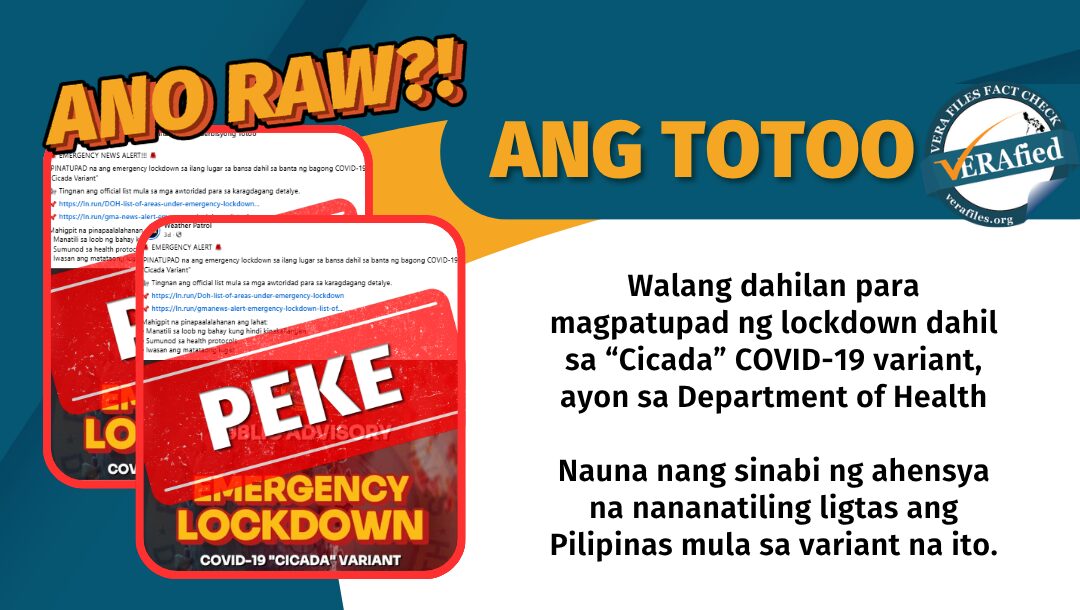
At least two Facebook pages have been sharing a fabricated graphic bearing the Department of Health (DOH) logo, warning of an “emergency lockdown” allegedly starting April 10 due to the “Cicada” COVID-19 variant. The DOH has categorically dismissed these claims as fake.
The misleading posts, which began appearing as early as April 1 from a Facebook page ostensibly dedicated to weather updates, featured what appeared to be an official public advisory. The graphic prominently displayed text reading: “PUBLIC ADVISORY: EMERGENCY LOCKDOWN COVID-19 ‘CICADA’ VARIANT STARTING APRIL 10, 2026.”
Adding to the confusion, the captions accompanying these posts contradicted the graphic’s content, suggesting that lockdowns were already being implemented in certain regions across the Philippines. Between April 1 and 3, these Facebook pages also shared links purporting to contain lists of “areas under emergency lockdown,” falsely attributing this information to the DOH.
The health department moved swiftly to counter the misinformation. In an official advisory released on April 3, the DOH explicitly labeled posts from three Facebook pages as “fake” and reassured the public that there was no cause for concern.
“There is no reason to worry and to implement a lockdown,” the DOH stated in Filipino, emphasizing that “the Philippines remains safe from this variant,” referencing their earlier statement from March 31.
The emergence of these false claims coincides with legitimate international reports of COVID-19 cases linked to the Cicada strain detected in several countries, including the United States and the United Kingdom, potentially contributing to the confusion and anxiety that misinformation purveyors are exploiting.
According to a March 19 report published by the U.S. Centers for Disease Control and Prevention (CDC), COVID-19 variant BA.3.2, nicknamed Cicada, was first identified in a respiratory sample collected on November 22, 2024, in South Africa. The CDC report noted that “as of February 11, 2026, BA.3.2 had been reported in 23 countries. Detections began increasing in September 2025.”
The fraudulent posts originated from two Facebook pages: “Weather Patrol” (originally created on October 8, 2024, as “Weather Watch Philippines”) and “Malasakit News Update: Balitang Sapat, Serbisyong Totoo” (created February 23, 2026). Together, these pages’ seven misleading posts garnered nearly 4,000 interactions, indicating substantial reach among social media users.
Public health experts have long warned about the dangers of health-related misinformation, particularly during disease outbreaks. False claims about lockdowns and new variants can create unnecessary panic, undermine trust in public health institutions, and potentially lead to harmful behaviors or decisions.
This incident highlights the ongoing challenge of combating misinformation on social media platforms, where false content can spread rapidly before fact-checkers and authorities have an opportunity to respond. It also underscores the importance of verifying information through official channels, particularly regarding public health matters.
The DOH continues to monitor the global COVID-19 situation and has urged the public to rely only on official announcements regarding public health measures and disease variants.
Fact Checker
Verify the accuracy of this article using The Disinformation Commission analysis and real-time sources.

8 Comments
This is a good reminder to always verify information, especially when it comes to important public health matters. I’m glad the authorities were able to quickly refute these false lockdown claims.
While the ‘Cicada’ variant claim appears to be unfounded, it’s important we continue monitoring the COVID-19 situation and remain prepared to respond appropriately if new variants emerge. Transparent and fact-based communication from authorities is crucial.
Spreading misinformation during a public health crisis is extremely irresponsible. I’m glad the Department of Health was able to quickly refute these false claims about a ‘Cicada’ variant and lockdowns.
This seems like another attempt to spread misinformation about COVID-19. I’m glad the health authorities quickly debunked these false claims about a ‘Cicada’ variant and lockdowns. We need to stay vigilant against the spread of such fabricated stories.
While it’s good that the authorities debunked this false lockdown claim, it’s concerning that misinformation about COVID-19 is still being spread so actively. We need to stay vigilant and rely on credible sources.
It’s disappointing to see malicious actors trying to capitalize on public fears by creating fake COVID-19 advisories. I commend the health department for swiftly addressing this misinformation and reassuring the public.
This is yet another example of how important it is to fact-check information, especially when it comes to public health issues. I commend the authorities for their prompt response in debunking these false lockdown claims.
Fabricated COVID-19 stories like this ‘Cicada’ variant lockdown advisory are irresponsible and potentially harmful. I’m glad the Department of Health acted swiftly to set the record straight.