


Listen to the article
US and Israel Strike Iran, Killing Khamenei, Sparking Regional Conflict
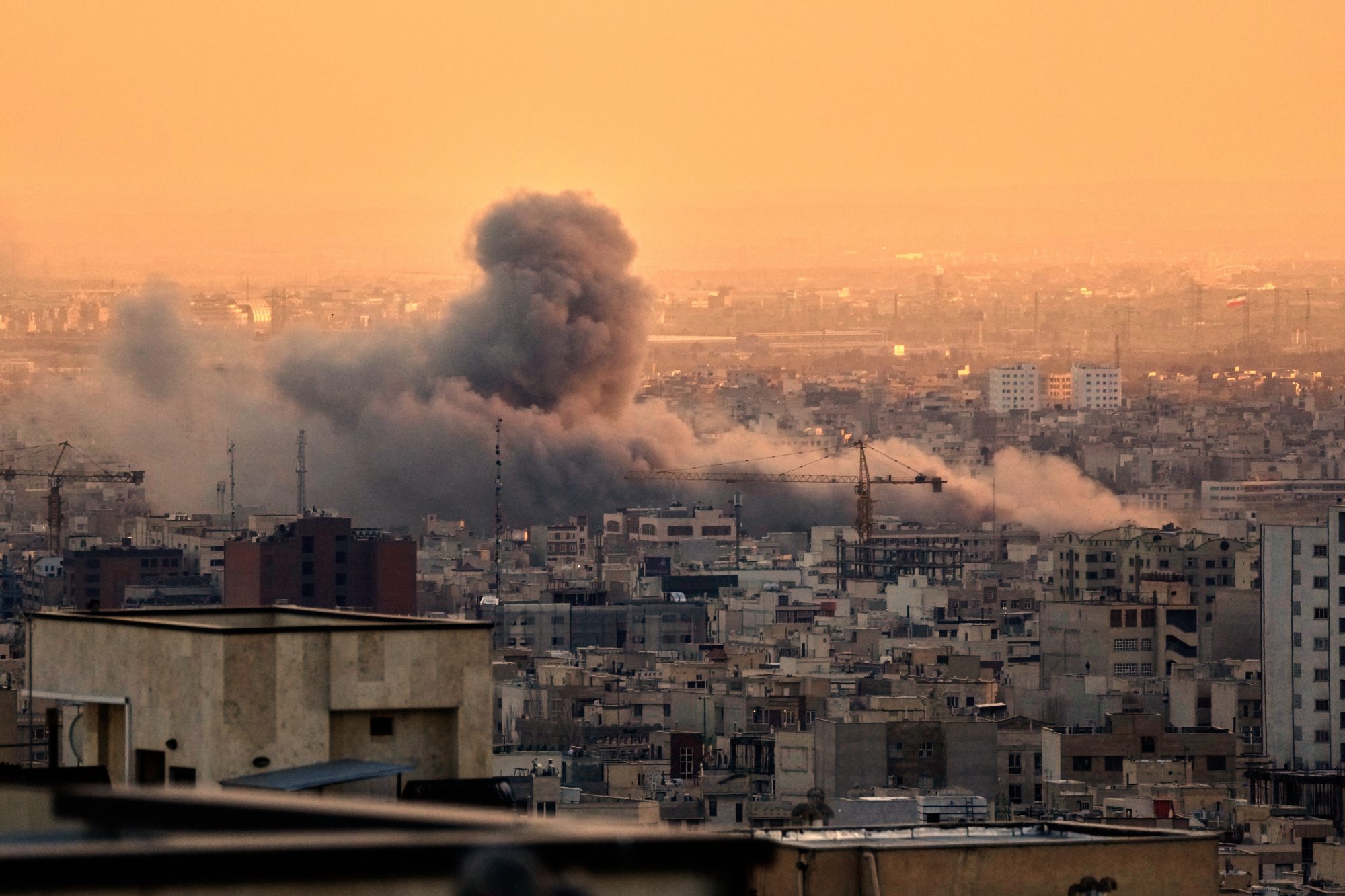
The United States and Israel launched coordinated strikes against Iran over the weekend, killing Supreme Leader Ayatollah Ali Khamenei and triggering a dramatic escalation of hostilities across the Middle East. In response, Iran has retaliated with attacks on multiple countries including Saudi Arabia, Oman, Cyprus, Bahrain, Qatar, the UAE, Kuwait, Lebanon, Iraq and Jordan, while the US and Israel continue military operations against Iranian targets.
The assassination of Iran’s highest authority has sent shockwaves through the region and raised critical questions about the future of the Iranian regime, the legality of the strikes, and the timing of President Trump’s decision to take such dramatic action.
Despite the significant blow to Iran’s leadership, experts remain skeptical about prospects for regime change. Neve Gordon, professor of international law and human rights at Queen Mary University of London, believes that while the US and Israel aim to “produce instability,” these actions are “unlikely to lead to regime change.” He warned that historically, externally-imposed regime change “usually leads to disastrous results.”
Dr. Sanam Vakil, director of the Middle East and North Africa program at Chatham House, emphasized that “external military pressure may weaken a regime” but doesn’t automatically create viable alternatives. Iran’s institutional structure remains “cohesive” with “a deeply embedded ideological structure” and networks extending beyond its borders, giving it the capacity to regenerate under pressure.
Shabnam Holliday, associate professor at the University of Plymouth, noted that the regime shouldn’t be assumed to collapse simply because senior leadership has been eliminated, as they “have the capacity to have new leaders.” Dr. Evaleila Pesaran from the University of Cambridge believes contingency plans for leadership transition were already in place, and warned that “regime forces will rally and intensify repression” against domestic opposition.
Public sentiment in Iran remains complex. Dr. Seyed Ali Alavi from the University of London pointed to “indications that the authorities have lost a significant level of popular support in the streets” following crackdowns on nationwide protests earlier this year. Rosa Freedman, professor at the University of Reading, observed that “many Iranian people have made clear for many years that they desire regime change.”
The legality of the US-Israeli strikes has been widely questioned by international experts. Prof. Gordon explained that war can only be legally waged with UN Security Council approval or in self-defense following an attack or imminent threat. “The US and Israel did not receive the Security Council’s approval, while neither the US or Israel were attacked or faced an imminent attack,” he stated, concluding the action “is clearly illegal and endangers the whole world order.”
Professor Marc Weller, director at Chatham House, called the strikes a “major step in unhinging the global order,” noting that force is only permissible as “a means of last resort, where no other means is available to secure a state from an armed attack.” Dr. Eskandar Sadeghi-Boroujerdi from the University of St. Andrews emphasized that “there was absolutely no evidence of any imminent attack from Iran.”
However, Prof. Freedman offered a counterargument, suggesting the strikes might be justified under Article 51 of the UN Charter as part of Israel’s right to self-defense, especially if Iran has resumed nuclear weapons development while expressing “intent to wipe Israel off the map.”
The timing of President Trump’s decision to strike Iran now has sparked considerable speculation. Multiple experts pointed to Iran’s weakened position following regional conflicts and domestic unrest. Dr. Alavi cited intensifying tensions after Trump signaled support for Iranian protesters during recent demonstrations, combined with “a prolonged confrontation and deep mutual mistrust” between the administration and Iranian leadership.
Some analysts suggested domestic political calculations may have influenced the decision. Prof. Gordon speculated that Trump “was looking for a fast win that he can showcase” due to declining opinion polls. Dr. Vakil proposed the strikes represent an attempt to “redefine the terms” of the 47-year conflict with Iran and “secure his place in history.”
As military operations continue and regional tensions escalate, the full consequences of this dramatic escalation remain uncertain, with profound implications for Middle Eastern stability and international relations.
Fact Checker
Verify the accuracy of this article using The Disinformation Commission analysis and real-time sources.
