


Listen to the article
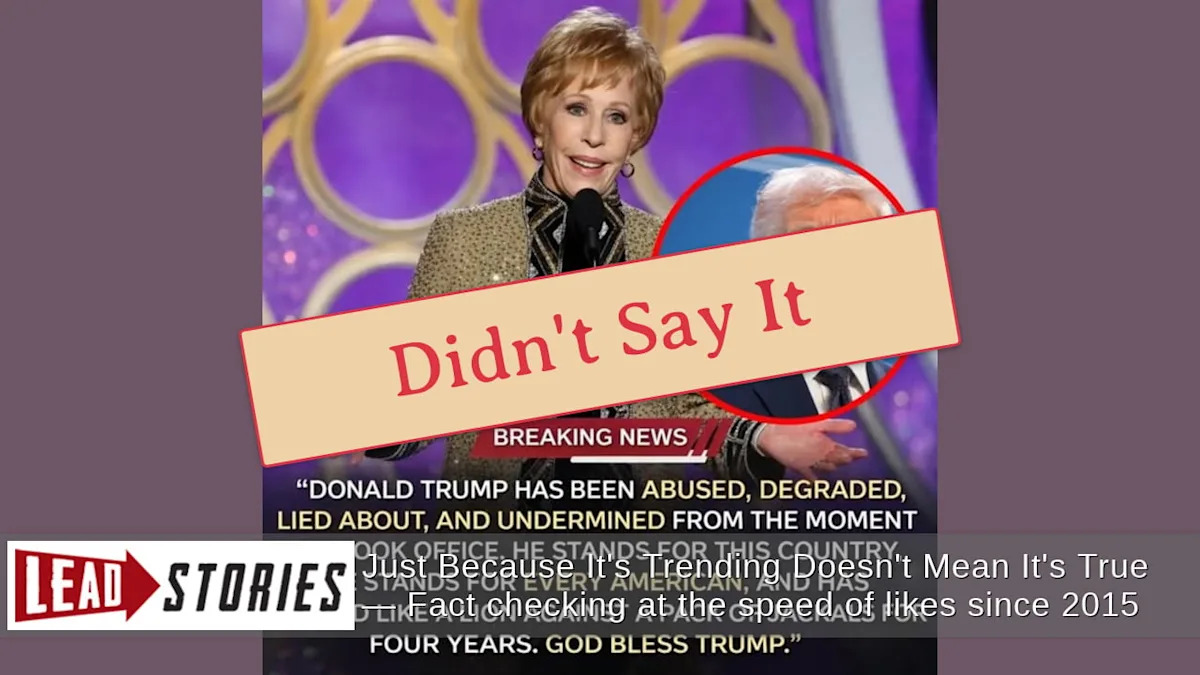
In a widespread case of online misinformation, dozens of identical posts falsely attribute pro-Trump statements to Carol Burnett and other celebrities, part of what fact-checkers have identified as a sophisticated clickbait operation originating from Vietnam.
The posts, which have spread across Facebook, claim that Burnett and various other celebrities stated that Donald Trump “has been abused and lied about since taking office” and “stood like a lion against a pack of jackals.” Extensive searches through major news databases reveal no evidence that Burnett or any of the other celebrities ever made such statements.
This fabrication follows a recognizable pattern of what fact-checkers at Lead Stories have dubbed “Viet Spam” – a coordinated campaign where identical language is attributed to different celebrities to generate clicks and traffic. Had any of these high-profile individuals actually made such politically charged statements about Trump, it would have generated significant media coverage.
The mechanism behind these false attributions is relatively simple but effective. Operators create nearly identical fabricated stories featuring different famous people, designed to drive traffic to advertising-laden websites based primarily in Vietnam. These fabricated quotes are then distributed through networks of social media accounts, where unsuspecting users encounter and sometimes share them, believing them to be authentic.
What makes these campaigns particularly effective is their strategic targeting of audience interests. By attaching provocative political statements to beloved cultural figures like Burnett, they create content that specific demographic groups are more likely to engage with and share.
A review of Facebook posts reveals this exact quote has been falsely attributed to numerous celebrities in identical posts, demonstrating the template-based approach of these disinformation campaigns. The posts direct users to websites designed to generate advertising revenue through artificial traffic inflation.
The transparency information available for some of these Facebook pages confirms their connection to Vietnam, which has become a significant hub for this type of online misinformation operation. Digital forensics experts note that Vietnam-based operations have become increasingly sophisticated in their approach to generating viral content through false celebrity endorsements and fabricated quotes.
This type of misinformation campaign presents particular challenges for social media platforms and fact-checkers. The sheer volume of nearly identical posts with only the celebrity names changed makes comprehensive debunking difficult. Furthermore, these operations frequently create new pages and websites when existing ones are flagged or removed.
Media literacy experts recommend that social media users apply heightened skepticism toward posts claiming celebrities have made unexpected political statements, especially when they appear on unfamiliar pages or websites. Checking whether mainstream news sources have reported on such statements remains one of the most reliable verification methods.
Lead Stories, which has published dozens of debunks on similar “Viet Spam” operations, offers guidance for identifying these deceptive posts. Their primer titled “Prebunk: Beware Of Fake Fan Pages Spreading False Stories About Your Favorite Celebrities — How To Spot ‘Viet Spam'” provides social media users with tools to recognize these increasingly common disinformation tactics.
As the 2024 election cycle intensifies, fact-checkers anticipate that such operations will continue to exploit celebrity influence and political polarization to generate engagement and advertising revenue, highlighting the ongoing challenges of maintaining information integrity in the digital age.
Fact Checker
Verify the accuracy of this article using The Disinformation Commission analysis and real-time sources.

7 Comments
This is a classic case of clickbait misinformation. Falsely attributing partisan quotes to celebrities is a dishonest tactic to generate clicks and spread propaganda. I’m glad fact-checkers identified the Vietnamese spam operation behind this.
No evidence of the celebrities actually making those statements? That’s a clear red flag. Good journalism to thoroughly investigate the source and expose this as a Vietnamese spam campaign.
Absolutely, it’s critical to fact-check claims, especially those involving public figures, to prevent the spread of misinformation. Kudos to the fact-checkers for their diligence.
This is a concerning trend of using false celebrity endorsements to push political narratives. It speaks to the need for better media literacy and verification of online content, especially around sensitive topics.
It’s disappointing to see the spread of such blatantly fabricated content. I hope social media platforms can do more to curb the proliferation of this type of coordinated disinformation campaign.
Agreed, these coordinated spam operations are a real challenge for maintaining trust in online information. More robust fact-checking and content moderation is needed.
Interesting how the false quotes follow a recognizable pattern of being attributed to different celebrities. That level of coordination suggests a sophisticated operation trying to game the system for clicks and engagement.