


Listen to the article
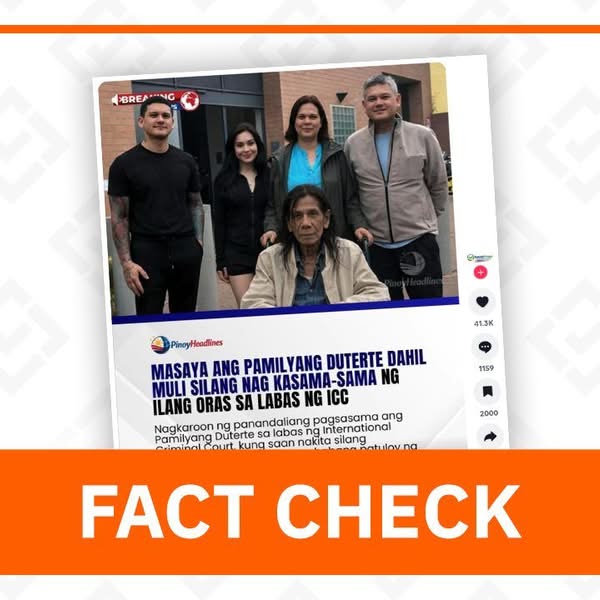
Manipulated Image of Duterte’s Children at The Hague Circulates Online
A digitally altered photograph purporting to show former Philippine President Rodrigo Duterte’s children at the International Criminal Court in The Hague has been spreading across social media platforms, fact-checkers confirmed Wednesday.
The manipulated image, which appears to have been AI-generated or heavily edited, has gained traction amid ongoing investigations into allegations of human rights abuses during Duterte’s controversial war on drugs campaign.
Digital forensics experts who examined the image found multiple inconsistencies in lighting, shadows, and pixel patterns typical of artificial intelligence image generation or sophisticated manipulation techniques. The original photograph, dated August 2025, showed only Duterte’s children visiting The Hague but has been altered to include additional elements and individuals not present in the authentic image.
“We’re seeing an alarming increase in sophisticated visual misinformation targeting political figures,” said Maria Santos, director of Digital Truth Initiative, an independent fact-checking organization. “This particular manipulation seems designed to create a false narrative about the Duterte family’s legal situation.”
The timing of the manipulated image’s circulation coincides with renewed international attention on the Philippines’ human rights record under the former president’s administration. The International Criminal Court has been conducting a preliminary examination into allegations surrounding the drug war that claimed thousands of lives between 2016 and 2022.
Social media platforms have struggled to contain the spread of the altered image, which has been shared thousands of times across Facebook, Twitter, and messaging applications. The viral nature of the content highlights ongoing challenges in combating visual misinformation, particularly when it involves prominent political figures.
Media literacy experts warn that such manipulations are becoming increasingly sophisticated and difficult for average users to detect. “The technology for creating convincing fakes has outpaced most people’s ability to identify them,” explained Dr. Rafael Mendoza, professor of digital media studies at the University of the Philippines. “What we’re seeing is just the beginning of a new era of visual disinformation.”
The Duterte family has faced ongoing scrutiny since the former president left office in 2022. His daughter Sara Duterte served as vice president, while his son Sebastian has held political office in Davao City. The family has consistently denied wrongdoing related to the drug war policies that defined the Duterte administration.
Fact-checking initiatives across the Philippines have ramped up efforts to combat disinformation in the post-Duterte era, with organizations like FactsFirstPH working to verify claims and images before they gain widespread traction. These efforts have become particularly important as the country navigates political transitions and ongoing international investigations.
The circulation of manipulated images targeting political figures is not unique to the Philippines. Similar tactics have been observed globally, raising concerns about the impact on democratic processes and public discourse. Technology companies have invested in detection algorithms, but manipulated content continues to spread faster than it can be identified and removed.
Authorities have urged the public to verify information through official channels and to exercise caution when sharing politically sensitive content, particularly as tensions surrounding investigations into the former administration remain high.
“The proliferation of AI-generated or manipulated images represents a significant challenge to information integrity,” said Commissioner Paulo Garcia of the Philippine Commission on Human Rights. “Citizens need to approach such content with healthy skepticism and seek verification before sharing.”
As investigations into the Duterte administration’s policies continue both domestically and internationally, experts anticipate further waves of misinformation designed to shape public perception of the proceedings and their potential outcomes.
Fact Checker
Verify the accuracy of this article using The Disinformation Commission analysis and real-time sources.

14 Comments
This is a timely reminder of the importance of critical thinking and fact-checking when it comes to online content. Manipulated images can be used to sow confusion and undermine trust.
It’s alarming to see how easily images can be manipulated these days. This serves as a reminder to always approach online content with a critical eye and rely on credible sources for verification.
This is a concerning example of the growing threat of misinformation in the digital age. It’s crucial that we remain vigilant and rely on credible sources to verify the authenticity of online content.
Interesting how quickly misinformation can spread online these days. It’s important to verify the authenticity of images, especially those involving public figures. Fact-checking organizations play a vital role in debunking manipulated content.
I agree, the use of sophisticated editing techniques to create false images is concerning. Fact-checking is crucial to maintaining trust in information shared online.
The rise of AI-generated and heavily edited visuals is a worrying trend. I’m glad the fact-checkers were able to identify the inconsistencies in this manipulated image and expose the truth.
Absolutely. Maintaining trust in information is crucial, especially when it involves high-profile individuals. Rigorous verification processes are essential to combat the spread of misinformation.
This is a concerning example of the challenges we face in the digital age. It’s crucial that we remain vigilant and rely on authoritative sources to verify the authenticity of online content.
I appreciate the efforts of the fact-checking organizations in identifying and debunking this digitally altered image. Maintaining transparency and accuracy in information is vital for a well-informed public.
Agreed. The proliferation of sophisticated visual manipulation techniques is a significant challenge that requires vigilance and robust verification processes to overcome.
This is a concerning example of how digital manipulation can be used to mislead the public. I’m glad the fact-checkers were able to identify the inconsistencies and expose the altered nature of the image.
Yes, the increasing prevalence of AI-generated and heavily edited visuals is a growing challenge. Rigorous verification is essential to combat the spread of misinformation.
I appreciate the diligence of the fact-checkers in exposing this digitally altered image. Maintaining transparency and trust in information is vital, especially when it involves public figures.
Agreed. The proliferation of sophisticated visual manipulation techniques poses a real threat to the integrity of information. Vigilance and robust fact-checking are essential to combat the spread of misinformation.