


Listen to the article
Experts are increasingly challenging conventional wisdom about protein consumption, suggesting many Americans may be consuming more than necessary while others still fall short of optimal levels.
Dr. Stuart Phillips, a professor of kinesiology and an expert in protein metabolism at McMaster University, notes that the Recommended Dietary Allowance (RDA) for protein—0.8 grams per kilogram of body weight per day—represents only the minimum needed to prevent deficiency, not the amount for optimal health.
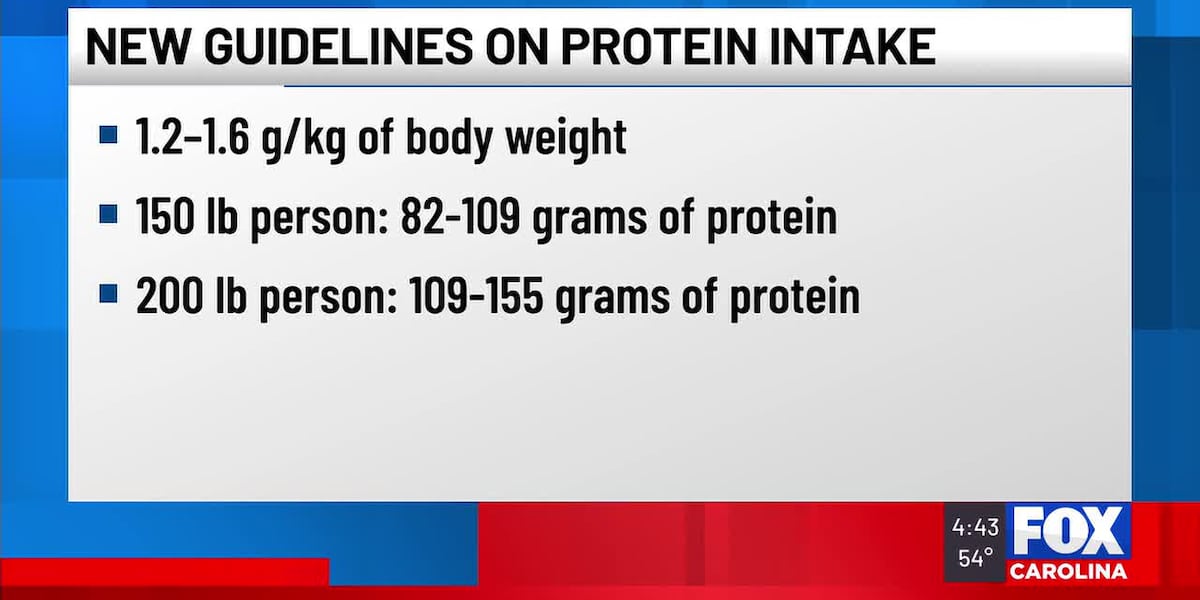
“The RDA is like the minimum wage of protein. It’s enough to survive, but not enough to thrive,” Phillips explains. For a 150-pound person, the RDA translates to roughly 55 grams of protein daily—equivalent to about two palm-sized portions of chicken.
However, emerging research suggests that higher protein intake may offer significant health benefits, particularly for active individuals and older adults. Sports nutritionists often recommend 1.2 to 2.0 grams per kilogram of body weight for those engaged in regular exercise, with the higher end benefiting strength athletes and those in caloric deficit.
The protein conversation has gained prominence as plant-based diets become more popular and consumers grow increasingly concerned about both nutritional adequacy and environmental sustainability. This has led to a booming market for protein supplements, with global sales expected to exceed $32 billion by 2027, according to market research firm Grand View Research.
For older adults, protein requirements may be even higher than previously thought. Research from the PROT-AGE study group suggests adults over 65 may benefit from consuming 1.0 to 1.2 grams per kilogram daily to combat age-related muscle loss, known as sarcopenia.
“As we age, our bodies become less efficient at utilizing protein for muscle maintenance,” says Dr. Heather Keller, research chair in nutrition and aging at the University of Waterloo. “Increased protein intake, combined with resistance exercise, can help preserve muscle mass and functional independence.”
Contrary to popular perception, excessive protein consumption rarely causes harm in healthy individuals. The kidneys can handle higher protein loads in those without pre-existing kidney disease, according to a 2018 review in the Journal of the International Society of Sports Nutrition.
“For years, we worried about too much protein damaging kidneys, but the evidence simply doesn’t support this concern for healthy individuals,” notes registered dietitian Nancy Rodriguez, who specializes in sports nutrition.
Timing of protein consumption may be just as important as the total amount. Research from the University of Texas Medical Branch suggests that distributing protein evenly throughout the day—roughly 25-30 grams per meal—maximizes muscle protein synthesis compared to consuming most protein at dinner, as is common in American dietary patterns.
Plant-based protein sources have also entered the spotlight, though they typically provide less protein per serving than animal products. Legumes, nuts, seeds, and whole grains can contribute significantly to protein intake but may require more strategic planning to meet higher targets.
“Plant proteins can absolutely meet requirements, but volume and variety are key,” explains Sharon Palmer, a registered dietitian specializing in plant-based nutrition. “Many plant foods have incomplete amino acid profiles individually, but combining various sources throughout the day provides all essential amino acids.”
For the average sedentary adult, the standard RDA may indeed be sufficient, but numerous factors including age, activity level, health status, and weight management goals can significantly alter optimal protein needs.
Health professionals increasingly recommend personalized approaches to protein intake rather than one-size-fits-all recommendations. Consulting with a registered dietitian can help individuals determine their specific protein needs based on health status, fitness goals, and overall dietary pattern.
As nutrition science continues to evolve, the protein debate exemplifies how dietary recommendations must balance emerging research with practical applications for diverse populations. While high-protein diets have become trendy, experts emphasize that protein remains just one component of a balanced diet that should include adequate fruits, vegetables, healthy fats, and appropriate calories for individual needs.
Fact Checker
Verify the accuracy of this article using The Disinformation Commission analysis and real-time sources.

12 Comments
Interesting to see the debate around optimal protein intake. The RDA may be too low for many, especially active individuals and seniors. Higher protein can provide benefits, but the right balance is key.
Agreed, the RDA is just a minimum. Personalized recommendations based on activity level and health goals make more sense.
Protein is so essential, but the optimal amount can vary widely. Glad to see nuanced advice moving beyond the one-size-fits-all RDA.
Absolutely, a more individualized approach makes sense, especially for active people and older adults.
Plant-based diets are growing in popularity, but protein intake still needs to be carefully considered. Getting the right balance of complete proteins is crucial.
Good point. Combining plant-based proteins can help provide the full amino acid profile.
The protein RDA is a minimum, not an optimal target. Higher intakes can be beneficial, but balance is key. Individualized advice is important.
Agreed, the one-size-fits-all RDA is outdated. More nuanced guidance is needed.
Good to see the protein conversation evolving. The RDA may be too low for optimal health, especially for certain populations.
Definitely, personalized protein recommendations make a lot of sense.
This is a helpful fact check on protein intake guidelines. Tailoring recommendations based on activity level and health goals is wise.
Agree, the RDA is just a baseline – higher protein can provide important benefits for many.