


Listen to the article
Viral Claim of Danish Mobile Grocery Buses for Elderly Debunked
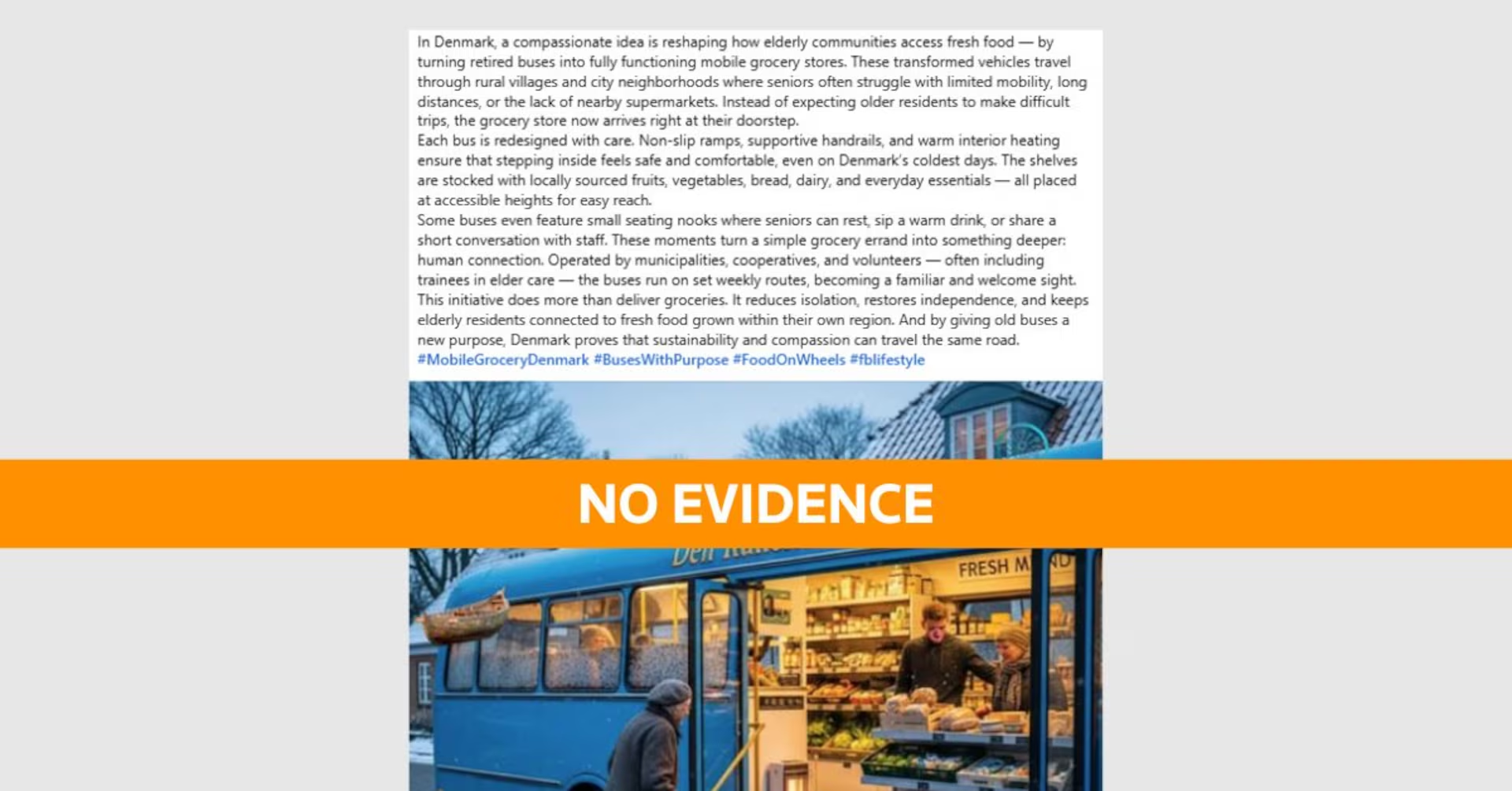
Claims circulating on social media about Denmark converting old buses into mobile grocery stores for elderly citizens have been thoroughly investigated and found to be false. The widely shared images depicting an elderly woman boarding a bus filled with produce shelves have no basis in reality, according to multiple official sources.
The social media posts, which began appearing on platforms like Facebook and X in late November, show a bus labeled “Den Rullende Kæbmand” (a misspelling with no meaning in Danish) alongside captions claiming the vehicles feature “ramps, heaters, and local produce shelves” specifically designed for elderly shoppers.
One blog post specifically alleged that Danish food retailer Dagrofa had launched an initiative called “Den Rullende Købmand” (The Rolling Grocer) in partnership with local municipalities. However, when contacted for verification, Dagrofa categorically denied any involvement.
“We have nothing at all to do with a company called ‘Den Rullende Købmand,'” stated Carsten Ritter, senior press and communications adviser at the grocery group. Ritter confirmed that Dagrofa was neither involved in nor aware of any buses being converted into grocery stores in Denmark.
Adding to the confusion, there is an actual grocery delivery company named “Den Rullende Købmand” based in Odense, southern Denmark. When contacted by Reuters on December 12, a spokesperson for this legitimate business clarified that while they do deliver groceries, they have not transformed buses into mobile stores. The spokesperson expressed surprise at the social media posts mentioning their company name and confirmed they had no connection to the circulating images.
The visual evidence itself appears problematic. The branding visible on the bus in the viral image bears no resemblance to the official branding used by the actual Den Rullende Købmand company on their website, suggesting the image has been manipulated or misrepresented.
In an attempt to verify the claim through official channels, investigators contacted Denmark’s six public transport companies and three island municipalities responsible for bus routes across the country. None of the responding organizations—including three public companies and a private contractor—acknowledged any awareness of initiatives to convert decommissioned buses into supermarkets for elderly citizens.
Denmark’s national transport authority declined to comment when approached about the alleged program, while the country’s Ministry of Senior Citizens did not respond to requests for information—further suggesting no such national initiative exists.
The fabricated story appears to have gained traction as it presents a heartwarming scenario of public service innovation for vulnerable populations. Denmark does have a strong reputation for social welfare programs and public transportation, which might have made the claim seem plausible to international audiences unfamiliar with actual Danish services.
False claims about innovative social programs in Nordic countries have previously gone viral on social media platforms, often presenting idealized versions of welfare states that don’t align with reality.
After exhaustive fact-checking efforts, Reuters found no evidence supporting the existence of any initiative to convert buses into mobile grocery stores for elderly citizens in Denmark, making this yet another example of misinformation spreading through social media channels despite lacking factual foundation.
The case highlights the importance of verifying viral claims about international social programs before sharing them, particularly when they present seemingly innovative solutions that might inspire policy discussions elsewhere.
Fact Checker
Verify the accuracy of this article using The Disinformation Commission analysis and real-time sources.

7 Comments
This is an interesting fact check. It’s good to see that the claims about Denmark’s mobile grocery stores for the elderly were thoroughly investigated and found to be false. It’s important to verify viral social media claims before spreading them further.
Agreed. Fact-checking is crucial in the age of misinformation. It’s great that the authorities were able to confirm the lack of any such initiative in Denmark.
This fact check highlights the importance of scrutinizing claims, even if they seem plausible or well-intentioned. It’s a good reminder to always check the facts before sharing or believing information, especially on social media.
The concept of converting old buses into mobile grocery stores for the elderly sounds like a creative idea, but it’s disappointing to learn that the viral claims about Denmark doing this are untrue. I wonder what inspired the original social media posts?
That’s a good question. Viral misinformation often stems from well-intentioned but unverified ideas. It’s important for people to be more critical when encountering such claims, especially on social media.
While the idea of mobile grocery stores for the elderly sounds like a helpful service, it’s concerning to see how easily false claims can gain traction online. This fact check demonstrates the importance of robust journalism and fact-checking to counter the spread of misinformation.
It’s interesting to see how quickly misinformation can spread on social media, even about something as specific as a grocery store initiative in Denmark. This serves as a valuable lesson in the need for accurate and verified information, especially on niche topics.