


Listen to the article
Mexican drug cartel spreads disinformation following leader’s death, authorities report
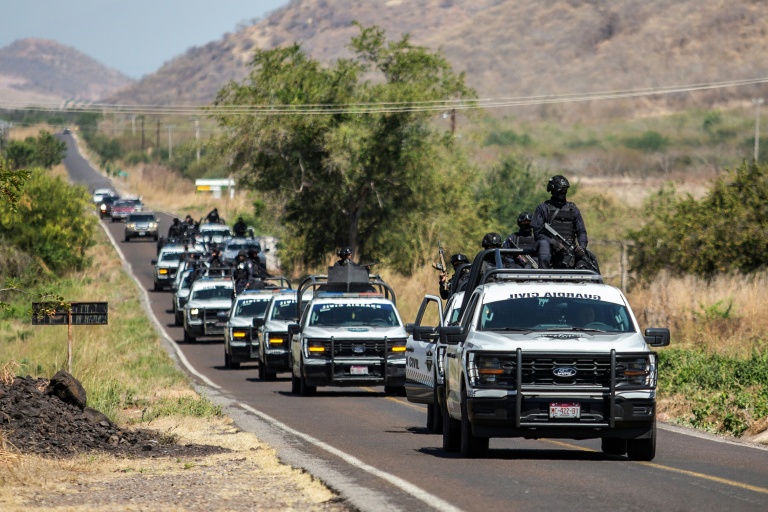
While security forces worked to contain the wave of violence that erupted across Mexico following the death of notorious drug kingpin Nemesio “El Mencho” Oseguera, another battle was unfolding in the digital realm. As gunmen from the Jalisco New Generation Cartel (CJNG) burned vehicles and blockaded roads, others within the organization deployed a different weapon: disinformation.
The killing of Oseguera, Mexico’s most-wanted narcotrafficker, during a military operation on Sunday triggered criminal violence across 20 of Mexico’s 32 states. Simultaneously, social media platforms were flooded with AI-generated images purporting to show catastrophic damage in areas affected by the violence.
AFP’s fact-checking team in Mexico analyzed approximately a dozen fake images and videos related to the operation that garnered over 38,500 shares on various social media platforms. One widely circulated image—created using artificial intelligence—depicted the popular tourist destination of Puerto Vallarta with multiple buildings engulfed in flames.
While CJNG members did burn vehicles and vandalize businesses in the Pacific coast resort town, the actual damage was significantly less severe than what the fabricated images suggested.
Alberto Escorcia, a journalist specializing in social media analysis, identified three distinct groups spreading false information during the wave of violence. “One was the Jalisco Cartel, magnifying the chaos,” he told AFP. The other groups consisted of “opportunists” who leveraged the situation to promote various political agendas, both domestic and international.
Many of these opportunistic accounts had previously been flagged by AFP for spreading disinformation across Mexico and Latin America. After Escorcia shared a video demonstrating how disinformation was spreading on platform X (formerly Twitter), he reportedly received threats on social media.
Mexico’s Security Secretary, Omar Garcia Harfuch, confirmed that authorities have identified multiple social media accounts linked to the disinformation campaign. “We’re going to do a deeper job to find out what relationship they have to the criminal organization,” he stated during a press conference, adding that some accounts “were only dedicated to disinformation.”
The digital campaign extended beyond exaggerating the violence. Academic researchers observed significant expressions of sympathy for Oseguera, who had been the most wanted narcotrafficker in the United States, with a $15 million bounty on his head.
“There was a notable and sustained volume of publications and comments with expressions of admiration, mourning,” and “aspirational identification” with the drug lord, according to Valeria Almaguer, subdirector of the Seminar on Violence and Peace at the College of Mexico.
Researchers examining Instagram, TikTok, and X discovered messages lamenting “El Mencho’s” death, often accompanied by CJNG-related emojis and “narco-corridos”—popular songs celebrating criminal organizations. These patterns align with findings from an April 2025 report documenting over 100 TikTok accounts dedicated to criminal recruitment and propaganda.
“The CJNG leads the use of TikTok as a channel of recruitment and propaganda,” the report stated.
Mexican authorities have previously identified the cartel’s social media recruitment strategies. In March 2025, following the discovery of a CJNG training center in Jalisco, the Security Secretary’s Office identified 39 TikTok profiles dedicated to recruiting young people. These accounts were subsequently removed at the request of authorities.
The dual strategy of physical violence and digital manipulation highlights the evolving tactics of Mexico’s criminal organizations as they adapt to the digital age, combining traditional intimidation methods with sophisticated online operations to amplify their influence and maintain their power structures even in moments of significant leadership loss.
Fact Checker
Verify the accuracy of this article using The Disinformation Commission analysis and real-time sources.

7 Comments
It’s alarming to see drug cartels weaponizing social media and AI to spread disinformation amid real-world violence. This underscores the urgent need for robust content moderation policies and fact-checking efforts to counter the threat.
Concerning to see drug cartels weaponizing disinformation on social media amid violence in Mexico. AI-generated fake images spreading rapidly can sow panic and confusion. Authorities must counter this with verified information and fact-checking.
Absolutely, the use of disinformation tactics by criminal groups is very troubling. Fact-checking and transparent communication from officials are critical to combat the spread of misleading content.
This is a worrying example of how criminal organizations are adapting their tactics to leverage emerging technologies like AI for propaganda and sowing chaos. The authorities will need a multi-pronged approach to address the disinformation threat.
The prevalence of AI-generated fake imagery related to the violence is alarming. Cartel members seem to be exploiting the reach and immediacy of platforms like TikTok to rapidly disseminate disinformation. This underscores the need for stronger content moderation.
You’re right, the speed at which these AI-manipulated visuals can spread is concerning. Tighter platform policies and better detection tools will be essential to staying ahead of the cartel’s disinformation efforts.
The scale of the fake images and videos related to the cartel violence highlights the challenge of combating disinformation, especially when it’s AI-generated. Strengthening digital literacy and empowering the public to spot manipulated content will be crucial.