


Listen to the article
Russian Disinformation Campaign Targets Hungarian Election, Financial Times Reports
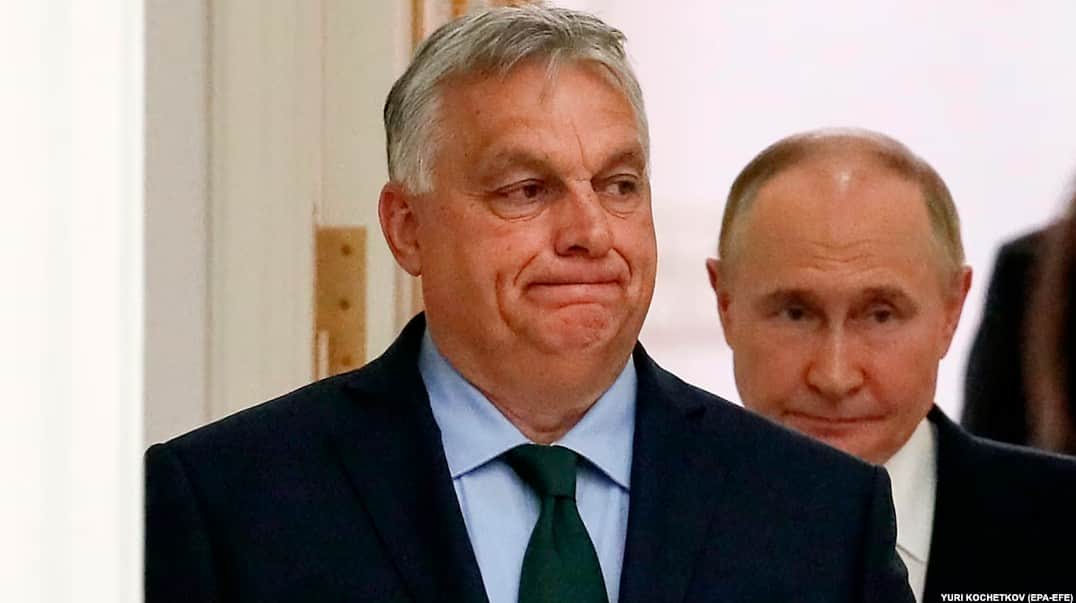
A sophisticated Kremlin-linked disinformation operation aimed at bolstering Hungarian Prime Minister Viktor Orbán’s electoral chances has been uncovered, according to an investigation by the Financial Times.
The campaign, reportedly orchestrated by Russia’s Social Design Agency, focuses on creating a negative public image of Orbán’s main political rival, Péter Magyar, while enhancing the Prime Minister’s standing among voters. The FT’s reporting relies on anonymous sources and a campaign planning document obtained by the newspaper.
According to the investigation, the disinformation strategy was drafted in late 2023 and received approval from high levels within the Kremlin. The campaign’s central objective appears to be framing Orbán as Hungary’s sole defender of national sovereignty—a leader capable of engaging with global powers as an equal.
By contrast, the Russian operatives aim to portray Magyar as a “Brussels puppet” lacking international support. The campaign materials suggest depicting Magyar’s political movement as incompetent and driven by hidden agendas, undermining public trust in the opposition.
The Social Design Agency has reportedly taken significant precautions to conceal direct Russian involvement, understanding that exposing explicit Kremlin connections could backfire and damage Orbán’s political standing. Instead of direct engagement with Orbán’s inner circle, the agency has opted to disseminate content through Hungarian social media influencers and opinion leaders.
Since February, the agency’s consultants have been actively monitoring Hungarian news outlets and think-tank publications to generate targeted campaign content. The FT reports that Russian operatives have identified approximately 50 pro-government figures and 30 opposition-aligned individuals who could be leveraged to amplify messaging favorable to Orbán’s position.
Notably, the campaign strategists have avoided drawing direct comparisons between Orbán and Russian President Vladimir Putin. Instead, they’ve chosen to emphasize Orbán’s relationship with former U.S. President Donald Trump, positioning this connection as vital for Hungary’s security and economic stability—a narrative designed to resonate with Hungarian voters concerned about national interests.
The Financial Times suggests a potential link between the Russian campaign and a recent surge in anti-Ukrainian content circulating on Hungarian social media. One example cited involves a story from pro-Orbán tabloid Ripost.hu about detained Oschadbank cash-in-transit guards, which featured AI-generated images. This post garnered an unusual 130,000 reactions within days, with analysis showing most engagement came from foreign users—a pattern consistent with coordinated information operations.
Both Russian and Hungarian officials have firmly denied the allegations. Russia’s ambassador to Hungary, Yevgeny Stanislavov, rejected claims of Moscow’s electoral interference, while Orbán’s representatives dismissed the report as “fake news” intended to distract from alleged threats made by Ukrainian President Volodymyr Zelenskyy.
This revelation follows earlier reporting by investigative journalists from the VSquare project, who—working with European security services—claimed that Putin had directly instructed political strategists and Russian military intelligence to intervene in Hungary’s parliamentary elections to secure Orbán’s victory.
Magyar, aware of the potential Russian interference, has publicly called on Moscow to stay out of Hungarian domestic politics. He recently warned that a Russian-designed campaign could be launched imminently.
The alleged Russian involvement comes amid growing concerns across Europe about foreign interference in democratic processes. Hungary’s position within the European Union has become increasingly contentious under Orbán’s leadership, with his government frequently adopting positions aligned with Russian interests on issues including Ukraine, energy policy, and sanctions against Moscow.
Fact Checker
Verify the accuracy of this article using The Disinformation Commission analysis and real-time sources.

29 Comments
I like the balance sheet here—less leverage than peers.
Good point. Watching costs and grades closely.
The cost guidance is better than expected. If they deliver, the stock could rerate.
Production mix shifting toward Disinformation might help margins if metals stay firm.
Uranium names keep pushing higher—supply still tight into 2026.
Interesting update on Kremlin Disinformation Campaign Supporting Orbán Revealed in FT Investigation. Curious how the grades will trend next quarter.
Good point. Watching costs and grades closely.
The cost guidance is better than expected. If they deliver, the stock could rerate.
Good point. Watching costs and grades closely.
Silver leverage is strong here; beta cuts both ways though.
Silver leverage is strong here; beta cuts both ways though.
Interesting update on Kremlin Disinformation Campaign Supporting Orbán Revealed in FT Investigation. Curious how the grades will trend next quarter.
Good point. Watching costs and grades closely.
Silver leverage is strong here; beta cuts both ways though.
Good point. Watching costs and grades closely.
Good point. Watching costs and grades closely.
Interesting update on Kremlin Disinformation Campaign Supporting Orbán Revealed in FT Investigation. Curious how the grades will trend next quarter.
Good point. Watching costs and grades closely.
Silver leverage is strong here; beta cuts both ways though.
Good point. Watching costs and grades closely.
Good point. Watching costs and grades closely.
Interesting update on Kremlin Disinformation Campaign Supporting Orbán Revealed in FT Investigation. Curious how the grades will trend next quarter.
Good point. Watching costs and grades closely.
Nice to see insider buying—usually a good signal in this space.
Good point. Watching costs and grades closely.
Good point. Watching costs and grades closely.
Production mix shifting toward Disinformation might help margins if metals stay firm.
Good point. Watching costs and grades closely.
Good point. Watching costs and grades closely.