


Listen to the article
Before Megan Pilatzke received her autism diagnosis, she couldn’t understand why she felt completely drained after work each day. The constant effort to navigate workplace social cues, the mental replaying of conversations, and the distress from noisy environments took a heavy toll on her professional life.
“I would come home burnt-out, anxious,” Pilatzke recalls of her time as an insurance claim specialist. “That just kept going, week after week, day after day.”
Her diagnosis finally explained these workplace challenges. Now 36, Pilatzke has transformed her experience into expertise, working as an inclusion specialist at Specialisterne Canada, a nonprofit that helps organizations better support neurodiversity in the workplace. She also discovered that certain traits associated with autism—like intense focus and direct communication—could be reframed as professional strengths.
Autism spectrum disorder affects approximately 1 in 45 adults in the United States, according to Autism Speaks, a nonprofit supporting autistic individuals through research, resources, and advocacy. The condition presents differently in each person but commonly creates challenges with social skills and communication while sometimes manifesting as repetitive behaviors and sensory sensitivities.
“Start by learning about different communication styles and being open-minded,” advises Subodh Garg, who appeared in Netflix’s “Love on the Spectrum” and works part-time at a Southern California deli. “Inclusion begins with giving people a chance and making space for diverse ways of thinking and working. Employers can start with small intentional steps.”
Rita Ramakrishnan, an autistic executive coach who founded a consulting company for neurodivergent leaders, emphasizes the diversity within autism. “The reality is, it is a massive spectrum. There’s a community of people with much higher support needs, and then there are folks who are twice exceptional or otherwise extraordinarily high functioning. Their support needs are not as high, and their production capabilities are different. But they’re all valid autistic experiences.”
Organizations seeking to be more inclusive should actively consult autistic employees when developing policies, Ramakrishnan notes. “No one’s expecting you to be an expert in this, but we are expecting a level of curiosity, not judgment, and we would love the ability to have a conversation around our needs.”
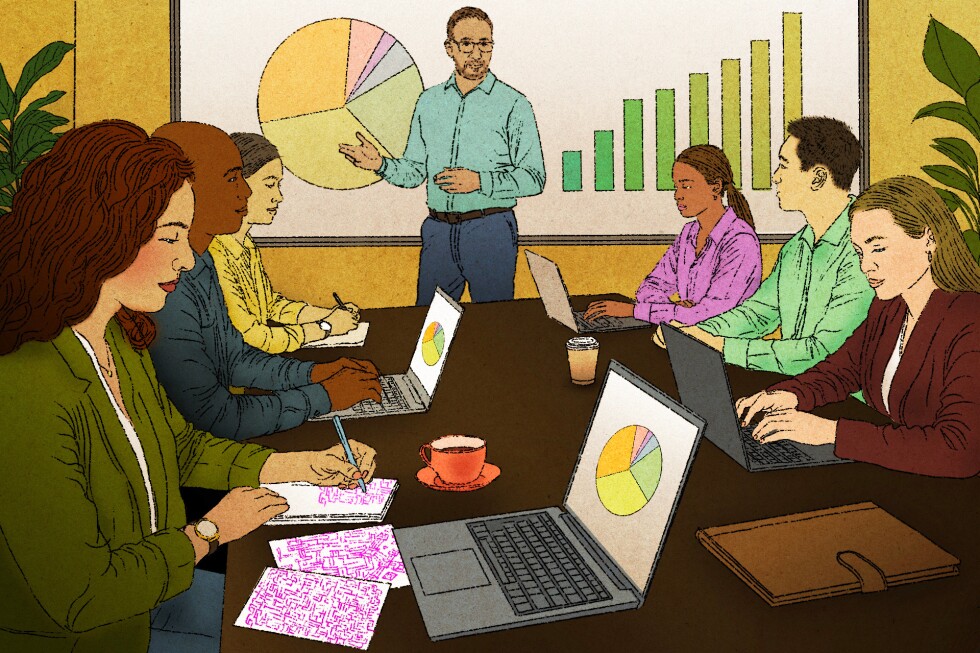
For more accessible meetings, experts suggest allowing flexible participation options. Face-to-face communication can be challenging for some autistic individuals, making virtual attendance or written contributions valuable alternatives. Making camera use optional during virtual meetings removes pressure on autistic employees who might feel anxious about “masking” their natural behaviors.
“Things like that can actually cause a lot of anxiety for individuals that are neurodivergent,” Pilatzke explains. “So having that pressure removed can be helpful.”
Some autistic individuals find it easier to focus when they’re moving or doodling during meetings. Natalie Longmire, a professor of organizational behavior at Tulane University, suggests managers explicitly normalize these behaviors. Employees can also self-advocate by explaining, “If I get up and walk around, I’m doing that so I can be more engaged in what you’re saying.”
Detailed advance planning also creates a more supportive environment. Keith Wargo, President and CEO of Autism Speaks, shares that his organization sends out meeting agendas broken into five-minute chunks beforehand. “Having that kind of structure, it’s good practice for everyone,” he notes.
Ramakrishnan adds that clear communication about each agenda item’s purpose—whether it’s for discussion, brainstorming, or decision-making—gives autistic individuals time to prepare their contributions. “These are the folks that are going to come up with the ideas that nobody else thinks about,” she points out.
Multiple communication channels during meetings are another key accommodation. Abigayle Jayroe, senior vice president at NEXT for Autism, recommends chat windows for those uncomfortable speaking aloud and enabling captions for individuals who process information better through reading. Normalizing noise-canceling headphones can also reduce sensory overwhelm.
Garg, who was diagnosed with autism at age three, highlights how professional environments often create unnecessary barriers: “One of the biggest challenges has been interviews because they focus a lot on social skills instead of the actual work. Sometimes people misunderstand my communication style or underestimate what I can do. Even small things like clear instructions or written feedback really help me do my best.”
The direct communication style common among autistic individuals is frequently misinterpreted as rudeness, when it can actually benefit organizations. Pilatzke describes herself as “blunt” and “very honest,” reflecting the strong sense of justice many autistic individuals possess.
Companies can leverage this characteristic by designating devil’s advocates in brainstorming sessions. “The best ideas are built off of poking holes in what everyone agrees on,” Jayroe explains. “It lays the groundwork longer term for a company to have their employees feel comfortable raising red flags or building on ideas.”
These accommodations don’t just benefit autistic employees—they often improve workplace function for everyone, creating environments where diverse thinking styles contribute to stronger, more innovative organizations.
Fact Checker
Verify the accuracy of this article using The Disinformation Commission analysis and real-time sources.

22 Comments
This is an important topic. Adults with autism bring unique perspectives and skills that can benefit employers if they create an inclusive environment. I’m glad to see more awareness around neurodiversity in the workplace.
Yes, recognizing the strengths of employees with autism, like intense focus and direct communication, is key. With the right accommodations, they can thrive in many roles.
This is an important issue that deserves more attention. Employers have so much to gain by fostering inclusive workplaces that welcome and accommodate the unique strengths of autistic employees.
Agreed. With the right support, autistic individuals can make invaluable contributions in a wide range of fields.
Kudos to Megan Pilatzke for turning her personal experience into expertise that can help other autistic individuals thrive in the workplace. Her role as an inclusion specialist is so valuable.
Yes, her story is inspiring and demonstrates the importance of empowering autistic people to advocate for their needs and share their unique perspectives.
The fact that 1 in 45 adults in the US are on the autism spectrum is a striking statistic. It underscores the importance of employers making their workplaces more inclusive and supportive of neurodiversity.
Agreed. With the right environment and support, autistic employees can make invaluable contributions to organizations across industries.
As the article notes, autism affects people in diverse ways. I appreciate the emphasis on supporting neurodiversity and creating inclusive work environments that enable all employees to thrive.
Absolutely. There’s no one-size-fits-all solution, so flexibility and an openness to understanding individual needs are key.
The mental and emotional toll Megan Pilatzke described experiencing in her previous job really highlights the need for better understanding and accommodation of autistic employees. Kudos to her for turning that into a positive by helping other organizations improve.
Yes, her story is a powerful example of how companies can benefit when they invest in supporting the unique needs of their autistic workforce.
As the article notes, autism is a spectrum and affects each person differently. I’m glad to see more awareness around the diverse strengths and challenges autistic employees may face in the workplace.
Absolutely. Tailored support and accommodations are key to ensuring autistic individuals can thrive in their roles.
Interesting to hear how an autism diagnosis helped Megan Pilatzke understand the workplace challenges she was facing. Her story highlights the importance of self-awareness and advocating for one’s needs.
Yes, her experience illustrates how empowering it can be for autistic individuals to have that clarity and find ways to leverage their strengths.
It’s great that organizations like Specialisterne are working to support neurodiversity. Providing training and resources to help employers understand and accommodate the needs of autistic workers is so valuable.
Absolutely. Small adjustments like reducing sensory overload can make a big difference in enabling autistic employees to do their best work.
It’s great to see more organizations like Specialisterne working to bridge the gap between autistic individuals and inclusive employers. Proactive efforts to support neurodiversity are so important.
Yes, initiatives that foster understanding and provide practical guidance can make a big difference in creating workplaces that work for everyone.
This article highlights the need for more education and understanding around autism in the workplace. Employers who make the effort to accommodate and support their autistic employees will likely see strong returns.
Absolutely. Small adjustments can go a long way in enabling autistic individuals to excel in their roles and contribute to the organization’s success.