


Listen to the article
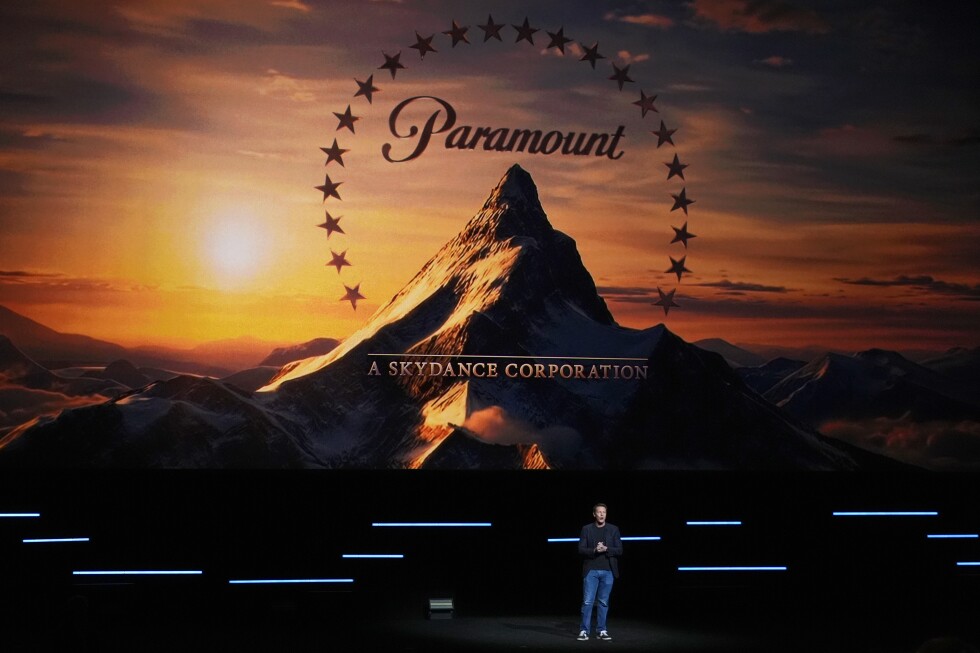
Paramount Skydance CEO David Ellison made bold commitments to theater owners at CinemaCon in Las Vegas on Thursday, promising to deliver 30 movie releases annually between Paramount and Warner Bros., while also pledging to maintain a 45-day exclusive theatrical window “starting today.”
“Long live the movies,” Ellison declared to the audience of exhibitors gathered at the industry convention.
The executive’s appearance comes amid industry uncertainty surrounding his company’s pending $111 billion acquisition of Warner Bros. Discovery, a deal that has sparked significant debate in Hollywood. Ellison sought to allay concerns by emphasizing his dedication to traditional theatrical releases, presenting a glossy promotional video directed by Jon M. Chu and narrated by Tom Cruise.
The star-studded promotional piece featured appearances by Will Smith, Mark Wahlberg, Chris Pratt, Timothée Chalamet, John Krasinski, and Teyana Taylor. It concluded with Cruise perched atop Paramount’s iconic water tower, delivering the message: “The future is paramount and the future looks pretty great from here.”
Addressing theater owners directly, Ellison affirmed his personal commitment to cinema. “I love cinema and I love film. I always have and I always will,” he said, adding, “you can count on our complete commitment.”
In a major announcement likely to excite fans and exhibitors alike, Paramount revealed that a third “Top Gun” movie is currently in development at the script stage, with Tom Cruise set to return.
The studio showcased its upcoming slate with appearances from numerous celebrities. Johnny Depp discussed his role in Ti West’s “Ebenezer: A Christmas Carol,” a project he described as a personal passion since childhood. Billie Eilish promoted her upcoming concert film, while filmmaker James Cameron showed his support for the studio. Marlon Wayans, Shawn Wayans, and Anna Faris appeared to generate excitement for the sixth installment in the “Scary Movie” franchise.
Additional projects highlighted included “Call of Duty,” “A Quiet Place Part III,” and the fourth “Sonic the Hedgehog” movie, alongside original productions such as the adaptation of “Tomorrow, and Tomorrow and Tomorrow” starring Daisy Edgar-Jones, a new Damien Chazelle film featuring Cillian Murphy and Daniel Craig, and Teyana Taylor’s directorial debut “Get Lite.”
The proposed merger between Paramount Skydance and Warner Bros. Discovery, announced in late February, has dominated many discussions at CinemaCon. Notably, Warner Bros. made no mention of Paramount during its two-hour presentation earlier in the week. Several filmmakers who appeared at the Warner Bros. event, including Denis Villeneuve and J.J. Abrams, were among thousands who signed an open letter opposing the merger.
However, James Cameron has expressed support for the deal. In an interview with The Associated Press, Cameron praised Ellison as a “natural born storyteller” who “really cares about movies,” adding, “He’s the right man for the job to run a major studio, and now it looks like he’s going to have two of them… which doesn’t bother me at all.”
The merger still faces significant regulatory hurdles. Having completed its own $8 billion merger with Skydance just months ago, Paramount now awaits a shareholder vote and government approval at both state and federal levels. The U.S. Justice Department must evaluate whether the combination would give Paramount excessive pricing power over movies and other offerings, potentially harming consumers.
In SEC filings, Paramount stated, “Our priority is to build a vibrant, healthy business and industry — one that supports Hollywood and creative, benefits consumers, encourages competition, and strengthens the overall job market.” However, the company has acknowledged plans to save approximately $6 billion through job cuts in “duplicative operations.”
Paramount executives argue the merger will enable them to compete with larger rivals, particularly in streaming, by combining content libraries. Warner Bros., with its 102-year history, brings iconic franchises including “Harry Potter,” “Superman,” and “Barbie” to the table.
The potential consolidation faced scrutiny on Wednesday when Democratic Senator Cory Booker held a hearing in Washington, D.C., examining possible anticompetitive impacts of combining two of Hollywood’s “big five” studios.
Actor Mark Ruffalo, a vocal critic of the merger, testified that “tens of thousands of workers will be left poorer, along with the audiences we serve.” Oscar-winning documentarian David Borenstein expressed concern that further industry consolidation could “erode access to documentary filmmaking… because a small number of distributors have consolidated power and decided to feed audiences a narrow and politically safe diet of content.”
Ellison did not attend Wednesday’s hearing in Washington. A spokesperson confirmed he was attending a funeral that day.
Fact Checker
Verify the accuracy of this article using The Disinformation Commission analysis and real-time sources.

11 Comments
The promotional video sounds like a star-studded affair. Using big names like Cruise, Smith, and Chalamet is a smart play to generate excitement around the theatrical experience. But the real test will be in the films themselves.
Definitely. Glitzy marketing can only get you so far. Paramount will need to deliver high-quality, compelling content to truly lure audiences back to cinemas.
I’m curious to see how Paramount and Warner Bros. handle the 30 movie releases per year. That’s an ambitious slate, especially with the pending acquisition still in the works. Quality over quantity will be key to driving audiences back to theaters.
Agreed. It’s an aggressive production target, and they’ll need to carefully balance big-budget tentpoles with more mid-range films to keep the pipeline fresh.
Interesting move by Ellison to commit to a 45-day theatrical window. This could help reinforce the importance of the big-screen experience for major releases, though it remains to be seen how it impacts streaming and home viewing options.
You make a fair point. The theatrical window is a contentious issue in the industry, so Ellison’s pledge is likely an attempt to appease theater owners.
Ellison’s pledge to maintain a 45-day theatrical window is a bold statement, but it may be difficult to sustain long-term. Streaming has become so integral to the industry that finding the right compromise will be crucial.
Ellison’s personal commitment to cinema is encouraging, but the industry is in flux. Maintaining a 45-day window may be challenging as streaming continues to grow in popularity. Striking the right balance will be critical.
That’s a fair point. The movie-going experience is evolving, and Paramount will need to adapt to changing consumer preferences while still preserving the theatrical model.
It will be interesting to see how Paramount’s slate performs compared to Warner Bros. over the next year or two. The acquisition is a big move, and the combined studio’s output will be closely watched by the industry.
Absolutely. The success or failure of their joint releases could set the tone for the future of theatrical distribution and the balance between cinema and streaming.