


Listen to the article
Uruguay and Argentina Make History as First Mercosur Nations to Ratify EU Trade Deal
Uruguay and Argentina have become the first founding members of Mercosur to ratify a historic free-trade agreement with the European Union, marking a significant milestone in a negotiation process that has spanned a quarter century.
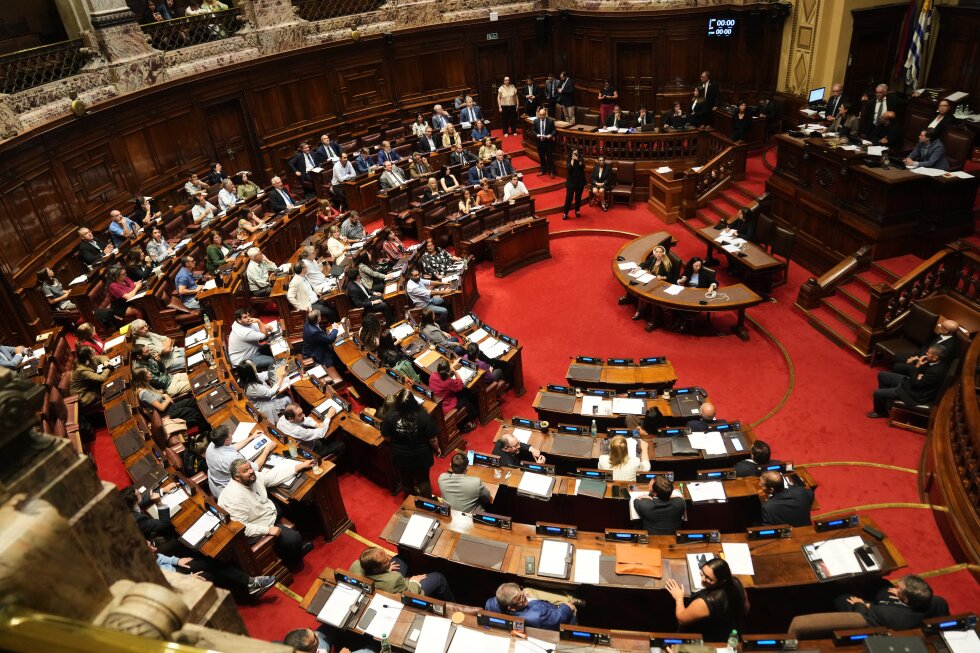
The landmark deal, which will establish one of the world’s largest free-trade zones, passed Uruguay’s lower house on Thursday with an overwhelming 91-2 vote. This followed the Uruguayan Senate’s unanimous support the previous day, demonstrating strong political consensus across the small South American nation.
“Uruguay has sent a strong message to the United States, Mercosur and Europe: that we have waited 25 years, but we are not willing to wait a single second longer,” said Congressman Juan Martín Rodríguez after the vote, highlighting the frustration over the prolonged negotiations.
On the same day, Argentina’s Senate also ratified the agreement with a decisive 69-3 vote without any abstentions. This followed the Chamber of Deputies’ approval on February 12. Despite the ruling party’s push for a swift session to secure Argentina’s position as the first country to ratify the trade deal, deliberations in the Senate lasted four hours, reflecting the importance of the agreement.
The trade pact, which was formally signed on January 17 this year, aims to connect economies that collectively represent over 700 million people and approximately a quarter of global GDP. The remaining Mercosur founding members—Brazil and Paraguay—are expected to approve the deal in the coming weeks, further solidifying the regional bloc’s commitment to expanded trade relations.
The agreement’s path to implementation has not been without obstacles. For decades, European agricultural concerns about unfair competition delayed progress. Just days after the January signing, European lawmakers challenged the agreement in the EU’s top court, citing legal concerns. While a court decision could take months, European Commission President Ursula von der Leyen has indicated that the EU would proceed once at least one Mercosur nation ratified the deal—a threshold now crossed by both Uruguay and Argentina.
The economic implications of this agreement are substantial. Mercosur, founded in 1991, represents a market of nearly 270 million people with a combined GDP of approximately $2.4 trillion. The bloc includes Argentina, Brazil, Paraguay, and Uruguay as full members, with Bolivia in the process of accession. Venezuela’s membership has been suspended since 2016.
For the European Union, the deal opens access to a significant market for industrial goods, particularly in sectors where EU companies hold competitive advantages, such as automobiles, machinery, chemicals, and pharmaceuticals. For Mercosur nations, the agreement offers expanded opportunities for agricultural exports, including beef, poultry, sugar, and ethanol.
Once fully implemented, the deal will create a massive free trade area that von der Leyen has described as “a powerful endorsement of multilateralism in the face of an increasingly hostile and transactional world.” This sentiment reflects growing concerns about protectionist trade policies globally and highlights the strategic importance of strengthening trans-Atlantic economic ties.
The ratification by Uruguay and Argentina comes at a time when both nations face domestic economic challenges. Argentina, under President Javier Milei, is implementing dramatic economic reforms to address inflation exceeding 200%, while Uruguay seeks to diversify its export markets beyond its larger neighbors.
The agreement still faces hurdles, including ratification by all EU member states and the remaining Mercosur countries. Additionally, environmental concerns, particularly regarding deforestation in the Amazon, have prompted criticism from European environmental groups and some EU member states.
Nevertheless, the ratifications mark a significant step forward in a process that has spanned multiple governments and economic cycles on both sides of the Atlantic.
Fact Checker
Verify the accuracy of this article using The Disinformation Commission analysis and real-time sources.

8 Comments
The rapid ratification by Uruguay and Argentina suggests strong political will to move this deal forward. It will be important to understand how the agreement addresses issues like agricultural trade and environmental standards.
An intriguing development, but the devil will be in the details. Curious to see how this impacts trade flows of strategic commodities like copper, lithium, and uranium between the regions.
Ratification by the first Mercosur members is an important step, but the real test will be in how the agreement is put into practice. Skeptical investors will be watching closely for any potential pitfalls.
Interesting development in regional trade relations. The Mercosur-EU pact could open up new economic opportunities for Uruguay and Argentina, though the details will be important to watch.
The Mercosur-EU trade deal is an interesting development, but its real-world impact on mining and energy firms remains to be seen. Curious to hear perspectives from industry analysts on the potential opportunities and risks.
This pact could boost exports of minerals and metals like copper, lithium, and uranium from the region to EU markets. However, concerns around labor and environmental protections will need to be carefully evaluated.
This pact could open up new markets for South American mining and energy companies, but labor and environmental standards will be a key focus area. Careful implementation will be crucial.
This is a significant milestone after years of negotiations. The free trade zone between Mercosur and the EU will create one of the world’s largest trading blocs. Curious to see how it impacts commodity flows and investment in the region.