


Listen to the article
The United Arab Emirates announced Tuesday it will exit OPEC effective May 1, a significant blow to the oil cartel that removes its third-largest producer and further diminishes the group’s influence over global oil supplies and pricing mechanisms.
Industry analysts had anticipated this possibility for some time, noting growing tensions as the UAE increasingly pushed back against OPEC production quotas it considered too restrictive. The Emirates has invested heavily in expanding its energy production capacity in recent years, creating a situation where it has been eager to increase its oil output beyond OPEC’s allocation limits.
“The ties binding OPEC members together have loosened,” noted Capital Economics in an analysis of the situation, drawing parallels to Qatar’s departure from the cartel in 2019.
The decision likely reflects complex regional politics between the UAE and Saudi Arabia, OPEC’s dominant producer. Relations between the two Gulf powers have grown increasingly strained over various political and economic matters in the Middle East, despite both nations facing threats from fellow OPEC member Iran during recent conflicts.
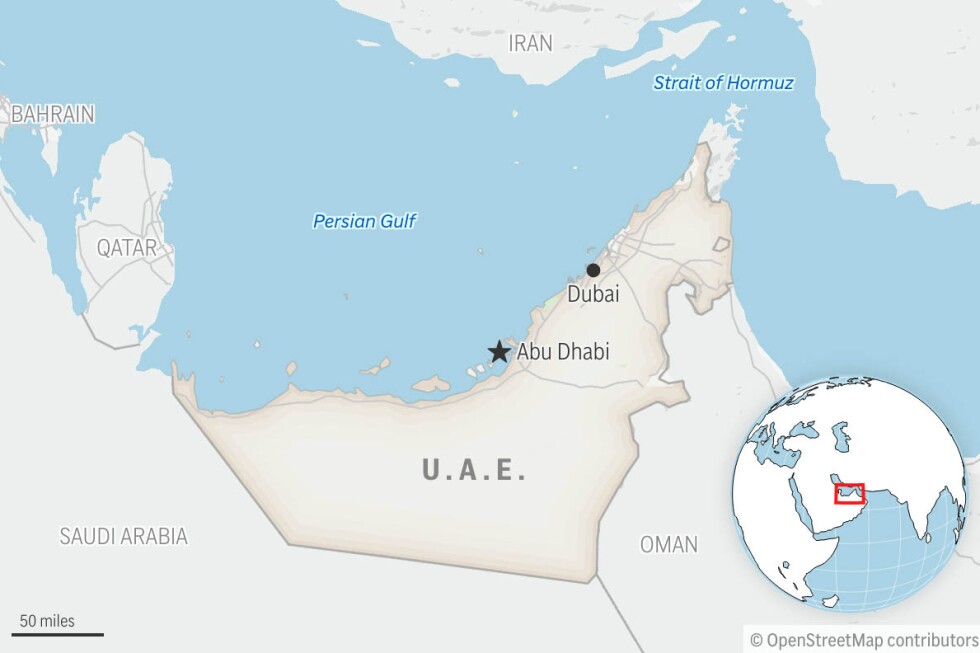
Markets are not expected to see immediate disruption from the UAE’s withdrawal. The current global oil supply is already severely constrained by ongoing war affecting the Strait of Hormuz, a critical waterway through which approximately one-fifth of global oil supplies—including much of the UAE’s production—typically flows. Brent crude, the international benchmark, traded above $111 per barrel on Tuesday, marking a more than 50% increase from pre-war prices.
OPEC, which accounts for roughly 40% of world oil production, has seen its market power gradually diminish in recent years as the United States significantly expanded its domestic production. While Saudi Arabia had been producing more than 10 million barrels of oil daily before recent conflicts, U.S. production now exceeds 13 million barrels per day.
The UAE, an OPEC member through its emirate of Abu Dhabi since 1967, had been producing approximately 3.4 million barrels of crude daily before the U.S.-Israeli conflict with Iran began on February 28. Industry experts estimate the Emirates has capacity to produce around 5 million barrels daily, representing substantial untapped potential.
In its official announcement via state-run WAM news agency, the UAE confirmed it would also leave the wider OPEC+ alliance, which includes Russia and other non-OPEC producers. The Emirates characterized the decision as reflecting its “long-term strategic and economic vision and evolving energy profile, including accelerated investment in domestic energy production.”
The statement indicated the UAE would introduce “additional production to market in a gradual and measured manner, aligned with demand and market conditions.”
Jorge Leon, head of geopolitical analysis at Rystad Energy, explained that the UAE’s departure removes one of OPEC’s few members with capacity to rapidly increase production. “A structurally weaker OPEC, with less spare capacity concentrated within the group, will find it increasingly difficult to calibrate supply and stabilize prices,” he noted.
The deteriorating relationship between Saudi Arabia and the UAE encompasses both economic competition and regional political disagreements, particularly regarding Red Sea affairs. Though the two nations jointly fought against Yemen’s Iran-backed Houthi rebels beginning in 2015, this coalition collapsed amid recriminations last December when Saudi Arabia targeted what it described as a weapons shipment destined for Yemeni separatists backed by the UAE.
In a sign of the broader cooling of relations, Saudi broadcasters long headquartered in Dubai have recently relocated operations back to the kingdom.
Karen Young, a senior research scholar at Columbia University’s Center on Global Energy Policy, contextualized the move: “This exit of OPEC fits into the UAE need for flexibility with key energy consumers as well—including a future relationship with China and a more competitive relationship with Saudi Arabia.”
While neither Saudi Arabia nor OPEC immediately responded to the announcement, Emirati Energy Minister Suhail al-Mazrouei insisted to CNBC that the decision did not stem from any dispute with its Gulf neighbor. “We’ve been working together for years and years. We have the highest respect for the Saudis for leading OPEC,” he stated.
Nevertheless, diplomatic signals suggest otherwise. The UAE sent only its foreign minister rather than its ruler to a Gulf Arab leaders’ meeting held Tuesday in Jeddah, Saudi Arabia, hosted by Saudi Crown Prince Mohammed bin Salman.
The Emirates’ decision comes just months after hosting the United Nations COP28 climate talks in 2023, which concluded with nearly 200 countries pledging to transition away from fossil fuels. Despite these climate commitments, the UAE continues to plan significant increases in oil production capacity, a stance criticized by environmental activists but reflective of its economic priorities.
As U.S. Interior Secretary Doug Burgum told attendees at an Abu Dhabi oil conference in November, drawing applause from Emirati hosts: “The demand for power is going to go up and up and up. Today’s the day to announce that there is no energy transition. There is only energy addition.”
Fact Checker
Verify the accuracy of this article using The Disinformation Commission analysis and real-time sources.

6 Comments
This is an unexpected move by the UAE, which has been a long-standing member of OPEC. It raises questions about the future cohesion and effectiveness of the cartel in managing global oil markets.
The UAE’s exit could embolden other members to pursue their own interests more aggressively, potentially undermining OPEC’s ability to influence prices and production levels.
The UAE’s decision to leave OPEC seems driven by a desire for more flexibility in its production levels. As one of the larger producers, this move could reduce OPEC’s influence over global oil supplies and pricing.
I wonder how this will impact coordination among OPEC members going forward. The group may need to adapt its approach to accommodate the changing priorities of its members.
This is a significant development for the global oil market. The UAE’s exit from OPEC means less coordination among major producers, which could lead to more volatility in prices. It will be interesting to see how this affects geopolitics in the region as well.
The UAE has clearly decided to prioritize its own energy interests over the collective goals of OPEC. This could signal a shift in the power dynamics within the cartel.