


Listen to the article
Fragrance Sales Surge as Holiday Season Approaches, Reshaping Retail Strategies
December has emerged as a crucial period for the fragrance industry, accounting for approximately 25% of annual high-end perfume, cologne, and scented beauty product sales in the United States, according to market research firm Circana. The category has shown remarkable strength throughout the year, outperforming both makeup and skincare sales during the first nine months of 2023.
This growth comes amid shifting consumer behaviors, as many shoppers now prefer self-guided fragrance exploration rather than traditional department store assistance. Social media trends like “fragrance layering” have created a new breed of informed consumers who approach scent selection with greater confidence and knowledge.
To navigate this evolving landscape, major retailers like Macy’s are adapting their approach. The company requires its 10,000 beauty advisers to participate in weekly training sessions covering everything from new product launches to emerging trends such as “juicy fruit” fragrances and the resurgence of matte makeup.
“Shoppers come in knowing what they’ve seen on TikTok, but our beauty advisers really help them discover what is the perfect scent for them,” explained Nicolette Bosco, vice president and divisional merchandise manager of Macy’s beauty business.
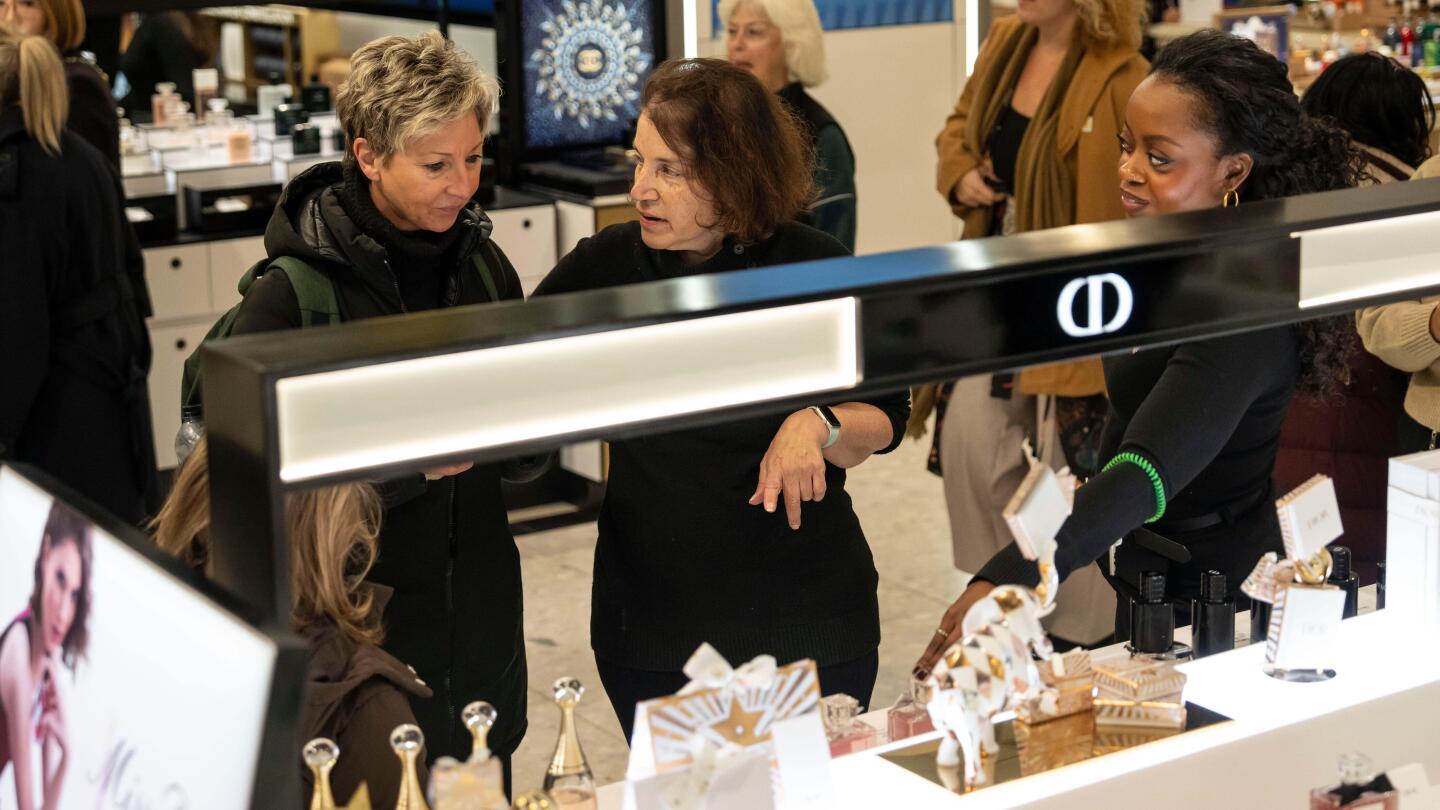
To better understand these retail dynamics, I recently participated in sales training at Macy’s flagship New York City location—the iconic store featured in the 1947 Christmas classic “A Miracle on 34th Street.” Virginia Dervil, a business manager for Parfum Christian Dior who trains beauty advisers for the luxury brand’s makeup and fragrance division, provided insights into effective customer engagement.
After 30 minutes of instruction on Dior’s fragrance portfolio and customer approach techniques, I attempted to put this training into practice. The experience proved challenging—during my half-hour at the Dior counter, I engaged only three customers and made no sales. Most shoppers preferred to browse independently, making initial contact difficult.
Despite these challenges, the training revealed four key strategies for successful fragrance retail.
First, Dervil emphasized the importance of non-verbal engagement through smiling and eye contact—particularly crucial when many customers wear earbuds or headphones that block verbal greetings. A sincere compliment about a customer’s attire can also create a positive initial connection.
Second, allowing customers space to explore independently proves essential. “Some customers want a one-on-one interaction the entire time that they’re here,” Dervil noted. “And some customers prefer to have a moment to themselves and to really self-discover.” The key is remaining attentive while respecting boundaries, as many browsers eventually initiate questions once comfortable.
Third, when guiding fragrance selection, Dervil recommends starting with scents in the middle of the intensity spectrum. For Dior’s popular J’Adore line, the “eau de parfum” represents this sweet spot. Interestingly, intensity variations don’t always mean simply stronger or lighter versions of the same scent—the line’s lightest offering, J’Adore Eau Lumiere, features a distinctly citrusy profile compared to its counterparts.
Finally, proper sampling technique involves three spritzes on a paper test strip, allowing seconds for the alcohol to dissipate before presenting it to customers. For those exploring multiple fragrances, advisers suggest sniffing one’s arm or hand between samples to reset the olfactory palette.
The surge in fragrance popularity reflects broader shifts in consumer preferences and shopping behaviors. As the holiday season progresses, retailers continue adapting their approaches to serve both fragrance enthusiasts who collect scents like fashion accessories and gift-givers navigating the complex world of personal scents.
With December’s critical sales period underway, the fragrance industry’s ability to balance traditional retail expertise with evolving consumer expectations will likely determine which brands capture the largest share of this growing market.
Fact Checker
Verify the accuracy of this article using The Disinformation Commission analysis and real-time sources.

10 Comments
Retailers like Macy’s must be nimble to adapt to changing consumer behaviors in the fragrance category. The shift towards self-guided exploration is a significant challenge.
It will be interesting to see if Macy’s and other department stores can effectively leverage their beauty advisers to guide customers and drive sales.
Fascinating insights into the fragrance industry and how retailers are adapting to changing consumer preferences. Fragrance layering and social media trends seem to be reshaping the in-store experience.
It will be interesting to see how Macy’s and other retailers continue to evolve their training and strategies to stay ahead of the curve.
Self-guided fragrance exploration and informed consumers present both challenges and opportunities for retailers. Providing the right training and in-store guidance will be key.
The resurgence of matte makeup is an interesting trend to watch – I’ll have to pay closer attention to that in the beauty aisles.
Juicy fruit fragrances sound intriguing. I wonder if that’s a passing fad or a longer-term shift in consumer preferences.
The article highlights how quickly beauty trends can evolve, putting pressure on retailers to stay ahead of the curve.
The 25% of annual sales coming in December underscores the critical importance of the holiday season for the fragrance market. Retailers have to be nimble to capitalize on these seasonal surges.
I wonder how the growth in fragrance sales compares to other beauty categories like makeup and skincare over the longer term.