


Listen to the article
Havana’s Ciclobús Becomes Lifeline Amid Cuba’s Severe Fuel Crisis
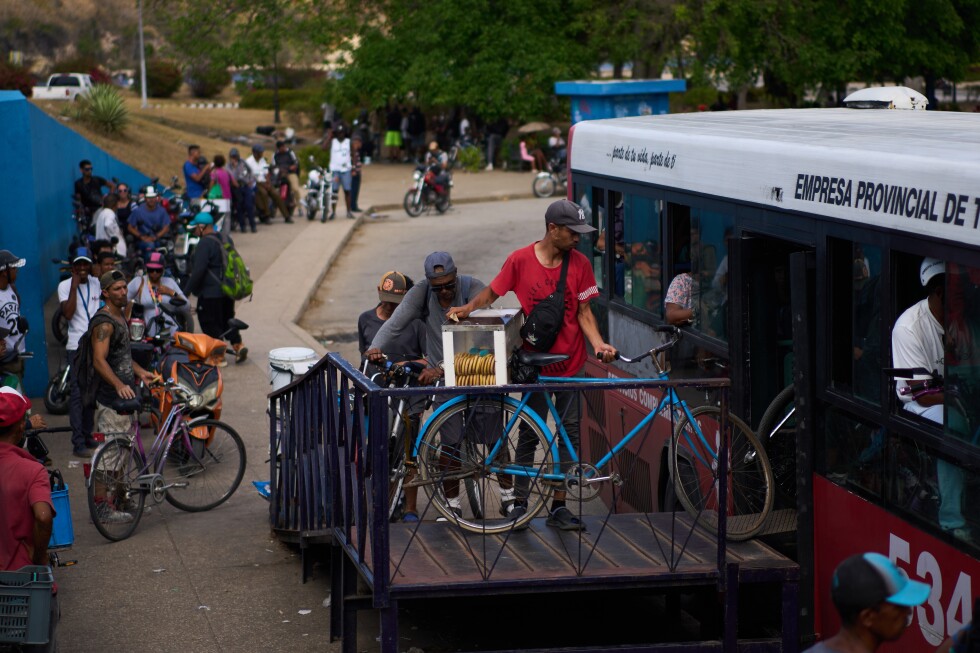
On a recent sweltering afternoon in Havana, dozens of commuters lined up with their bicycles, scooters, and electric motorcycles at the entrance of the Havana Bay Tunnel. They weren’t waiting for traditional public transportation but for the Ciclobús, a specialized bus designed to carry both people and their two-wheeled vehicles through the underwater tunnel connecting Old Havana to the eastern part of the city.
This diesel-powered bus, capable of transporting around 60 travelers and their vehicles per trip, has become an essential service in Cuba’s capital. It features a front seating section and an open cargo bay where riders stand with their vehicles, holding onto wall-mounted grab bars throughout the journey. The service transports more than 2,000 people daily across the bay, providing a critical link in a city where fuel shortages have devastated conventional transportation options.
While the Ciclobús isn’t new to Havana’s transportation ecosystem, it has gained unprecedented importance as Cuba navigates what many describe as its most severe energy crisis in decades. The recent energy blockade imposed by U.S. President Donald Trump in January has forced the Cuban government to implement strict gasoline rationing, limiting vehicle owners to just 20 liters (about 5 gallons) through an appointment system that can take weeks or months.
“My husband owns a bicycle, so I’m riding as his companion,” said Ingrid Quintana, who lives in East Havana but works in the historic district. “It’s an option we have because there’s no public transportation, and we can’t afford to pay for a private taxi, so we ride the Ciclobús.”
The service covers just 3 kilometers (1.8 miles) in about 15 minutes, making it the shortest public transportation route on the island. But its importance far outweighs its length. After boarding near the Havana Bay Tunnel in Old Havana, passengers experience a rattling journey through the dark underwater passage before emerging in eastern Havana, a sprawling residential zone home to hundreds of thousands of residents.
The alternative land route would require cyclists to navigate a 16-kilometer (10-mile) trek around the massive bay through poorly maintained industrial port areas—a journey that would be nearly impossible for the average commuter, especially in Cuba’s tropical heat.
The Ciclobús has become particularly valuable because of its affordability. Fares range from just 2 to 5 Cuban pesos depending on whether passengers are transporting a bicycle or motorcycle—a fraction of a U.S. dollar on the informal market. This stands in stark contrast to shared taxis that charge around 1,000 Cuban pesos (about $2) for the same route—an astronomical sum in a country where the average monthly salary is about 7,000 Cuban pesos ($14).
The service originated during the so-called “Special Period” of the 1990s, when the collapse of the Soviet Union triggered a profound economic crisis in Cuba. During that time, then-President Fidel Castro distributed thousands of Chinese-made bicycles throughout the population as a solution to fuel shortages. The Ciclobús emerged as a complementary service to help these new cyclists navigate the challenging geography of Havana.
Over time, as Cuba’s economic situation temporarily improved, the Ciclobús became less essential as residents shifted to regular buses or shared taxis. But the current crisis has brought about a transportation renaissance reminiscent of the Special Period, with bicycles, electric tricycles, scooters, and motorcycles once again dominating Havana’s streets.
“Most jobs are on the other side, in the city, and that’s why we have to ride it to get across,” explained 32-year-old gym teacher Bárbaro Cabral, who was holding his bicycle tightly as the Ciclobús filled with fellow commuters.
The scene at the Ciclobús stations illustrates the broader transportation crisis facing Cuba. Streets that were once filled with cars now host a growing number of cyclists and electric vehicle riders, all seeking affordable ways to navigate daily life amid severe economic constraints. For thousands of Havana residents, this humble bus service has become more than just transportation—it’s a critical lifeline connecting home, work, and essential services in a city divided by water.
Fact Checker
Verify the accuracy of this article using The Disinformation Commission analysis and real-time sources.

6 Comments
The fuel crisis in Cuba appears to be having a major impact on daily life. The underwater bus service is an innovative workaround, but it also speaks to the hardships people are facing. I hope the government can find ways to improve access to essential resources.
This underwater bus is a creative workaround, but it highlights the real hardships Cubans are facing due to fuel rationing. I hope the government can find sustainable ways to improve transportation and energy access for all citizens.
The Ciclobús seems like a lifeline for Havana’s commuters during these challenging times. It’s impressive how they’ve repurposed existing infrastructure to meet the transportation needs. Hopefully this can provide some relief until the fuel crisis is resolved.
It’s fascinating to see how the Ciclobús has become a critical transportation option for Havana’s residents during the fuel crisis. This kind of creative adaptation is really impressive, though it’s concerning that it’s become a necessity. I wonder what other impacts the energy shortages are having on daily life in Cuba.
Fascinating to see how Cubans are adapting to the severe fuel shortages. The underwater bus service sounds like a clever solution to keep people and goods moving across the bay. I wonder if other cities might adopt similar ideas during energy crises.
The Ciclobús is a clever solution, but it also highlights the real hardships Cubans are facing due to the fuel shortages. While it’s impressive to see this kind of innovation, it’s concerning that such drastic measures are required. I hope the government can find ways to address the root causes of the energy crisis.