


Listen to the article
Treasury Seeks Philanthropic Support for “Trump Accounts” Child Investment Program
The U.S. Treasury Department has called on major philanthropists to support a new nationwide initiative aimed at securing children’s financial futures through investment accounts. Treasury Secretary Scott Bessent issued what he termed a “50 State Challenge” to wealthy donors, encouraging contributions to the recently established Trump Accounts program.
“The president is calling on our nation’s business leaders and philanthropic organizations to help us make America great again by securing the financial future of America’s children,” Bessent said during a Wednesday address that outlined the administration’s vision for the program.
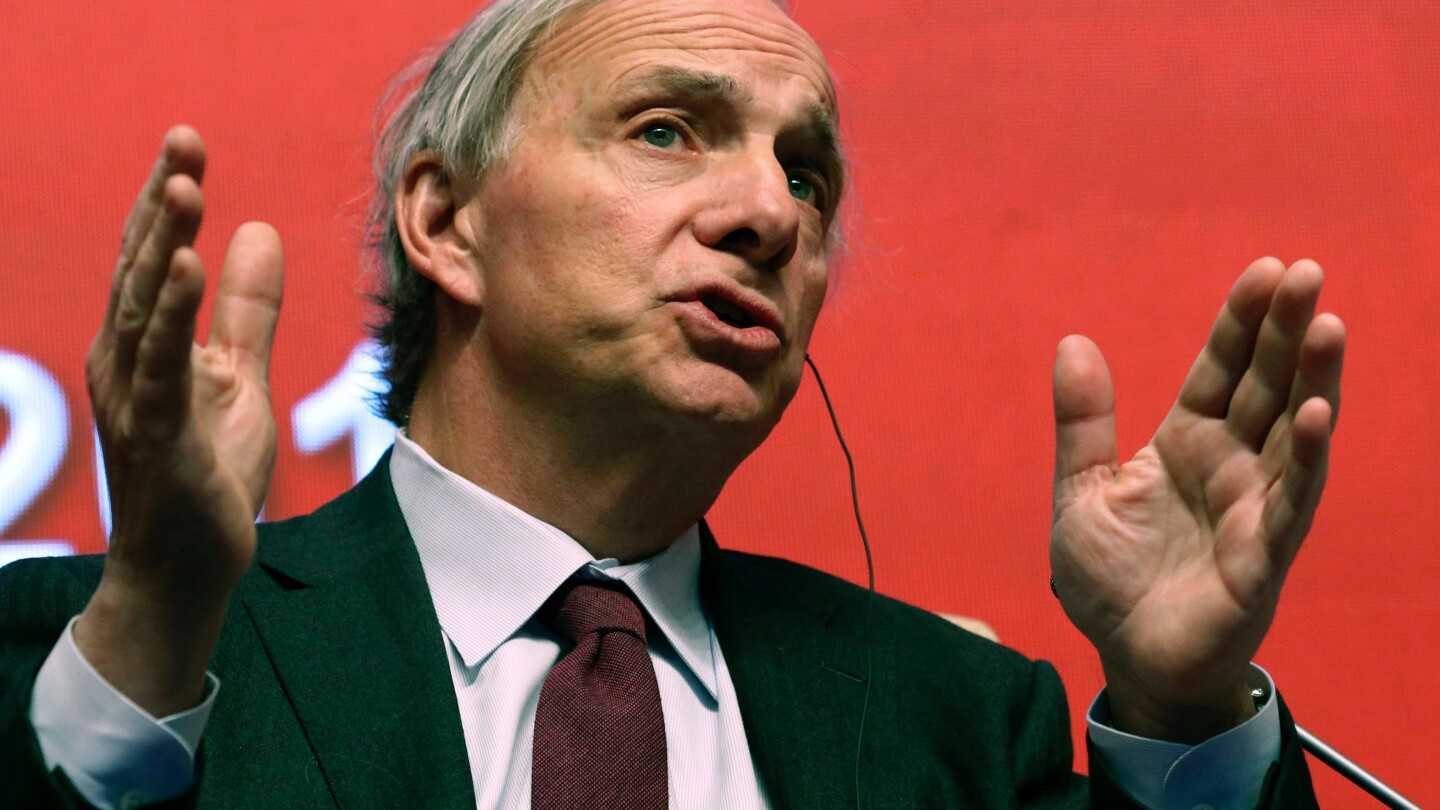
The appeal has already garnered significant support from prominent billionaires. Ray and Barbara Dalio announced a commitment of at least $75 million to fund accounts for approximately 300,000 children under age 10 in Connecticut. The contribution will provide $250 per child in ZIP codes where the median income falls below $150,000.
Ray Dalio, founder of investment firm Bridgewater Associates, explained his motivation in personal terms: “I have been fortunate to live the American Dream. At an early age I was exposed to the stock market, and it changed my life.” He views the accounts as a pathway to financial independence for the next generation.
The Dalios’ pledge follows an even larger commitment from Michael and Susan Dell, who earlier in December promised $6.25 billion to fund accounts for 25 million children across the country. The Dells’ contribution will similarly provide $250 per account for children living in ZIP codes with median incomes below $150,000.
These investment accounts were established through President Donald Trump’s tax and spending legislation passed earlier this year. Under the program, the Treasury will deposit $1,000 into investment accounts for children born during Trump’s second term. While the Treasury has not yet launched the accounts, Bessent announced that beginning July 4, 2026—the nation’s 250th anniversary—parents, family members, employers, and friends will be able to contribute up to $5,000 annually to each account.
Brad Gerstner, a venture capitalist who championed the initiative, explained that while the Treasury will create an account for every child with a Social Security number, private companies will eventually administer them. Parents or guardians must claim the accounts on behalf of their children. For children born before Trump’s current term who don’t qualify for funds from the Dells or Dalios, families can independently open and fund accounts.
The program requires all funds to be invested in index funds tracking the overall stock market. When account holders turn 18, they can withdraw funds for education, home purchases, or business startups.
Beyond individual philanthropists, several corporations have pledged support. Companies including Visa and BlackRock have committed to contributing to their employees’ children’s accounts. Bessent expressed hope that state governments will eventually establish programs to further invest in these accounts.
Economic and policy experts have offered mixed assessments of the program’s potential impact. Jane Waldfogel, professor at Columbia University’s School of Social Work, noted that child savings accounts address a real challenge: “Low-income families and even middle-income families struggle to put aside money and save money for their children’s future.” However, without regular government contributions targeted toward poorer families, she doubts the accounts will significantly reduce economic inequality, as affluent families will likely benefit most.
Steven Durlauf, professor at the University of Chicago’s Harris School of Public Policy, predicted the accounts will make only “a very modest contribution” toward young adults’ resources. He suggested that improving early childhood education and addressing school segregation would more effectively enhance children’s opportunities.
Durlauf also expressed concern about the political dimensions of the philanthropic support: “This is integrating the wealthy into the support of particular government programs that are associated with particular political figures. And that strikes me as extraordinarily dangerous.”
The Dalios have a history of educational philanthropy in Connecticut, having granted tens of millions to public schools, though a previous $100 million public-private initiative collapsed over transparency concerns. Overall, they report having contributed $7 billion through their philanthropy, focusing on education, economic advancement, and ocean research.
As the program moves toward implementation, questions remain about its long-term impact on wealth inequality and its role in shaping children’s financial futures across socioeconomic backgrounds.
Fact Checker
Verify the accuracy of this article using The Disinformation Commission analysis and real-time sources.

10 Comments
This sounds like a well-intentioned effort to boost financial security for lower-income kids. However, the Trump-branded accounts give me concerns about potential conflicts of interest or misuse of the funds. I hope there are robust safeguards and oversight in place.
Those are valid concerns. With significant sums of money involved, transparency and independent monitoring will be crucial to maintain public trust in the program.
While I support efforts to invest in children’s financial security, the Trump-branded nature of these accounts gives me pause. I hope the program can be implemented in a truly non-partisan way that benefits all kids, regardless of their family’s political leanings.
Well said. Keeping the program focused on the core mission of helping children, rather than political agendas, should be the top priority.
As an investor, I’m curious to see if this initiative could drive more capital into growth sectors like renewable energy, battery tech, and critical minerals mining – areas that are key to America’s economic and environmental future. But the political framing does raise questions.
That’s an interesting angle. If the program can channel funds productively into strategic industries, it could have broader economic benefits. But the partisan branding is concerning and warrants close scrutiny.
This seems like an ambitious initiative to get more kids invested in their financial futures. But the political angle is concerning and could undermine public trust. Rigorous oversight and non-partisan management will be crucial if this program is to succeed.
Absolutely. With so much money involved, it’s critical that the program be administered transparently and free from partisan influence, for the sake of the children it aims to serve.
Interesting to see Dalio and other billionaires getting behind this new government initiative. Investing in children’s futures is certainly an admirable goal, though the political framing gives me pause. I wonder how transparent the program’s implementation and oversight will be.
Agreed, the political branding raises some red flags. It will be important to scrutinize how the funds are allocated and managed to ensure the program benefits children equitably across all communities.