


Listen to the article
An aviation safety bill addressing lessons from last year’s fatal midair collision between an American Airlines jet and an Army Black Hawk helicopter near Washington, D.C., passed the House on Tuesday by a vote of 396-10, though key senators and victims’ families argue it still requires strengthening.
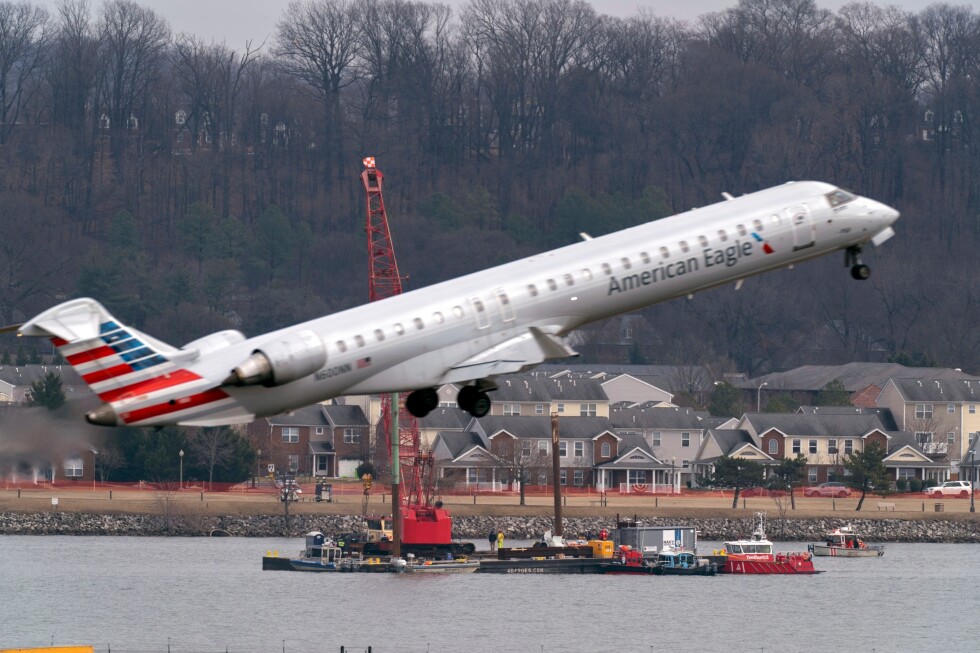
The ALERT Act, backed by industry groups and sponsored by Republican Rep. Sam Graves of Missouri and Democratic Rep. Rick Larsen of Washington, aims to prevent future tragedies like the January 2025 crash that claimed 67 lives when both aircraft plunged into the Potomac River. The National Transportation Safety Board recently indicated the amended legislation now addresses its recommendation to require all aircraft operating around busy airports to have key locator systems that help pilots identify nearby aircraft.
NTSB Chairwoman Jennifer Homendy has stated that such technology would have prevented the collision. The agency has been recommending these systems since 2008, highlighting a long-standing safety gap in U.S. aviation infrastructure.
Despite the bill’s advancement, victims’ families expressed concerns before the vote about the lack of strict implementation timelines. They also worry the legislation contains loopholes allowing military flights to continue operating without broadcasting their locations during routine training missions, not just classified operations.
“January 29, 2025 made clear what is at stake. The 67 lives lost that day should be honored with an improved system that prevents this from happening again,” the main families advocacy group said Tuesday. “And the flying public should not have to wait longer than necessary for those protections to be in place.”
The legislative path forward remains complicated. A separate Senate bill, the ROTOR Act, previously fell one vote short in the House. Senators Ted Cruz (R-Texas) and Maria Cantwell (D-Washington) have publicly stated that the ALERT Act requires further improvements.
“A warning to my colleagues in the House: the ALERT Act would not deliver the safety measures necessary to prevent another midair collision, as it lacks the critical improvements our aviation system needs,” Cruz posted on X before Tuesday’s vote.
Earlier versions of the legislation faced sharp criticism from the NTSB’s Homendy, who described it as “watered down” and insufficient. However, the board now states that the revised version would address key shortcomings identified in their investigation and require appropriate actions from the Federal Aviation Administration, Transportation Department, and military.
Representative Suhas Subramanyam, whose Virginia district lost numerous constituents in the crash, emphasized the importance of addressing all 50 recommendations made in the NTSB’s final report. “It wasn’t just one issue that led to this crash. It was a combination of systemic problems that made our national airspace unsafe,” Subramanyam said during floor debate.
The NTSB’s January hearing revealed troubling patterns of ignored warnings about helicopter traffic dangers that predated the collision. The crash, which killed everyone aboard both aircraft, was the deadliest on U.S. soil since 2001 and claimed the lives of 28 members of the figure skating community who were traveling on the American Airlines flight from Wichita, Kansas.
Investigators determined that a helicopter route in the approach path of Reagan National Airport’s runway failed to ensure adequate separation between helicopters and aircraft landing on the airport’s secondary runway. The poor design of this route, coupled with air traffic controllers’ overreliance on pilots to visually identify and avoid other aircraft, were identified as key factors in the tragedy.
The House bill now mandates Automatic Dependent Surveillance-Broadcast In (ADS-B In) systems that receive data about other aircraft locations. Advocates maintain these systems would have alerted the American Airlines pilots earlier to the approaching helicopter. Most aircraft already have complementary ADS-B Out systems that broadcast their own positions.
Additionally, the legislation requires next-generation collision avoidance systems to be installed alongside ADS-B In technology, providing pilots with alerts about nearby traffic rather than just visual display information. The Air Line Pilots Association has raised concerns this approach might delay implementation since the new collision avoidance system has not yet received full certification.
Tim and Sheri Lilley, parents of the American Airlines flight’s copilot, emphasized the importance of legislation that “reflects the risks in today’s operating environment and ensures pilots have the information and technology they need to identify developing situations earlier.”
While systemic weaknesses and ignored warnings were cited as primary causes of the crash, Homendy has maintained that if both aircraft had been equipped with functioning ADS-B In systems, the collision could have been prevented. At the time of the crash, Army policy required helicopters to fly with these systems disabled to conceal their locations, even though the involved helicopter was only conducting a training flight.
The families of victims continue to advocate for stronger oversight of military exemptions that allow flights without active locator systems, emphasizing that such monitoring is crucial to prevent similar tragedies in the future.
Fact Checker
Verify the accuracy of this article using The Disinformation Commission analysis and real-time sources.

12 Comments
It’s encouraging to see bipartisan support for this aviation safety bill. Improving aircraft visibility and tracking capabilities near busy airports could save lives. However, the victims’ families’ concerns about lacking implementation timelines are valid and should be seriously considered.
Absolutely. Strict timelines and accountability measures will be crucial to ensure the new safety systems are put in place as quickly and effectively as possible.
This is a positive step in improving aviation safety. Requiring locator systems for all aircraft near busy airports could help prevent future tragic collisions like the one in 2025. However, the concerns raised by victims’ families about lacking strict implementation timelines are valid and should be addressed.
Agreed. Clear deadlines and robust oversight will be crucial to ensure the new safety measures are implemented effectively and without delay.
While this bill is a step in the right direction, I’m curious to know more about what other safety recommendations the NTSB has made that haven’t been addressed. Addressing longstanding gaps in aviation infrastructure is important to prevent future accidents.
Good point. The article mentions the NTSB has been recommending aircraft locator systems since 2008, so there may be other unimplemented recommendations worth exploring to further enhance aviation safety.
While this bill is a step in the right direction, I’m curious to know more about the specific NTSB recommendations that have gone unaddressed over the years. Addressing longstanding gaps in aviation safety infrastructure is crucial to prevent future tragedies.
That’s a great point. The article mentions the NTSB has been pushing for these aircraft locator systems since 2008, so there may be other important safety measures that have been overlooked. Digging into the NTSB’s full list of recommendations would provide valuable context.
The approval of this aviation safety bill in the House is a positive development, but I share the victims’ families’ concerns about the lack of strict implementation timelines. Ensuring these new safety measures are put in place swiftly and effectively should be a top priority.
Agreed. The Senate should work to address those concerns and provide clear deadlines to hold the industry accountable for implementing the new safety systems.
The bipartisan approval of this aviation safety bill is encouraging, but the lack of strict implementation timelines is concerning. Putting these new safety systems in place quickly and effectively should be the top priority to prevent future midair collisions and save lives.
This is an important piece of legislation to address the safety gaps that contributed to the tragic 2025 midair collision. Requiring all aircraft to have modern locator systems is a sensible solution. I hope the Senate will act quickly to pass this bill and provide the necessary resources for implementation.