


Listen to the article
After more than three years of hiatus, mega K-pop group BTS has launched its highly anticipated 12-month world tour, but one crucial market is noticeably absent from the schedule: China. This omission, far from surprising industry observers, highlights the ongoing unofficial ban China has maintained on most South Korean entertainment since 2016.
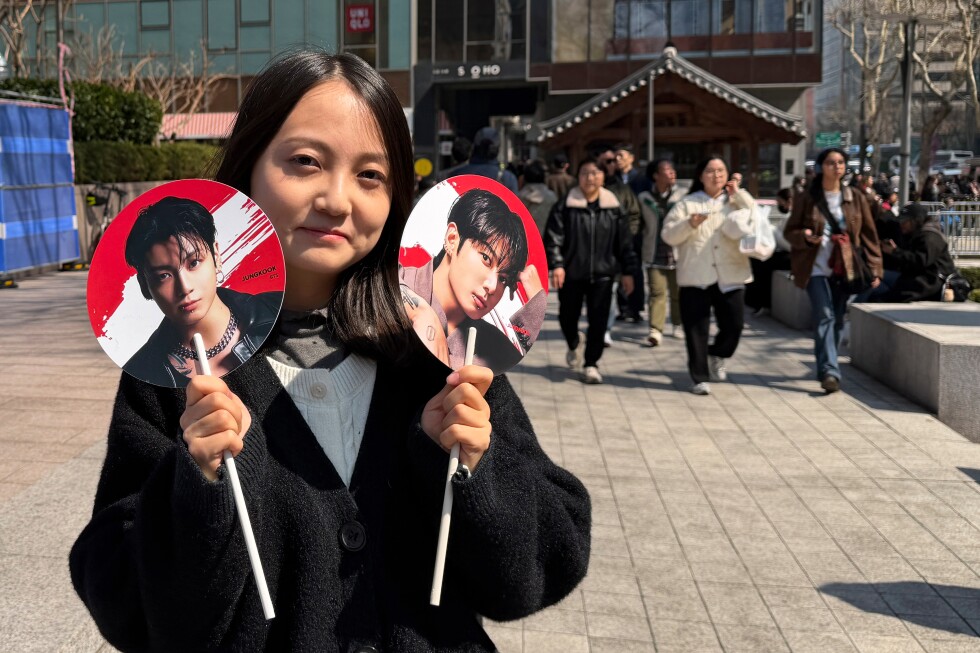
The ban, which extends to movies and popular TV dramas, has forced devoted Chinese fans to find creative alternatives to support their favorite artists. Many are expected to fly to Seoul for BTS’s opening shows this weekend, demonstrating the lengths fans will go to circumvent these restrictions.
China’s unofficial ban emerged following South Korea’s decision to allow the United States to deploy the THAAD anti-missile defense system on Korean soil. While the system was designed to counter North Korean threats, Chinese officials expressed concerns that its radar capabilities could potentially be reconfigured to monitor Chinese territory.
“From China’s perspective, these actions go beyond symbolism,” explains Seung-Youn Oh, a Bryn Mawr College professor currently writing a book on China’s use of informal economic sanctions. “They are strategic tools to shape the international environment.”
The ban has proven remarkably persistent, lasting far longer than similar trade restrictions China has imposed during other geopolitical disputes. Analysts attribute this longevity to Beijing’s deeper concerns about the overwhelming popularity of Korean cultural products among Chinese youth and the potential influence they wield.
The restriction is not absolute. K-pop groups with non-Korean members have been permitted to perform in China, and pop-up stores selling K-pop merchandise continue to draw crowds requiring advance reservations during peak hours. Additionally, the ban doesn’t apply to Hong Kong and Macao, which operate under different administrative systems. BTS has scheduled performances in Hong Kong for 2027.
“I’m already really grateful that they can perform in places like Hong Kong, Macao and Taiwan,” said Tian Xin, who traveled to Seoul last month for a free BTS comeback concert. “The rest is a matter of national policy. Of course, I still hope they can come closer to us — fans always want that.”
Beyond the entertainment sector, China also forced out a South Korean supermarket chain as part of its response to the THAAD deployment. The missile defense system remains operational in South Korea, though recent security footage has fueled speculation that some interceptor missiles may have been relocated to the Middle East for conflict with Iran.
The Korea Creative Content Agency, a government organization, noted in a recent report that China initially welcomed the “Korean Wave” as a cultural import compatible with its political system and an alternative to Western pop culture. However, the explosive popularity of Korean entertainment in the 2010s transformed it into something Beijing perceived as needing control.
“The Chinese government had never experienced anything like that before,” said Dong-ha Kim, a professor at Busan University of Foreign Studies. “While the dispute over THAAD happened to coincide with that period, Beijing’s fundamental concern goes deeper. It cannot allow foreign culture to shape the thinking of its young people, especially when its government has no control over the content.”
This concern manifested in additional cultural restrictions, including China’s 2021 ban on “effeminate-looking men” on television – an aesthetic many Chinese pop stars had adopted from Korean and Japanese performers.
China’s strategy also includes developing its own pop culture ecosystem as a form of soft power, evidenced by phenomena like the Labubu doll craze and growing domestic food and beverage chains with cultural appeal.
“China wants cultural governance – to grow its own music industry,” said Hyunji Lee, a financial analyst covering the entertainment sector. “If K-pop floods back in, there’s a direct conflict.”
Despite implementing these restrictions, Chinese officials have never publicly acknowledged the ban’s existence. “China has never imposed any so-called bans on the Republic of Korea,” Foreign Ministry spokesperson Zhao Lijian stated in 2022. Another spokesperson later claimed China had no objection to “healthy and beneficial” cultural exchange with South Korea.
Some optimism emerged after recent meetings between South Korean President Lee Jae Myung and Chinese leader Xi Jinping. In January, the two governments signed an agreement to expand cultural exchange, though only gradually and initially limited to soccer and the traditional board game of go.
The prolonged ban has fundamentally reshaped how South Korean entertainment companies view the Chinese market. Drama producers have felt the greatest impact, as pirated versions circulating in China generate no revenue for creators. Major streaming platforms like Netflix and Disney+, which distribute most Korean dramas globally, remain blocked in China.
Meanwhile, the K-pop industry has restructured its business model. Japan has become the anchor market, while North America represents the primary growth frontier for Korean entertainment companies.
“China matters,” Lee noted, “but it’s not something companies are desperately waiting on anymore.”
Fact Checker
Verify the accuracy of this article using The Disinformation Commission analysis and real-time sources.

16 Comments
This situation highlights the delicate balance between political interests and cultural influences. It will be intriguing to see how it plays out in the long run.
Absolutely, it’s a prime example of how geopolitics can intersect with the entertainment industry in unexpected ways. This will be an interesting case study to follow.
China’s concerns about the THAAD system’s potential for surveillance seem to be the root cause of this ban. It’s a complex geopolitical issue with far-reaching consequences.
Exactly, the political tensions between the countries are clearly driving this decision, which is having a significant impact on the cultural exchange between them.
It’s interesting to see how geopolitical tensions can impact the entertainment industry. The unofficial ban on K-pop in China highlights the complex dynamics between the two countries.
I wonder how this will affect the Chinese fans who are so devoted to their K-pop idols. It must be frustrating to have such limited access.
This situation raises questions about the role of cultural exchange and soft power in international relations. It will be interesting to see how it affects the broader dynamics between China and South Korea.
Absolutely, this is a complex issue that goes beyond just the entertainment industry. It touches on broader geopolitical and diplomatic considerations.
The creativity of Chinese fans in finding ways to support their K-pop idols, despite the ban, is really admirable. It speaks to the power of fandom and the appeal of the music.
You’re right, the fans’ dedication and ingenuity in the face of these restrictions is quite impressive. It’s a testament to the enduring popularity of K-pop.
While the official reasons for the ban may be political, it’s clear that the Chinese public still has a strong appetite for K-pop. This dynamic will be fascinating to watch unfold.
Agreed, the continued demand from Chinese fans despite the restrictions demonstrates the cultural pull of K-pop. It will be intriguing to see how this plays out in the long run.
From a business perspective, this ban must be a significant challenge for K-pop companies trying to expand into the Chinese market. It will be interesting to see how they adapt their strategies.
You raise a good point. The Chinese market is crucial for K-pop’s global growth, so this ban could have major financial implications for the industry.
The lengths that fans are willing to go to support their favorite artists, like flying to Seoul, just shows how powerful the K-pop phenomenon is. It’s a testament to the genre’s global appeal.
I agree, the K-pop fandom is incredibly dedicated and passionate. It will be fascinating to see how this situation evolves over time.