


Listen to the article
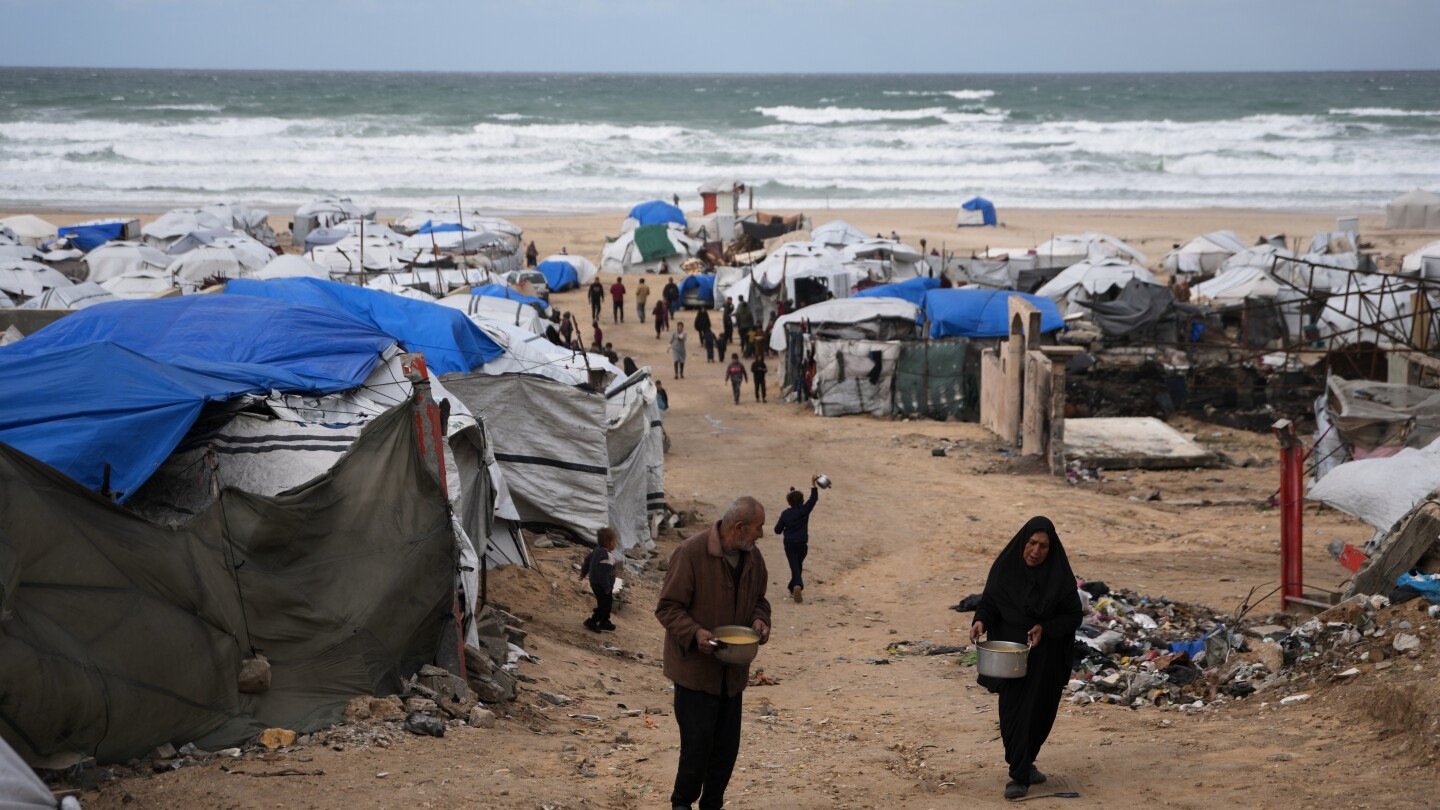
Winter rains have compounded the misery for displaced Palestinians in Gaza, flooding makeshift camps with ankle-deep water as the region’s humanitarian crisis deepens amid ongoing ceasefire negotiations.
In Khan Younis, residents struggled to cope as rainwater inundated tents that have housed families for months. Blankets were soaked through, clay cooking ovens submerged, and children waded through muddy puddles in flip-flops. Many used whatever tools they could find—shovels, tin cans, or bare hands—to bail water from their shelters or extract collapsed tents from the mud.
“We drowned last night,” said Majdoleen Tarabein, who was displaced from Rafah in southern Gaza. “Puddles formed, and there was a bad smell. The tent flew away. We don’t know what to do or where to go.”
The deteriorating conditions have proven deadly. Gaza’s Health Ministry reported that at least 12 people, including a two-week-old infant, have died since December 13 from hypothermia or weather-related collapses of war-damaged buildings. Emergency workers have warned people against staying in damaged structures, but with an estimated 80% of Gaza’s buildings destroyed or damaged according to United Nations figures, shelter options are severely limited.
“Where are the mediators? We don’t want food. We don’t want anything. We are exhausted. We just want mattresses and covers,” pleaded Fatima Abu Omar while attempting to secure her collapsing shelter.
The crisis unfolds as Israeli Prime Minister Benjamin Netanyahu traveled to Florida for an expected meeting with U.S. President Donald Trump regarding the second phase of the ceasefire agreement. Netanyahu made no public statement upon his departure.
The first phase of the ceasefire, which took effect on October 10, was intended to facilitate a significant increase in humanitarian aid for Gaza, including shelter materials. However, aid organizations and an Associated Press analysis of Israeli military figures indicate deliveries are falling far short of what was promised.
The Israeli military body responsible for humanitarian coordination reported that 4,200 aid trucks entered Gaza in the past week, along with eight garbage trucks and unspecified quantities of tents and winter clothing. Since the ceasefire began, approximately 72,000 tents and 403,000 tarps have entered Gaza, according to the Shelter Cluster, an international aid coalition led by the Norwegian Refugee Council.
Philippe Lazzarini, commissioner-general of the leading UN aid group in Gaza, highlighted the severity of the situation on social media: “Harsh winter weather is compounding more than two years of suffering. People in Gaza are surviving in flimsy, waterlogged tents and among ruins. There is nothing inevitable about this. Aid supplies are not being allowed in at the scale required.”
The ceasefire has generally held despite slow progress in moving to subsequent phases. Israel has refused to advance to the next stage while the remains of the final hostage killed in the Hamas-led attack of October 7, 2023, are still in Gaza. Hamas claims that extensive destruction has hampered efforts to locate these remains.
The Gaza Health Ministry reports that since the ceasefire began, 414 Palestinians have been killed and 1,142 wounded. The overall Palestinian death toll from the war has reached at least 71,266, according to ministry figures, which do not distinguish between militants and civilians.
Significant challenges remain for the next phase of the ceasefire, including deploying an international stabilization force, establishing a technocratic governing body for Gaza, disarming Hamas, and further withdrawing Israeli troops from the territory. Both Israel and Hamas have accused each other of violating the truce terms.
As winter progresses, the humanitarian situation appears likely to deteriorate further unless aid delivery accelerates and more permanent housing solutions are implemented for Gaza’s displaced population.
Fact Checker
Verify the accuracy of this article using The Disinformation Commission analysis and real-time sources.

9 Comments
It’s distressing to read about the hardships faced by displaced Palestinians in Gaza due to the severe winter weather. The flooding and damaged shelters sound like they are making an already difficult situation even worse. I hope international aid and relief efforts can provide some much-needed assistance.
This is a heartbreaking situation. The people of Gaza are already facing immense challenges, and now having to endure these harsh winter conditions on top of it must be unbearable. I hope the international community can step up and provide urgent humanitarian aid to help address the immediate crisis and work towards more sustainable long-term solutions.
This is a distressing situation. Vulnerable populations like children and infants should not have to suffer through these harsh conditions. I hope the international community can step up to provide emergency relief and long-term support to improve living conditions in Gaza.
You’re right, the loss of life due to these weather-related incidents is heartbreaking. Urgent action is needed to protect displaced people and ensure access to adequate shelter, warmth, and other essentials.
The flooding and damaged infrastructure in Gaza are concerning. I wonder what steps are being taken by local and international authorities to address the immediate humanitarian crisis and work towards more sustainable solutions for housing and infrastructure in the region.
This is a tragic situation. The people of Gaza are already struggling with the impacts of conflict, and now having to deal with severe winter weather and damaged shelters must be overwhelming. I hope aid groups can provide emergency relief quickly to help protect vulnerable populations.
Absolutely, the compounding crises in Gaza are devastating. Urgent humanitarian intervention is critical to prevent further loss of life and alleviate the suffering of displaced people.
The situation in Gaza sounds truly heartbreaking. Flooding camps and damage to homes during winter rains must be making life extremely difficult for displaced Palestinians. I hope aid and humanitarian assistance can reach those in need quickly.
Agreed, the plight of the people in Gaza is concerning. Ongoing conflicts and lack of infrastructure only compound the challenges they face during harsh weather events.