


Listen to the article
Pro-Democracy Leaders Face Trial Under Hong Kong’s National Security Law
Two former leaders of a prominent Hong Kong pro-democracy group are set to stand trial Thursday under the city’s sweeping national security law, marking another significant moment in the ongoing crackdown on political dissent in the former British colony.
Chow Hang-tung and Lee Cheuk-yan, who once led the Hong Kong Alliance in Support of Patriotic Democratic Movements of China, face charges of incitement to subversion. A third former alliance leader, Albert Ho, is expected to plead guilty at the hearing, which could result in a reduced sentence. The trial is scheduled to last 75 days, and the charges carry a maximum prison term of 10 years.
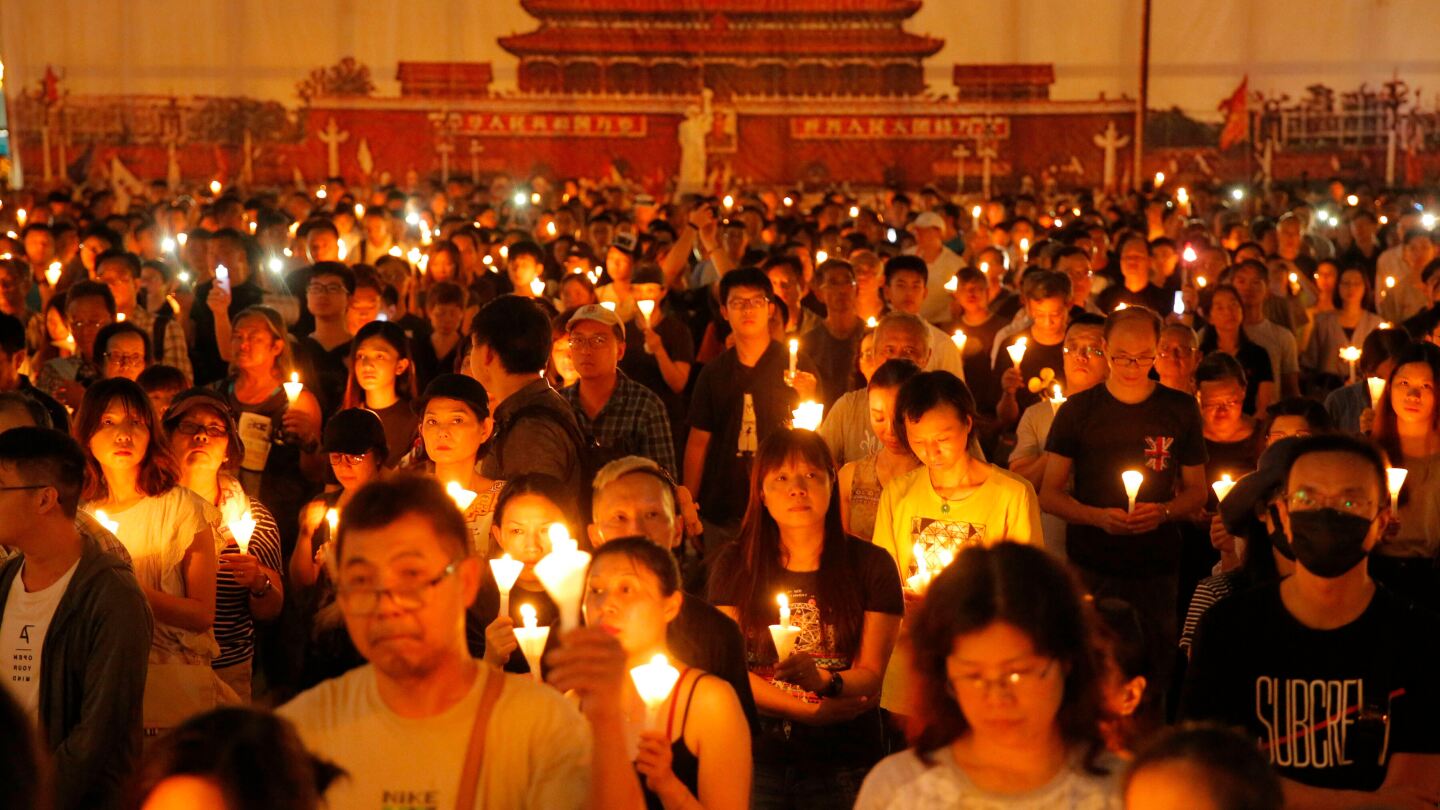
For three decades, the alliance organized an annual candlelight vigil commemorating victims of the 1989 Tiananmen Square crackdown in Beijing. The event regularly drew tens of thousands of participants, making it the only large-scale public commemoration of the tragedy permitted on Chinese soil.
The vigils ended abruptly in 2020 when authorities banned the gathering, citing COVID-19 restrictions. The alliance was forced to disband in 2021 following the arrest of its leaders under the national security law imposed by Beijing the previous year.
Critics view the case as part of a broader pattern of eroding civil liberties in Hong Kong, where Beijing promised to maintain the city’s Western-style freedoms for 50 years after the 1997 handover from Britain. The Hong Kong government maintains its law enforcement actions are “evidence-based and strictly in accordance with the law.”
The disappearance of this public commemoration highlights the dramatic political transformation Hong Kong has undergone since 2019, when massive anti-government protests rocked the city. In response, China implemented the national security law, which has been used to prosecute dozens of activists, journalists, and opposition figures.
The 1989 Tiananmen Square protests represented one of the most significant challenges to Communist Party rule in China’s modern history. Led primarily by students, the pro-democracy movement ended when Chinese authorities sent tanks and troops into Beijing, resulting in a bloody crackdown that killed hundreds, possibly thousands of protesters. The exact death toll remains unknown.
For Hong Kongers, the annual vigil served multiple purposes. It honored those who died, preserved historical memory that is systematically erased in mainland China, and symbolized Hong Kong’s unique status within China’s “one country, two systems” framework.
“It was a group that aimed to seek justice,” said Tang Ngok-kwan, a former alliance member who was charged alongside Chow in another case related to the group. Tang expressed feeling a moral responsibility about the deaths, believing Hong Kong’s financial support for the movement may have intensified the demonstrators’ confrontation with authorities.
While the annual vigil had faced declining interest from some younger activists in the 2010s who viewed the alliance’s goal of building a democratic China as less relevant to Hong Kong’s own democratic struggles, the final vigil in 2019 drew an estimated 180,000 participants. This occurred just days before Hong Kong erupted in months-long protests that ultimately triggered Beijing’s crackdown.
Since the crackdown, authorities have transformed the former vigil site. During recent anniversaries of the Tiananmen crackdown, the area instead hosted carnivals showcasing Chinese food and products, while residents who attempted to commemorate the event nearby were detained by police.
The Hong Kong Alliance was one of dozens of civil society groups disbanded during the ongoing political repression. Other prominent cases include media mogul Jimmy Lai, who was convicted in December of conspiring to collude with foreign forces and faces potential life imprisonment.
Despite her imprisonment, Chow has continued legal battles from behind bars. She successfully defended herself in a separate case that resulted in getting her conviction quashed. She also mounted a challenge to prison regulations requiring female inmates to wear long trousers during summer months, though this was recently rejected by the court.
In a January post on social media platform Patreon, Chow maintained her optimism: “I still firmly believe that the human spirit endures. Together, we shall smile until the very end.”
Tang, who regularly visits Chow and Lee in prison, reports they have lost weight during their incarceration. He described Lee as relatively philosophical, concerned primarily with explaining his beliefs to the court, while Chow remains determined to vigorously defend her position.
As the trial begins, Tang views it as the culmination of the group’s mission and, despite the high personal cost to those involved, “an opportunity to express their beliefs one more time.”
Fact Checker
Verify the accuracy of this article using The Disinformation Commission analysis and real-time sources.

14 Comments
This trial is a deeply troubling development. The Tiananmen vigil was a solemn annual event that allowed Hong Kongers to commemorate a pivotal moment in the fight for democracy. Prosecuting the organizers under the national security law is a clear attempt to erase the memory of the 1989 massacre and suppress political dissent.
Absolutely. The crackdown on the Tiananmen vigil is part of a broader pattern of the Chinese government trying to tighten its grip on Hong Kong and eliminate any remaining vestiges of the city’s democratic freedoms. This trial is a worrying sign of things to come.
The trial of the Tiananmen vigil organizers is a concerning development that reflects the ongoing erosion of civil liberties in Hong Kong. For decades, the annual event was an important way for the city to commemorate the victims of the 1989 massacre and show solidarity with the pro-democracy movement. Prosecuting the organizers under the national security law is a troubling sign of the Chinese government’s efforts to silence dissent.
I agree. The use of the national security law to target the Tiananmen vigil organizers is a clear attempt to erase the memory of the 1989 events and suppress any remaining vestiges of Hong Kong’s democratic freedoms. This trial is a deeply worrying development.
While the details of this case are complex, it’s clear that the crackdown on the Tiananmen vigil reflects the Chinese government’s ongoing efforts to erase the memory of the 1989 massacre. This trial is a concerning development for the future of human rights in Hong Kong.
Absolutely. The vigil was an important way for Hong Kongers to commemorate a pivotal moment in history. Banning it and prosecuting the organizers is a disturbing sign of the erosion of civil liberties in the city.
The trial of the Tiananmen vigil organizers under the national security law is a concerning development. The annual event was an important way for Hong Kongers to remember a tragic loss of life and show solidarity with the pro-democracy movement. Criminalizing its organizers is a troubling sign of the erosion of freedoms in the city.
Agreed. The use of the national security law to target the Tiananmen vigil organizers is a blatant attempt to silence pro-democracy voices in Hong Kong. It’s a worrying escalation in the crackdown on civil liberties in the city.
It’s disheartening to see the Hong Kong government wielding the national security law against peaceful pro-democracy activists. The Tiananmen vigil was a solemn tradition that honored the victims of a brutal crackdown. This trial is a troubling escalation in the ongoing crackdown on dissent.
Agreed. The use of the national security law to target the organizers of the Tiananmen vigil is a clear attempt to suppress free speech and memory of the 1989 events. It’s a worrying development for the future of Hong Kong’s autonomy.
This trial is a concerning example of how the national security law is being used to criminalize peaceful political dissent in Hong Kong. The Tiananmen vigil was an important way for the city to commemorate a pivotal moment in history. Prosecuting the organizers is a troubling erosion of fundamental freedoms.
Absolutely. The crackdown on the Tiananmen vigil is part of a broader pattern of the Chinese government trying to erase the memory of the 1989 massacre. This trial is a worrying sign of the dwindling space for civil liberties in Hong Kong.
This trial represents a concerning erosion of Hong Kong’s autonomy and democratic freedoms. The Tiananmen vigil was an important annual event to commemorate a tragic loss of life. Criminalizing its organizers is a worrying sign of China’s tightening grip on the city.
I agree, this trial seems like a politically motivated attempt to silence pro-democracy voices in Hong Kong. It’s deeply troubling to see the national security law used in this way.