


Listen to the article
At least 40 people were killed and more than 150 injured after a high-speed train derailed and collided with another train in southern Spain on Sunday evening, marking the country’s deadliest rail disaster in over a decade.
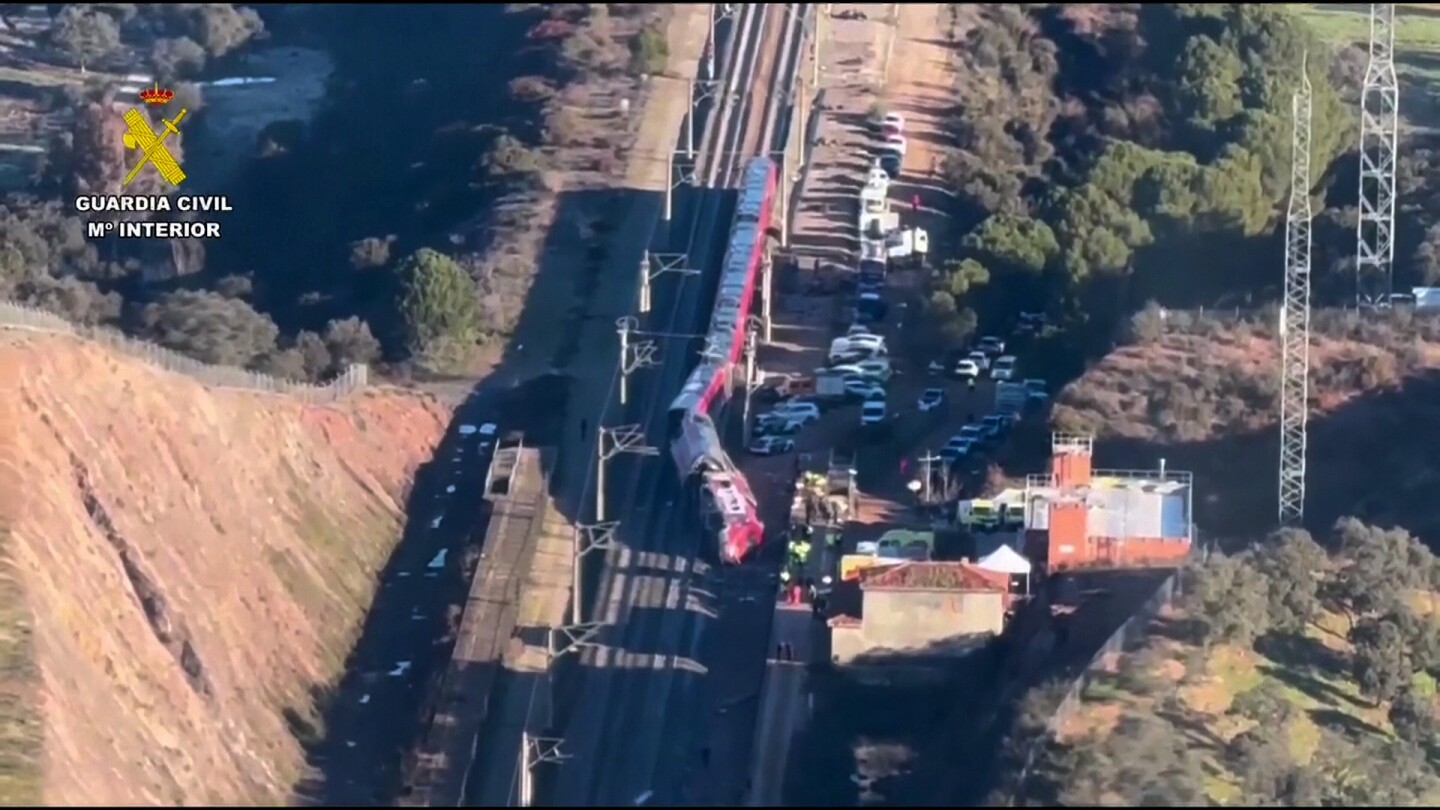
The accident occurred at 7:45 p.m. when the rear carriages of a train traveling from Malaga to Madrid derailed near Adamuz in Cordoba province, approximately 230 miles south of the capital. The derailed train then collided with an oncoming train traveling from Madrid to Huelva.
Transport Minister Óscar Puente said the front section of the second train bore the brunt of the impact, with its first two carriages being knocked off the track and sent plunging down a 13-foot slope. The violent collision scattered debris across a wide area.
“The impact was so incredibly violent that we have found bodies hundreds of meters away,” said Andalusia’s regional President Juan Manuel Moreno, who added that rescue efforts continued through Monday morning as authorities searched the surrounding area for additional victims.
Officials warned that the death toll could rise as recovery operations progress. This tragic incident is Spain’s worst rail disaster since 2013, when 80 people died after a commuter train derailed while navigating a curve at excessive speed.
The investigation into the cause of Sunday’s crash is ongoing, but early reports suggest unusual circumstances. Minister Puente described the incident as “truly strange,” noting that it occurred on a flat section of track that had been renovated just this May. He also pointed out that the train that initially derailed was less than four years old.
The derailed train belonged to private operator Iryo, which stated on Monday that the train was manufactured in 2022 and had passed its most recent safety inspection on January 15. The second train involved in the collision was operated by Spain’s public rail company, Renfe.
Questions about track maintenance have emerged following the crash. The Spanish Union of Railway Drivers revealed that in August, it had sent a letter to Spain’s national railway operator requesting investigations into potential flaws on train lines across the country. The union had recommended reducing speeds at certain points until tracks could be fully repaired, including on the high-speed line where Sunday’s accident occurred.
However, Álvaro Fernández, president of Renfe, told Spanish public radio RNE that both trains were operating well below the speed limit of 155 mph at the time of the accident. He suggested that “human error could be ruled out,” though investigators have yet to determine an official cause.
Spanish Prime Minister Pedro Sánchez declared three days of national mourning in response to the tragedy.
The accident represents a rare catastrophic failure in Spain’s extensive high-speed rail network, which has maintained an exceptional safety record since its inception. Spain boasts Europe’s largest high-speed rail network, with over 2,400 miles of track capable of supporting trains traveling at speeds exceeding 155 mph, according to the International Union of Railways.
The country has invested heavily in rail infrastructure since opening its first high-speed line in 1992, developing it into a popular, affordable, and generally safe transportation option. Sunday’s crash marks the first fatal accident on Spain’s high-speed rail network in its 32-year history.
As the investigation continues, transportation authorities will be examining whether this represents an isolated incident or if it points to broader safety concerns within Spain’s otherwise exemplary rail system. The findings could have implications for rail safety protocols across Europe, where high-speed networks continue to expand as an environmentally friendly alternative to air travel.
Fact Checker
Verify the accuracy of this article using The Disinformation Commission analysis and real-time sources.

20 Comments
This is truly heartbreaking. My deepest sympathies go out to the victims and their families. Rigorous safety standards and robust infrastructure are essential for safe rail travel.
Agreed. Thorough investigations and swift action to address any underlying issues must be a top priority.
This is a terrible loss of life. My condolences go out to all affected. Enhancing safety protocols and infrastructure across the rail network must be a priority.
Agreed. A thorough investigation to determine the cause and implement necessary safety upgrades is critical.
This is a devastating accident. My sincere condolences to all those impacted. Ensuring the highest safety standards in rail travel must be an absolute priority.
Absolutely. Rigorous safety reviews and proactive maintenance are crucial to prevent such tragedies in the future.
How awful. My condolences to all those affected by this tragedy. Improving rail safety protocols and maintenance should be a critical focus to prevent such disasters.
This is a devastating accident. My deepest sympathies to the victims and their families. Enhancing rail safety protocols and infrastructure must be a critical focus.
Devastating news. My thoughts are with the families and communities impacted by this horrific accident. Ensuring rail travel is as safe as possible should be a top priority for authorities.
Absolutely. This underscores the need for continuous safety reviews and upgrades across the entire rail network.
Tragic news. My heart goes out to the victims and their loved ones. Enhancing rail safety through technology, training, and maintenance should be a key focus for authorities.
Awful to hear about this tragedy. My deepest sympathies to the victims and their families. Improving rail safety should be a top concern for officials.
Awful news. I hope the authorities can identify the causes quickly and take steps to enhance rail safety and prevent similar incidents. Deepest condolences to all affected.
Yes, this is a sobering reminder of the importance of robust safety protocols and infrastructure maintenance in the transportation sector.
How dreadful. My heart goes out to the victims and their loved ones. Ensuring the highest safety standards in rail travel should be of utmost importance.
This is a terrible tragedy. My heart goes out to the victims and their families. Train safety needs to be a top priority to prevent such devastating accidents in the future.
I agree. Thorough investigations are crucial to determine the cause and implement necessary safety improvements.
This is a tragic loss of life. My sincere sympathies go out to the victims and their loved ones. I hope the investigation can shed light on what went wrong and how to improve rail safety going forward.
Tragic news. My sincere condolences to all impacted by this accident. Strengthening rail safety through improved technology, maintenance, and training should be a top priority.
Absolutely. Proactive safety measures are essential to prevent such devastating incidents in the future.