


Listen to the article
Vatican Begins Restoration of Michelangelo’s “The Last Judgement” to Remove Salt Film
Michelangelo’s iconic fresco “The Last Judgement” is undergoing a delicate cleaning operation at the Vatican, as restorers work to remove a chalky white film of salt that has accumulated on the Renaissance masterpiece over the past three decades.
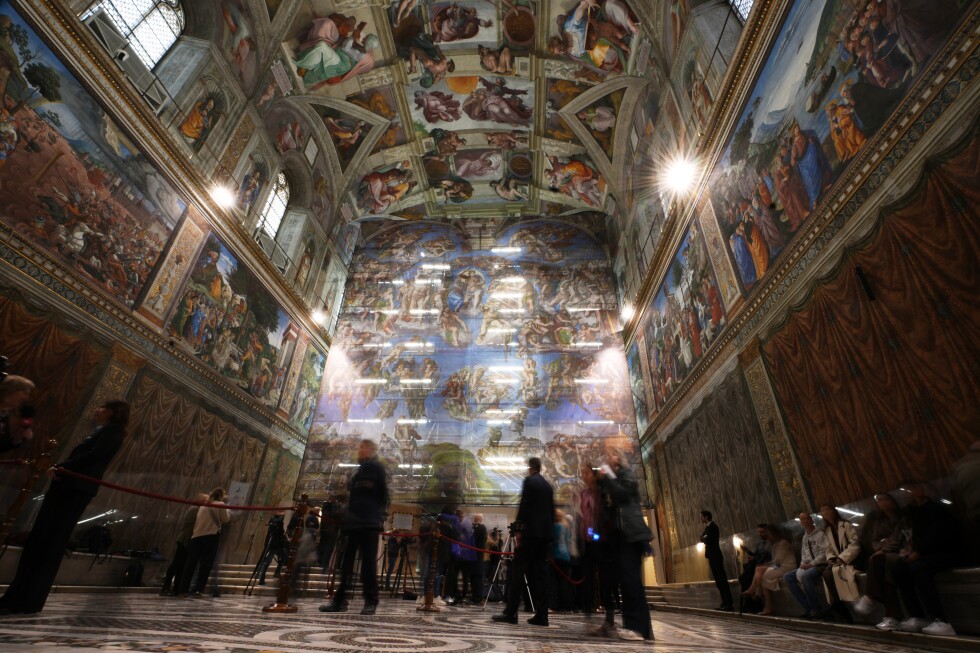
The Vatican offered media representatives a rare behind-the-scenes look at the restoration process on Saturday. Visitors to the Sistine Chapel will notice a floor-to-ceiling scaffolding currently obscuring the imposing fresco that depicts scenes of heaven and hell on the chapel’s front wall. In its place, a reproduction of the artwork appears on a screen covering the scaffolding.
According to Vatican Museum officials, the salt film is primarily the result of human presence in the chapel, with approximately 25,000 visitors passing through the Vatican Museums daily.
“This salt is created because, above all, when we sweat, we emit lactic acid, and unfortunately lactic acid reacts with the calcium carbonate present on the wall,” explained Fabio Moresi, who heads the scientific research team overseeing the cleaning operation.
Climate change has exacerbated the problem, Moresi noted, as warmer temperatures cause visitors to perspire more, creating increased humidity that reacts with the fresco’s surface.
The restoration technique is straightforward but effective. Barbara Jatta, director of the Vatican Museums, described the film as a “cataract” that can be removed by applying sheets of Japanese rice paper soaked in distilled water to the fresco, then carefully wiping away the accumulated salt.
Up close, the transformation is striking. Sections that have not yet been cleaned appear coated in a chalky dust, while restored areas reveal the vibrant colors and intricate details of Michelangelo’s original work. The restoration allows viewers to appreciate subtle elements, such as the detailed rendering of Jesus’s hair and crucifixion wounds in the central figure of the composition.
The current restoration project is scheduled for completion by Easter in early April, allowing visitors to once again view the masterpiece in its full glory.
The Sistine Chapel takes its name from Pope Sixtus IV, who commissioned the construction of the papal chapel in the 15th century. However, it was Pope Julius II who later commissioned Michelangelo to paint the chapel’s famous ceiling between 1508 and 1512, including the iconic “Creation of Adam” depicting God’s outstretched hand. Two decades later, Pope Clement VII asked Michelangelo to return to paint “The Last Judgement” in 1533.
While the other frescoes in the Sistine Chapel undergo routine annual maintenance, with restorers working overnight on mobile cherry-pickers that can be removed before visitors arrive each morning, “The Last Judgement” presents unique challenges. Located behind the chapel’s altar, which sits elevated on marble steps, the fresco requires a fixed scaffolding to provide complete access for cleaning.
This restoration follows a comprehensive renovation of the Sistine Chapel conducted between 1979 and 1999, which removed centuries of accumulated smoke, grime, and wax. Small patches of the pre-restored fresco remain intentionally untouched as a historical reference point, visible from the upper levels of the current scaffolding and showing an almost blackened wall surface.
Rather than drastically reducing visitor numbers to preserve the artwork, Vatican officials are researching technological solutions to address humidity levels through advanced filtration systems, aiming to prevent the formation of salt deposits in the future.
The Sistine Chapel continues to serve important functions beyond its status as an artistic treasure. In May, it hosted the conclave where Pope Leo XIV was elected, maintaining its centuries-old role in papal succession.
Fact Checker
Verify the accuracy of this article using The Disinformation Commission analysis and real-time sources.

16 Comments
Michelangelo’s ‘The Last Judgment’ is a true masterpiece, and I’m impressed by the Vatican’s scientific approach to its restoration. Preserving cultural patrimony is so important.
The challenges posed by climate change and human presence on this fragile artwork are concerning, but I’m hopeful the Vatican’s efforts will be successful in removing the salt buildup.
The Vatican’s behind-the-scenes look at the restoration of Michelangelo’s ‘The Last Judgment’ is intriguing. Maintaining priceless cultural heritage requires immense care and diligence.
I’m glad to see the Vatican prioritizing the preservation of this iconic fresco. Protecting artworks of this caliber is crucial for safeguarding our shared cultural legacy.
It’s fascinating to learn about the delicate process of restoring Michelangelo’s ‘The Last Judgment.’ The Vatican’s commitment to protecting this cultural treasure is commendable.
Maintaining priceless artworks like this requires immense care and expertise. I’m glad to see the Vatican investing in this crucial restoration project.
It’s fascinating to learn about the process of removing the salt buildup from Michelangelo’s ‘The Last Judgment.’ The Vatican’s efforts to preserve this cultural treasure are admirable.
The impact of climate change and human presence on this fragile artwork is concerning. I hope the Vatican’s restoration work is successful in safeguarding it for future generations.
Michelangelo’s ‘The Last Judgment’ is a true masterpiece, and I’m glad the Vatican is investing resources into its upkeep. Protecting cultural patrimony is crucial.
Restoring this iconic fresco must be an immense challenge, but the Vatican’s scientific approach seems well-considered. I look forward to seeing the final results.
The impact of climate change and human presence on this fragile fresco is concerning. I hope the Vatican’s cleaning methods can successfully remove the salt buildup without causing any further damage.
Agreed, preserving artworks of this caliber requires delicate and meticulous care. It’s good to see the Vatican prioritizing this restoration project.
The Vatican’s behind-the-scenes look at the restoration of Michelangelo’s ‘The Last Judgment’ is intriguing. Preserving our shared cultural heritage is vital, and I’m impressed by their scientific approach.
Protecting fragile artworks like this from the impacts of climate change and human presence is a constant challenge. I hope the Vatican’s efforts are successful in safeguarding this masterpiece.
Fascinating to learn about the delicate restoration process required to preserve Michelangelo’s masterpiece. The Vatican’s efforts to remove the salt buildup and protect this iconic artwork are commendable.
I’m glad the Vatican is taking this restoration work seriously. Maintaining priceless cultural heritage like this is so important.