


Listen to the article
U.S. Navy Executes Historic Submarine Strike Against Iranian Warship
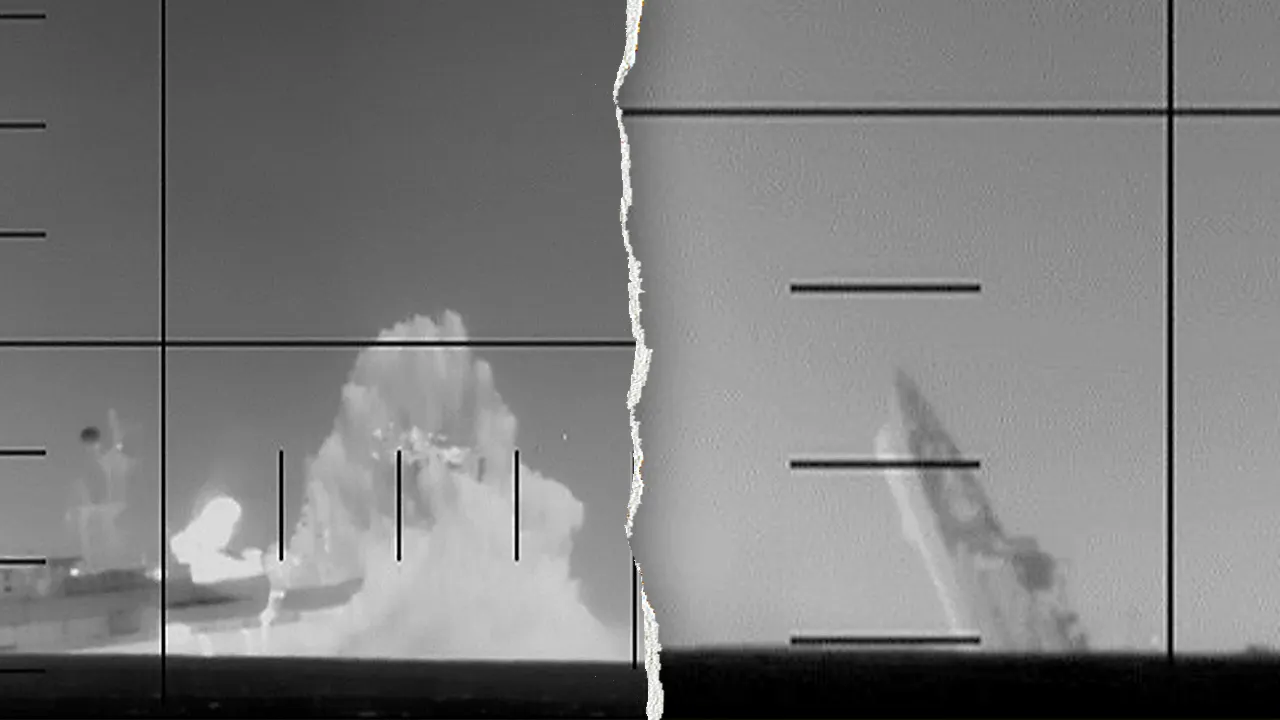
In a military operation not seen since World War II, a U.S. submarine has sunk an Iranian warship in international waters off Sri Lanka’s southern coast using a Mark 48 Advanced Capability torpedo, War Secretary Pete Hegseth confirmed Wednesday.
“An American submarine sank an Iranian warship that thought it was safe in international waters,” Hegseth told reporters during a Pentagon briefing, describing the attack as “a quiet death” and the first successful torpedo strike against an enemy vessel since the 1940s.
The $4.2 million torpedo struck the IRIS Dena, the newest frigate in Iran’s naval fleet, carrying a 650-pound warhead that detonated beneath the vessel’s stern. The weapon is designed not to hit ships directly but to create a massive vapor bubble underneath that breaks the vessel in half.
“This torpedo detonated underneath the stern of the Iranian ship and lifted it up out of the water, and so it sank in a matter of minutes,” explained Thomas Shugart, an adjunct senior fellow at the Center for a New American Security.
Military analysts note this marks only the second time in history that a nuclear-powered submarine has sunk a ship with a torpedo. The previous instance occurred during the 1982 Falklands War when the British submarine HMS Conqueror sank the Argentine cruiser General Belgrano.
The operation demonstrates the overwhelming technological superiority of American naval forces. U.S. nuclear submarines can operate at high speed with virtually unlimited range, constrained only by onboard supplies.
“The U.S. Navy submarines are very highly mobile, very, very quiet, and our crews are extremely well-trained,” Shugart noted. “To hunt down and sink an Iranian ship like that is not a challenging task for a U.S. nuclear-powered submarine.”
The IRIS Dena was not a minor target. It represented significant Iranian naval capability, equipped with surface-to-air missiles, anti-ship missiles, torpedo launchers, and other advanced weaponry. The vessel was the newest frigate in Iran’s fleet, making its loss particularly significant for Tehran’s naval operations.
Sri Lankan authorities reported receiving a distress call at 5:08 a.m. local time Wednesday from the Iranian vessel, which reported an explosion. Sri Lanka’s Foreign Affairs Minister Vijitha Herath confirmed the incident, which occurred outside the country’s territorial waters.
Military experts interpret the strike as a dramatic escalation in U.S. military action against Iran, signaling a fundamental shift in American posture. “It definitely seems to me like a message that the gloves really are off,” said Shugart.
The operation underscores the vast technological gap between U.S. and Iranian naval capabilities. While American submarines are nuclear-powered with advanced weapons systems and unlimited mobility, Iran’s submarine fleet consists largely of aging diesel-electric vessels acquired from Russia decades ago.
“I’m not sure Iran has any operational submarines anymore, but if they were operational, their biggest submarines would be at least 20 or 30 years old,” Shugart explained. “They would be ex-Russian diesel-electric submarines, so they’re not nuclear-powered like the U.S. ones.”
The attack sends an unmistakable message to Tehran about American willingness to employ decisive force. “This strike sent a message that if there are any Iranian warships left or any Iranian government-owned ships, they should expect no mercy,” Shugart added.
The submarine operation likely involved extensive surveillance, forward naval deployments, and precise targeting actions designed to demonstrate U.S. maritime dominance while signaling to Iran that escalation would be met with overwhelming force.
As tensions continue to rise between Washington and Tehran, this historic submarine strike marks a significant turning point in the conflict and demonstrates America’s willingness to employ capabilities not used in combat operations for generations.
Fact Checker
Verify the accuracy of this article using The Disinformation Commission analysis and real-time sources.

11 Comments
This is a significant development in naval warfare, marking the first successful torpedo strike against an enemy vessel since WWII. I wonder what lessons the US military will take away from this operation.
Agreed, this strike represents an important milestone. It will be interesting to see if it prompts changes in Iran’s naval strategy or capabilities going forward.
Wow, this is a significant military strike. I’m curious to learn more about the strategic rationale behind it and how it might impact regional tensions in the Middle East. What are the experts saying about the potential fallout from this action?
This type of direct confrontation between the US and Iran certainly raises the stakes. I wonder if diplomatic channels are still open to de-escalate the situation and find a peaceful resolution.
An intriguing use of advanced submarine technology against an Iranian naval target. I’d be interested to hear more about the intelligence and planning that went into this operation.
Yes, the strategic calculus behind this strike is likely complex. It will be worth monitoring how Iran responds and whether it leads to a broader confrontation.
Sinking an Iranian warship is a bold move by the US, but I worry it could escalate regional tensions. I hope both sides show restraint and prioritize diplomatic solutions to ease the situation.
This is a concerning development, as it risks further escalation between the US and Iran. I hope both sides can show restraint and focus on diplomatic solutions to reduce regional tensions.
While the technical details of the torpedo strike are fascinating, I’m more concerned about the broader geopolitical implications. This could further destabilize an already volatile region if not handled carefully.
An impressive display of US naval capabilities, though the use of a $4.2 million torpedo against an Iranian warship seems like an extravagant response. I hope the potential strategic benefits outweigh the costs of this operation.
You raise a fair point. The high price tag of the weapon used is certainly noteworthy. I’m curious to see if the US government provides more details on their rationale for this specific strike.